
You wake up and immediately reach for your phone. Before your feet hit the floor, you’ve scrolled through three apps, checked seventeen notifications, and felt that familiar knot of anxiety tightening in your chest. Your attention has been hijacked before you’ve even started your day.
If this sounds painfully familiar, you’re not alone. Millions of people feel controlled by their devices, trapped in an endless cycle of distraction and notification anxiety. But here’s the liberating truth: digital minimalism isn’t about deprivation—it’s about reclaiming your life through intentionality. Digital minimalism is a philosophy of using technology tools in a way that is intentional, optimized, and aligned with your personal values, allowing you to reclaim your time and attention from distracting forces.
This comprehensive guide to digital minimalism will take you from understanding the core philosophy to implementing practical strategies that transform your relationship with technology. You’ll learn the foundational principles, discover life-changing benefits, and follow a proven 30-day process to become a digital minimalist. By the end, you’ll have the tools to build a focused life in our increasingly noisy world.
What is Digital Minimalism? (And What It Isn’t)
The Core Philosophy: Technology as a Tool, Not a Tyrant
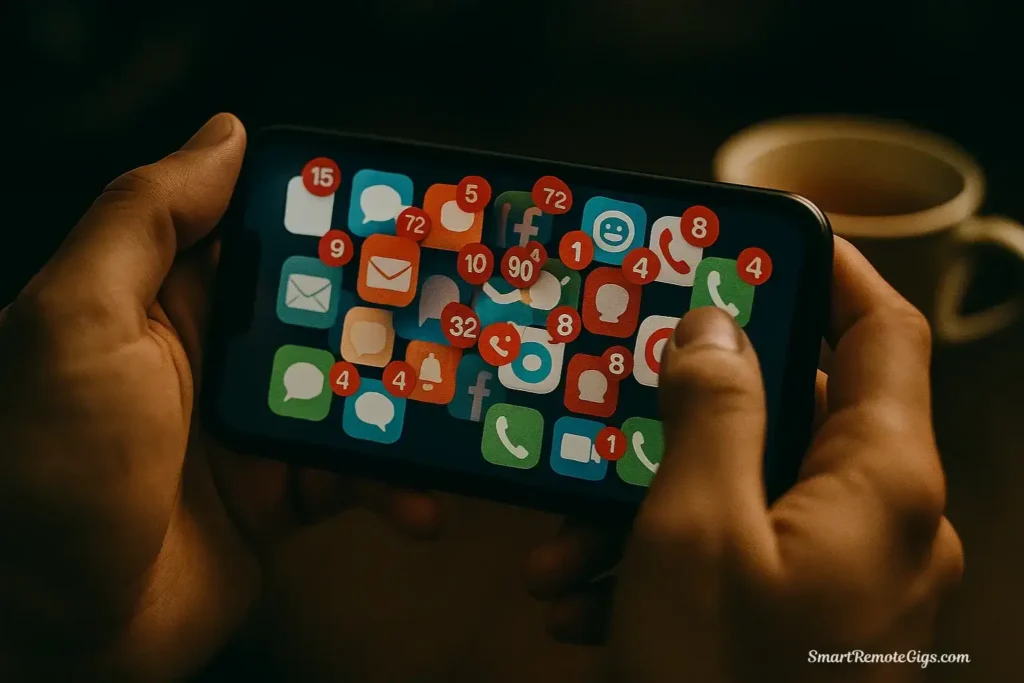
At its heart, digital minimalism represents a radical shift in how we approach technology. Instead of passively accepting every new app, platform, and digital service that enters our lives, this philosophy asks a fundamental question: Does this technology serve me, or do I serve it?
The concept gained widespread attention through Cal Newport’s digital minimalism framework, detailed in our summary of his book “Digital Minimalism,” which challenges the assumption that more technology automatically means a better life. Newport argues that we should treat our digital tools with the same careful consideration we apply to any significant life decision. Just as you wouldn’t fill your home with furniture you don’t need, why fill your digital life with apps and services that don’t genuinely improve your existence?
A digital minimalist approaches technology with skepticism and selectivity. Rather than downloading every trending app or joining every social platform, they curate a small collection of tools that deliver substantial value aligned with their deepest values and goals.
The 3 Core Principles of Digital Minimalism
Understanding how to be a digital minimalist starts with grasping these foundational principles:
Principle 1: Clutter is Costly
Every app you install, every account you create, and every notification you allow carries hidden costs. These aren’t just financial—though subscription fees add up quickly. The real price is paid in fragmented attention, constant context-switching, and the mental overhead of managing dozens of digital obligations.
Consider the typical smartphone user with 40+ apps installed. Each one wants your attention, sends notifications, requires updates, and demands you remember yet another password. This digital clutter creates a cognitive burden that quietly drains your mental resources throughout the day.
Principle 2: Optimization is Important
Once you’ve committed to using fewer digital tools, the next step is ensuring the ones you keep are truly the best options for your specific needs. A digital minimalist doesn’t just eliminate—they optimize.
This might mean choosing one communication platform instead of juggling five, or selecting a single note-taking system rather than spreading ideas across multiple apps. By consolidating and optimizing, you reduce friction and increase the actual value you extract from technology.
Principle 3: Intentionality is Satisfying
Perhaps the most transformative principle of digital minimalism is discovering the profound satisfaction that comes from using technology on your own terms. When you mindfully choose to engage with a digital tool for a specific purpose, then disengage when that purpose is fulfilled, you experience technology as genuinely helpful rather than controlling.
This intentionality transforms your relationship with devices from one of compulsion to one of agency. You’re no longer a passive consumer of whatever content algorithms serve you—you’re an active director of your own attention and time.
It’s Not a “Digital Detox”—It’s a Permanent Philosophy
Many people confuse digital minimalism with a digital detox, but the distinction matters enormously. A digital detox is a temporary break—a weekend without devices or a week off social media—after which you typically return to your old habits with renewed intensity.
The benefits of digital minimalism come from adopting a sustainable, long-term approach to technology. It’s not about punishment or deprivation; it’s about permanently restructuring your digital life around what truly matters to you. While a detox might help you reset temporarily, digital minimalism provides the framework for maintaining that clarity indefinitely.
Think of it this way: a detox is like crash dieting, while digital minimalism is like developing genuinely healthy eating habits that last a lifetime.
The Life-Changing Benefits of Becoming a Digital Minimalist
When you commit to this philosophy and follow through with the digital declutter process, the transformations can be remarkable:
- Reclaim an Astonishing Amount of Free Time: The average person spends 3-4 hours daily on their smartphone alone. Digital minimalists often recover 15-20 hours per week—time that can be redirected toward relationships, creative projects, physical health, or simply enjoying life’s quieter moments.
- Improve Your Concentration and Ability for “Deep Work”: Constant digital interruptions fragment your attention and make sustained focus nearly impossible. By eliminating unnecessary digital noise, you rebuild your capacity for deep concentration—the kind required for meaningful work, creative thinking, and genuine problem-solving. This is a key step in overcoming phone distraction and reclaiming your mental clarity.
- Strengthen Your Real-World Relationships: Digital minimalism helps you become fully present with the people in your life. Instead of half-listening while scrolling Instagram, you engage in rich conversations. Rather than documenting experiences for social media, you actually live them.
- Reduce Anxiety and Improve Mental Well-being: The link between excessive digital consumption and increased anxiety, depression, and stress is well-documented. By stepping away from the comparison trap of social media and the constant pressure to respond immediately to messages, many digital minimalists report significant improvements in their mental health and overall life satisfaction.
How to Begin: Your 30-Day Digital Declutter Challenge
Now we arrive at the practical core of this digital minimalism guide. This proven process, adapted from Cal Newport’s methodology, provides a clear path for how to start digital minimalism in your own life.
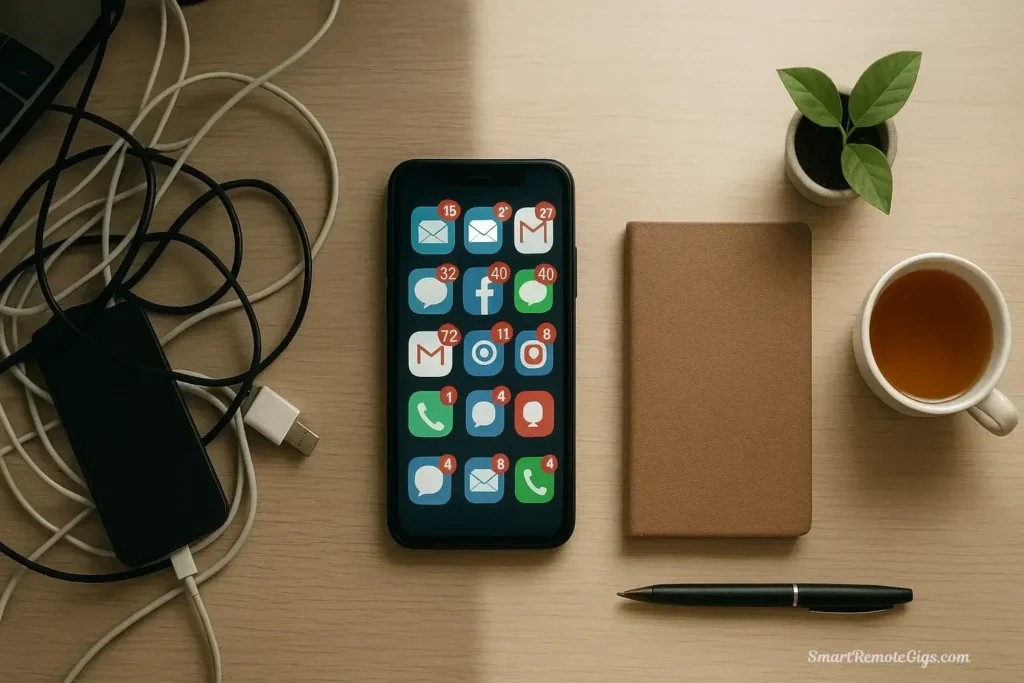
This process is the core practical exercise of digital minimalism. While we outline the essential steps below, we have also created a complete, day-by-day checklist in our guide on how to perform a digital declutter.
Step 1: Define Your Values and Vision
Time Required: 1-2 hours
Before touching any technology, you need clarity about what matters most to you. Grab a journal or notebook and find a quiet space where you won’t be interrupted.

Write down your answers to these questions:
- What do I value most deeply in life? (Examples: family connection, creative expression, physical health, spiritual growth, meaningful work)
- What would I regret not having prioritized when I look back on my life?
- How do I want to spend my limited time and attention?
Next, write a vision statement for how technology should serve these values rather than undermine them. For example: “I want technology to help me stay connected with distant family members, support my photography hobby, and manage my work efficiently—but not to steal time from face-to-face relationships or replace real hobbies with passive scrolling.”
This document becomes your foundation. Every decision you make in the following steps will be filtered through these values and this vision.
Step 2: Take a 30-Day Break from Optional Technologies
Time Required: 30 days
Now comes the bold move that makes this process so effective. Identify all the “optional” technologies in your life—digital tools and services you could theoretically live without for a month. Common examples include:
- Social media platforms (Instagram, Facebook, Twitter/X, TikTok, LinkedIn)
- News apps and websites
- Video streaming services (Netflix, YouTube for entertainment)
- Video games
- Dating apps
- Shopping apps
- Sports scores and celebrity gossip sites
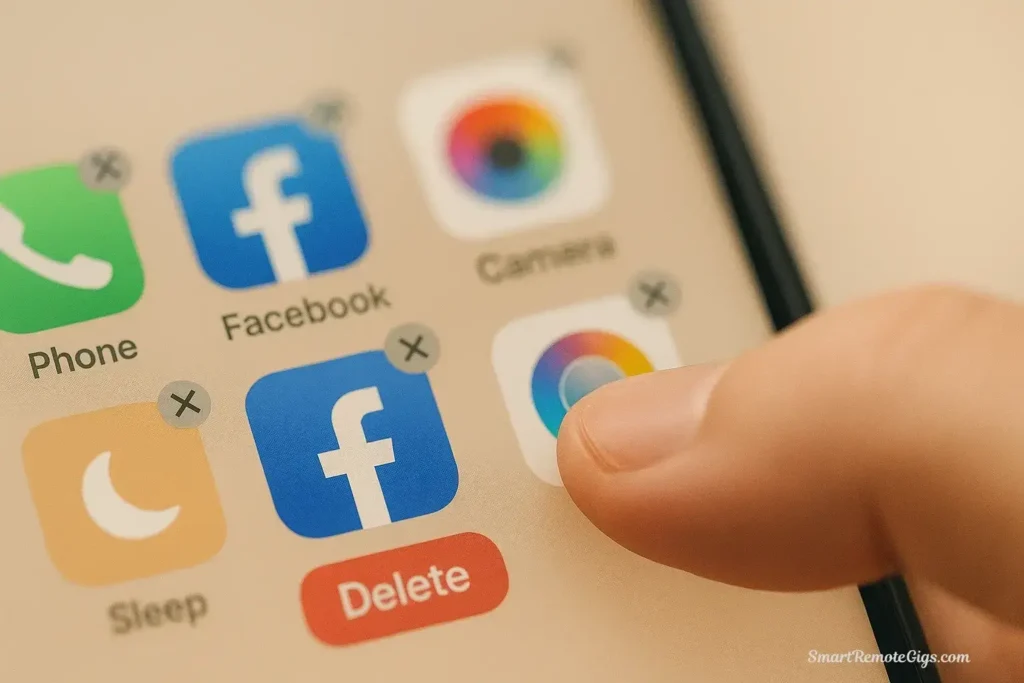
For the next 30 days, remove these technologies completely from your life. Delete the apps from your phone. Use website blockers if needed. You cannot use these optional technologies unless absolutely required for professional or critical logistical reasons.
This isn’t punishment—it’s a reset. You’re creating space to rediscover life without these constant digital companions.
Important exception: Keep technologies required for work (email, Slack, project management tools) and essential utilities (banking, navigation, calendar). The key word is “optional.”
Step 3: Rediscover High-Quality Leisure

Time Required: Ongoing throughout the 30 days
The 30-day break will create a void in your life—potentially hours of unstructured time previously consumed by digital distractions. This is where the real transformation happens, but only if you actively fill that void with high-quality alternatives.
During this period, aggressively pursue activities that provide genuine satisfaction:
- Schedule regular social gatherings with friends and family
- Start a physical hobby (woodworking, painting, gardening, cooking)
- Read books—real, immersive books that require sustained attention
- Engage in physical activities: sports, hiking, yoga, dance
- Spend time in nature without devices
- Learn a musical instrument
- Join community groups or clubs
- Have long, meandering conversations with people you care about
The goal is to remind yourself what life feels like when you’re fully present and engaged, not distracted and fragmented. Many people report that by week three, they’ve stopped missing the digital tools they thought were essential.
Step 4: Mindfully Reintroduce Technology
Time Required: 1-2 hours (after the 30-day break)
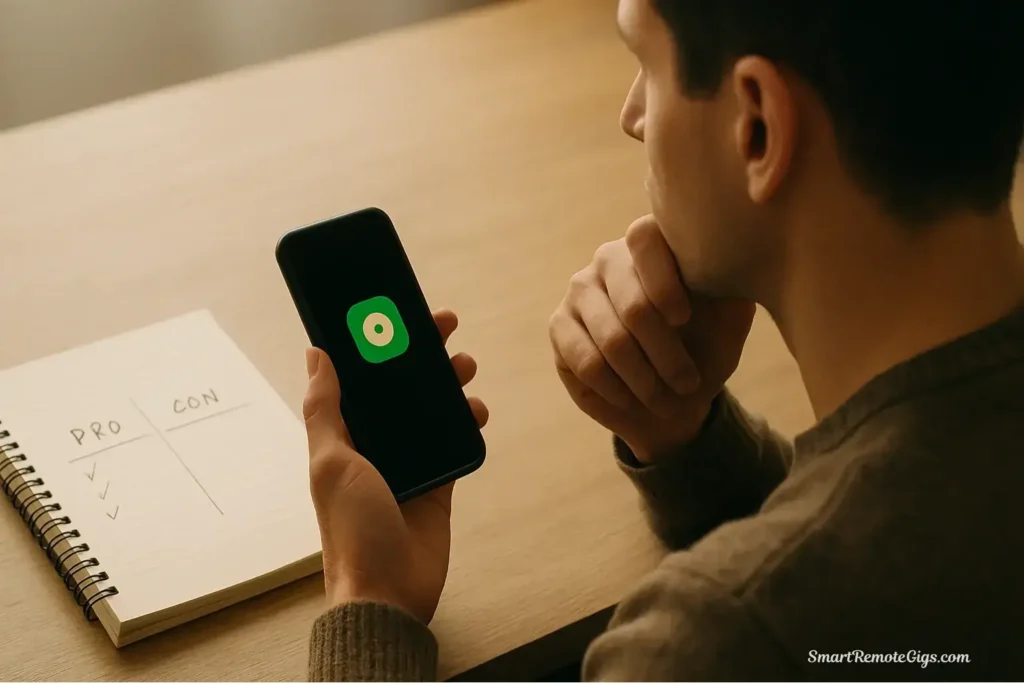
After 30 days, it’s time to selectively reintroduce technology. This is not a free-for-all return to your old habits—it’s a careful, values-based selection process.
For each optional technology you removed, ask these questions:
- Does this technology directly and significantly support something I deeply value? (Reference your vision from Step 1)
- Is this the best tool for serving that value, or are there better alternatives?
- Can I accomplish the same goal through non-digital means?
Be ruthless here. If a technology provides only marginal benefits—it’s “kind of nice” or “occasionally useful”—keep it out of your life. Only reintroduce technologies that pass a high bar of genuine value alignment.
You may find that you want to bring back 20% of what you removed, or perhaps 50%. The exact number doesn’t matter—what matters is that every technology you reintroduce has earned its place.
Step 5: Create a “Terms of Use” Agreement
Time Required: 30-60 minutes
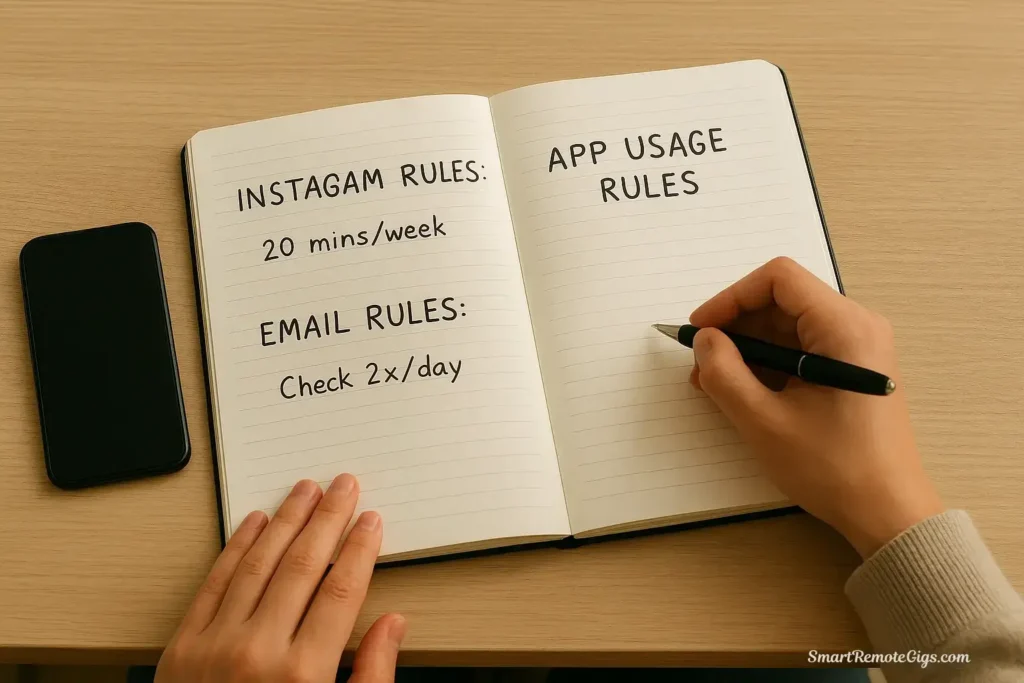
For each technology that makes it back into your life, define specific rules about when and how you’ll use it. This crucial step prevents the gradual creep back toward old habits.
Write down your terms of use for each approved technology. Examples:
- “I will use Instagram only on my laptop, for 20 minutes on Saturday mornings, to share photography from my week.”
- “I will check email at 9 AM and 4 PM only. Outside those times, the app remains deleted from my phone.”
- “I will watch one carefully chosen film per Friday evening, not browse endlessly through streaming platforms.”
- “I will use messaging apps only for coordinating plans and urgent communication, not for ongoing all-day conversations.”
These self-imposed constraints might sound restrictive, but they’re actually liberating. They allow you to extract value from technology while preventing it from hijacking your time and attention.
- A journal or notebook (digital or physical)
- Willpower and commitment to the process
- (Optional) Supporting resources like Cal Newport’s book “Digital Minimalism”
- (Optional) Apps like those on our list of the 7 best apps for a digital minimalist in 2025 to support your journey
Daily Strategies for a Sustainable Minimalist Lifestyle
Completing the 30-day digital declutter is transformative, but maintaining digital minimalism requires ongoing strategies and habits.

Taming Your Smartphone: The Pocket-Sized Distraction Device
Your smartphone is likely your biggest source of digital distraction. Here’s how to convert it from an attention-grabbing slot machine into a useful tool:
Transform Your Home Screen
Remove all social media, news, and entertainment apps from your home screen. Keep only essential utilities—phone, messages, calendar, maps, camera. Make your home screen as boring as possible. For recommendations on which minimalist apps to keep, check out the 7 best apps for a digital minimalist in 2025.
Enable Grayscale Mode
Colors are designed to grab your attention and trigger dopamine responses. Switching your phone to grayscale (found in accessibility settings) makes it dramatically less appealing to mindlessly scroll.
Delete, Don’t Disable
Don’t just log out of apps or move them to folders—delete them entirely. If you want to access social media, require yourself to do it on a desktop computer. The added friction makes impulsive usage nearly impossible.
Your browser is your main gateway to the internet. Consider using a privacy-focused browser that reduces distractions by default. We compare Brave vs. Chrome for digital minimalists to help you choose the best tool.
Create Phone-Free Zones
Establish rules like “no phones in the bedroom,” “no phones during meals,” or “no phones during the first hour after waking.” Physical distance prevents automatic reaching.
Use a Dumb Phone for Certain Situations
Consider keeping a basic phone for weekends, vacations, or after work hours. Knowing you have a minimalist backup device makes it easier to leave the smartphone behind. You might also explore using a privacy-focused browser like Brave that reduces distractions when you do need to browse the web.
Mindful Social Media: From Compulsive Scrolling to Intentional Connection
If social media passed your values test and made it back into your life, these strategies keep it under control. For a deeper dive into this process, explore our Guide to a Mindful Social Media Cleanse.
Unfollow Ruthlessly
Your feed should contain only accounts that genuinely add value to your life—close friends, educational content directly related to your goals, or sources of genuine inspiration. Everyone else can go. Aim to follow fewer than 50 accounts.
Turn Off All Notifications
Every ping is an interruption of whatever you’re actually trying to do with your life. Disable every notification from every social platform. You check on your schedule, not theirs.
Schedule Usage Time
Block out specific times for social media rather than checking sporadically throughout the day. Many digital minimalists limit social media to a single 20-minute session per day or even per week.
Use Website Blockers
Tools like Freedom, Cold Turkey, or browser extensions can prevent access to social media sites outside your designated times, removing the option to give in to impulses.
Prioritize Real Communication
When you want to connect with someone, send a direct message or better yet, make a phone call. Avoid the passive consumption of feeds and focus on actual relationship-building.
Reclaiming Your Work Focus: Digital Minimalism for Professionals
Overcoming phone distraction and managing social media are crucial, but many professionals struggle with work-related digital overwhelm. For busy professionals looking for specialized strategies, see The Busy Professional’s Guide to Digital Minimalism. Apply these principles of digital minimalism to your professional life:
Implement Email Protocols
Check email only during designated times (morning and afternoon work well for most people). Use auto-responders to manage expectations about response times. Unsubscribe from newsletters that don’t provide clear value.
Master Communication Tools
If your workplace uses Slack, Microsoft Teams, or similar platforms, configure them carefully. Disable notifications, set status to “Do Not Disturb” during focus time, and batch-check messages rather than staying constantly connected.
Protect Deep Work Blocks
Schedule specific times for cognitively demanding work and treat them as sacred. During these blocks, close all communication tools, silence your phone, and work on a single task with full concentration. Even two hours of uninterrupted deep work can be more productive than an entire day of fragmented attention.
Separate Work and Personal Devices
If possible, maintain distinct devices for professional and personal use. This creates clear boundaries and prevents work from bleeding into every moment of your life.
Question Every New Tool
When your organization introduces a new digital tool, ask whether it truly improves productivity or just creates another channel for interruption. Advocate for digital minimalism principles within your team or company.
Applying Digital Minimalism to Your Life
The principles of digital minimalism are not one-size-fits-all. They can be powerfully adapted to specific challenges:
- For Academic Focus: The student’s dilemma is unique—technology is required for school but is also the biggest distraction. For tailored strategies, read our Digital Minimalism for Students guide.
- For Workplace Productivity: In the modern workplace, managing digital noise is a critical skill. To apply these concepts to email and Slack, see The Busy Professional’s Guide to Digital Minimalism.
Frequently Asked Questions
Can a digital minimalist use social media?
Yes, absolutely. Digital minimalism isn’t about completely abandoning technology—it’s about using technology intentionally. A digital minimalist might use social media if it provides significant value aligned with their core values. The key differences are: they use it on their own schedule (not compulsively), they’ve defined specific purposes for its use, and they’ve eliminated the aspects that provide no value.
For example, using LinkedIn exclusively for professional networking, checking it once per week for 20 minutes, while ignoring the feed entirely.
What is the difference between digital minimalism and a digital detox?
A digital detox is a temporary break from technology—a weekend, week, or month away from devices or certain platforms. After the detox ends, most people return to their previous habits. Digital minimalism is a permanent philosophy and lifestyle approach. It’s about permanently restructuring your relationship with technology based on your values.
Think of a detox as a crash diet, while digital minimalism is developing sustainable healthy habits.
How long does it take to see the benefits?
Many people report feeling initial benefits within the first week of the 30-day digital declutter process—improved sleep, reduced anxiety, and more mental clarity. However, the deeper transformations—strengthened relationships, recovered creative energy, and genuinely rebuilt attention span—typically emerge over 2-3 months of consistently practicing the principles.
The full benefits accumulate over time as you rediscover interests and activities that had been crowded out by digital distraction.
Is digital minimalism hard to maintain?
The 30-day declutter process can be challenging, especially the first 7-10 days as you break ingrained habits and experience withdrawal from dopamine-triggering technologies. However, most practitioners find that maintaining digital minimalism becomes easier over time, not harder.
After experiencing the benefits—more time, better focus, reduced anxiety—returning to old patterns of digital overload becomes genuinely unappealing. The key is treating it as a philosophy you’ve chosen because it improves your life, not a set of restrictions you’re forcing yourself to follow.
Conclusion: Your Journey to a More Focused Life Begins Now
Digital minimalism represents more than just a strategy for managing technology—it’s a philosophy for reclaiming agency over your attention, time, and ultimately, your life. In a world designed to fragment your focus and monetize your distraction, choosing to become a digital minimalist is an act of resistance and self-respect.
You’ve learned what digital minimalism truly means, discovered its life-changing benefits, and received a detailed roadmap through the 30-day digital declutter challenge. You now have practical strategies for taming your smartphone, managing social media mindfully, and maintaining focus in your professional life.
The question isn’t whether you can implement these changes—it’s whether you will.
Your focused life awaits on the other side of intentionality. Every moment you spend passively scrolling, every notification that fragments your attention, and every app that fails to serve your deepest values is a choice you can unmake.
Start today. Right now. Open your journal and complete Step 1 of the Digital Declutter Challenge. Spend the next hour defining your values and vision for technology. That single hour of clarity will set the foundation for reclaiming thousands of hours of your life.
The focused life you desire in this noisy world isn’t a distant dream—it’s a decision you make today and reinforce through daily choices. Welcome to digital minimalism.
The 30-day declutter is the reset that makes this lifestyle possible, but daily habits sustain it. For quick reminders and easy wins, refer back to our 10 Actionable Digital Minimalism Tips whenever you feel yourself slipping.