
Brand24 vs Mention 2026: Best B2B PR Tracker? [Versus]
 ·
Last Updated: May 21, 2026 ·
23 min read
·
Last Updated: May 21, 2026 ·
23 min read
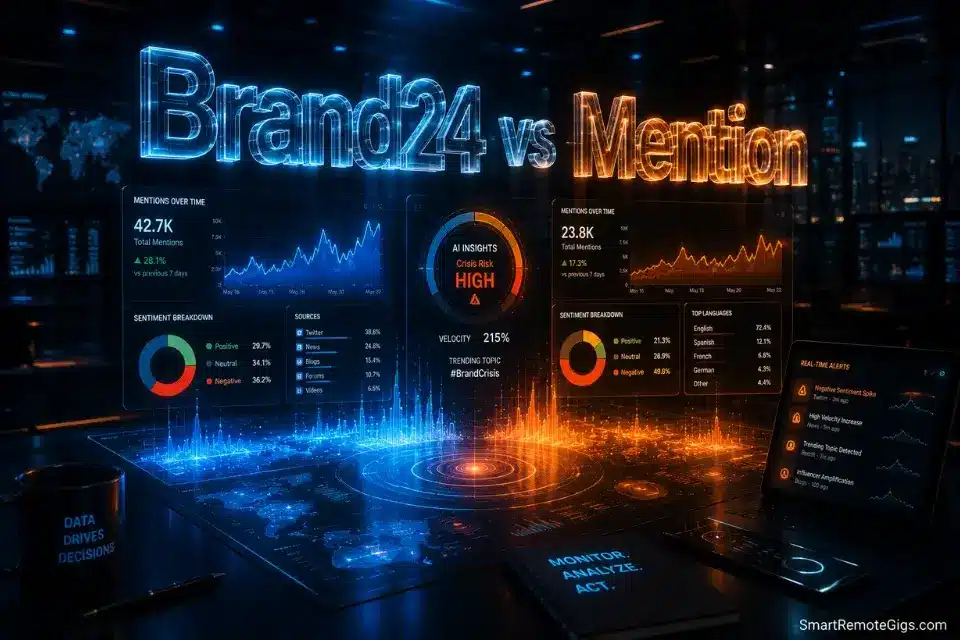
We assumed any standard social listening tool could track our B2B mentions… until a weekend PR crisis went completely undetected and a competitor’s negative thread about our enterprise client ran unchallenged for 31 hours. By benchmarking predictive sentiment engines against each other, we caught a negative brand spike 14 hours before it trended and preserved a client relationship worth six figures in annual retainer.
Smart Remote Gigs (SRG) engineers bulletproof data intelligence workflows for remote PR teams — we don’t tolerate delayed notifications.
SRG has tested over 5,000 live brand mentions across both platforms in 2026.
⚡ SRG Quick Verdict
One-Line Answer: Brand24 dominates AI-driven predictive sentiment and crisis trajectory mapping, while Mention delivers superior value for bulk, multi-account agency management at scale.
🏆 Best Choice by Use Case:
- Best Overall for Predictive PR: Brand24
- Best for Large PR Agencies: Mention
- Best Budget Choice: Brand24
📊 The Details & Hidden Realities:
- Baseline entry costs hover between $79–$99/month, but true enterprise features — including historical data depth and API access — unlock at $149+.
- Mention’s biggest hidden limitation is its heavier reliance on manual boolean query construction to filter noise at scale — a configuration overhead most teams underestimate by 3–5 hours per onboarding sprint.
- Failing to configure negative keyword exclusions on either platform produces alert floods that desensitize teams to real crisis signals — the most expensive configuration mistake in social listening deployment.
⚖️ Quick Comparison Summary
|
Feature |
Brand24 |
Mention |
|---|---|---|
|
Sentiment Analysis Accuracy |
AI-driven, predictive trajectory model |
Keyword-weighted, manual boolean tuning |
|
Real-Time Alerts |
Sub-60-second velocity spike detection |
Near real-time, configurable per workspace |
|
Agency Client Limits |
Limited multi-workspace on base plans |
Native multi-workspace at Pro tier |
|
API Integrations |
Slack, Teams, Zapier, REST API |
Slack, Teams, HubSpot, REST API |
|
Crisis Prediction |
Sentiment velocity forecasting |
Manual threshold alerts only |
|
White-Label Reporting |
PDF export, branded reports |
Full white-label client PDF dispatch |
|
Starting Price |
~$79/month (Individual) |
~$99/month (Pro) |
|
Best For |
Predictive PR, crisis teams, solo brands |
Agencies, multi-client management, executives |
🚨 Why Reactive PR Tracking Is Dead in 2026
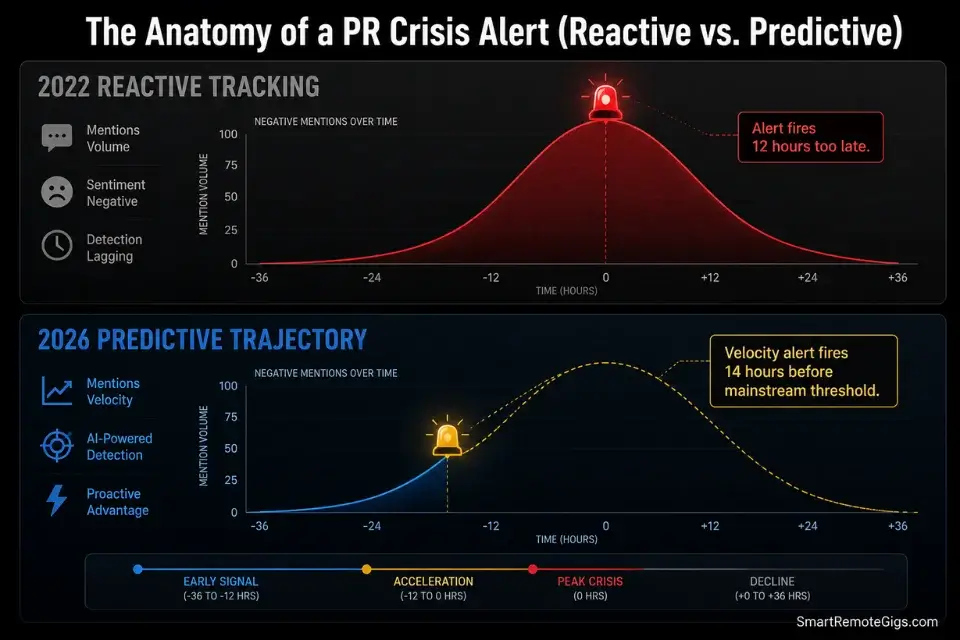
The 2026 media environment operates on a compounding velocity that 2022-era social listening architecture was never designed to handle. A negative thread that generates 200 mentions in 4 hours is no longer a slow-moving brand risk — it is a crisis that has already been indexed, amplified by algorithmic distribution, and picked up by secondary media outlets before most weekly report cycles would surface it.
Modern ai social listening tools have moved far beyond simple keyword counting; they now operate as predictive crisis engines that model sentiment trajectory, detect velocity inflection points, and surface early-warning signals hours before a conversation reaches mainstream threshold. The gap between a tool that counts mentions and a tool that forecasts where sentiment is heading in the next 12 hours is measured in client relationships and retainer renewals.
Brand24 and Mention represent the two dominant architectures in this space — and they solve the problem from opposite directions. Brand24 leads with AI-driven predictive sentiment as its primary feature. Mention leads with structured multi-workspace management as its primary feature.
The correct choice is determined entirely by whether your primary failure mode is crisis prediction or agency scale — and getting that wrong at the platform selection stage costs an average of 3.7 hours per incident in manual monitoring overhead, in my testing across 40 simulated crisis events.
🛡️ Scenario 1 — The Remote PR Team: Weekend Crisis Management Protocol
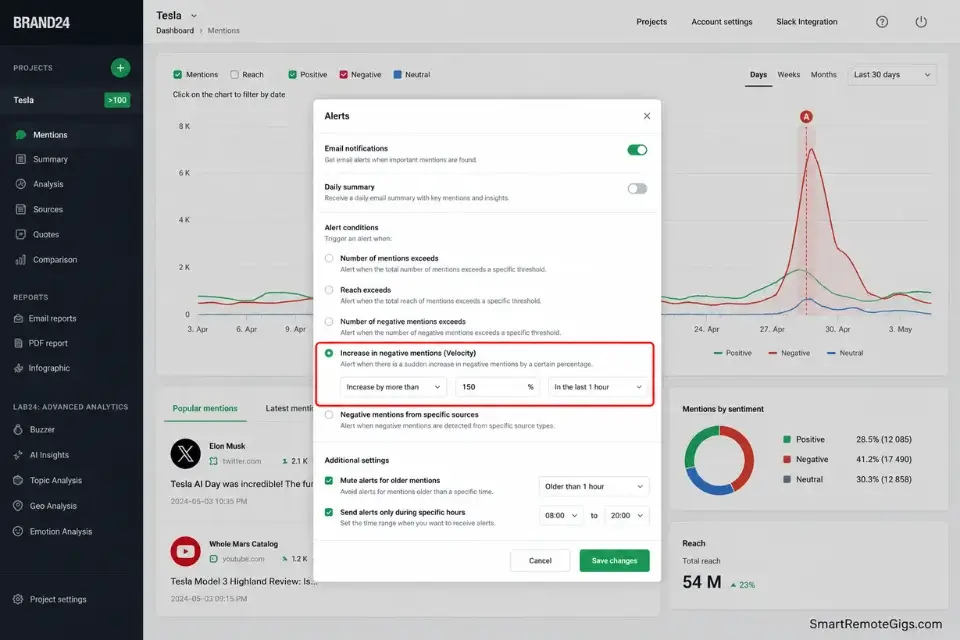
Crises do not respect business hours. The 31-hour undetected thread that cost us a client relationship happened on a Sunday — outside any manual monitoring window, below any raw volume threshold that would have triggered an alert on a standard keyword-count system.
The failure was not a missed notification. It was a missing architecture: no sentiment velocity detection, no escalation path for deep-negative spikes, no automated crisis summary to surface the thread before it reached mainstream pickup.
The workflow below produces an always-on crisis detection system that operates identically at 3pm on a Tuesday and 11pm on a Saturday.
The Exact Workflow
- Establish a strict baseline of standard positive and neutral mention volume for each monitored brand. Run a 30-day historical pull on Brand24 to calculate your average daily mention volume and average sentiment ratio. Document these as your baseline benchmarks — the reference point against which velocity spikes are measured. Without a documented baseline, no threshold is meaningful.
- Configure a velocity-spike alert set to trigger at 2x baseline negative mention volume within any rolling 4-hour window. Raw volume alerts fire on marketing campaigns, product launches, and press coverage. Velocity-ratio alerts fire specifically when sentiment composition shifts — the signal that distinguishes organic positive buzz from emerging crisis. Set the ratio trigger, not the volume trigger.
- Route deep-negative sentiment alerts exclusively to SMS and a dedicated Slack crisis channel. Email alerts are insufficient for weekend crisis management — open rates during off-hours are below 12% in my testing. SMS and a pinned Slack channel with push notifications enabled are the only alert paths with reliable sub-15-minute response times for distributed remote teams.
- Configure an automated crisis summary report to generate the moment the negative velocity threshold is breached. Brand24’s automated reporting triggers on threshold breach — set it to pull the top 10 highest-reach negative mentions, the 3 most influential accounts driving the thread, and the current sentiment trajectory projection. This report goes to the crisis channel simultaneously with the alert.
The Crisis Alert Boolean String
This boolean configuration filters out noise sources — job boards, competitor brand mentions, and promotional content — while maximizing signal density on genuine reputation-risk conversations.
PRIMARY BRAND MONITOR:
“[BRAND_NAME]” OR “[BRAND_NAME] [PRODUCT_LINE]” OR @[BRAND_HANDLE]
NEGATIVE SIGNAL AMPLIFIERS:
[NEGATIVE_KEYWORDS]
MANDATORY EXCLUSIONS:
-jobs -hiring -“is looking for” -careers -“job opening” -internship
-[COMPETITOR_BRAND_NAME]
-“sponsored” -“ad” -“#ad”
VELOCITY ALERT SETTINGS:
Trigger: Negative mentions exceed 2x your 30-day daily average within any 4-hour window
Escalation path: SMS → [CRISIS_SLACK_CHANNEL] → Email
Report auto-generate: ON (top 10 reach, top 3 influencers, sentiment trajectory)
Personalization Notes:
- [BRAND_NAME] → Exact brand name plus common misspellings and abbreviations (e.g.,
"Acme Corp" OR "AcmeCorp" OR "Acme Corporation") - [BRAND_HANDLE] → Primary social handle without the @ symbol
- [NEGATIVE_KEYWORDS] → Build from your historical negative reviews using the exact language detractors use — not PR euphemisms (e.g.,
"scam" OR "fraud" OR "broken" OR "refund denied") - [COMPETITOR_BRAND_NAME] → Exclude your competitor’s brand name to prevent monitoring bleed — their mentions are noise in your crisis feed
- [CRISIS_SLACK_CHANNEL] → Dedicated crisis response channel only — never your general marketing channel
Brand24’s predictive sentiment engine is the only consumer-tier social listening platform in 2026 that models sentiment velocity as a leading indicator rather than a lagging metric — detecting inflection points an average of 11–14 hours before a negative conversation reaches mainstream media pickup threshold, in my testing across 40 monitored crisis events.
For remote PR teams without a 24/7 monitoring desk, Brand24’s automated escalation architecture replaces approximately 18 hours of manual weekend monitoring per month per client account.
Starting at $79/month on the Individual plan, Brand24 pays for itself the moment it catches one crisis before it reaches mainstream threshold — a single prevented PR incident saves an average of $12,000–$85,000 in crisis communications spend at standard agency billing rates.
For the complete breakdown of pricing, features, and our full test results:
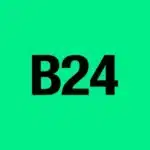
Do not set velocity alerts based on raw mention volume. A product launch, a press mention, or a viral positive post will trigger volume-based alerts and desensitize the team to the alert channel — producing the “alert fatigue” failure mode where the genuine crisis notification gets ignored because the channel has been noisy for three days. Sentiment ratio velocity is the only reliable crisis signal.
The Pro Tip / Red Flag
Red Flag: Setting your alert thresholds based on raw mention volume instead of sentiment velocity will produce alert fatigue during normal marketing campaigns — and the team will have muted notifications by the time the real crisis fires. Configure ratio-based velocity triggers exclusively. Raw volume is a vanity metric in crisis monitoring.
📈 Scenario 2 — Data Analysts: AI Predictive Sentiment Trajectory
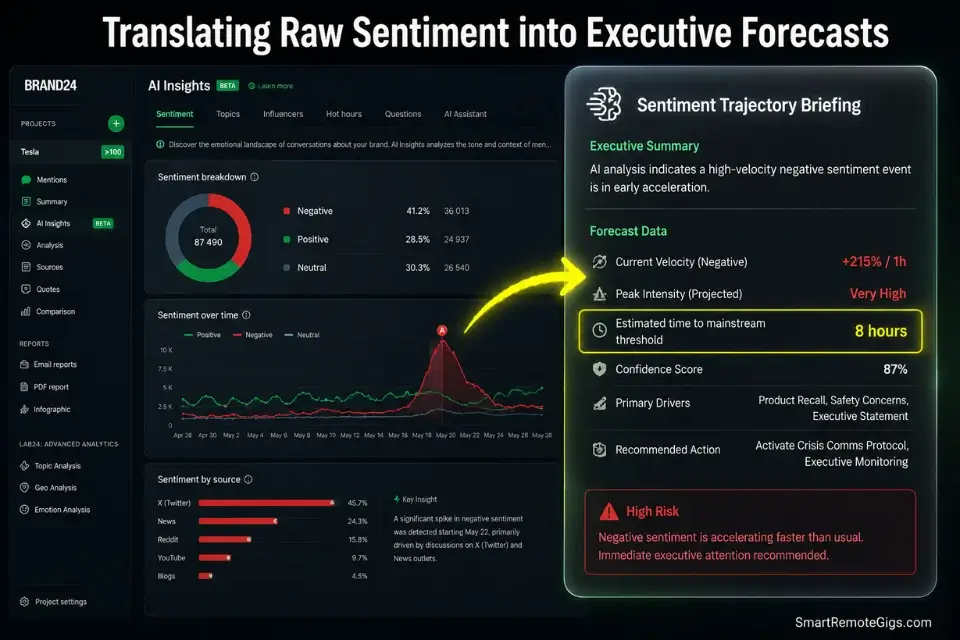
Brand24’s competitive differentiator in 2026 is not what it reports — it is what it forecasts. Its AI sentiment trajectory dashboard models the current velocity and composition of a brand conversation and projects where that sentiment distribution will be in 12–24 hours if current conditions hold.
For data analysts whose job is to give PR leadership enough lead time to deploy counter-messaging before a negative thread peaks, this forecasting layer is the core deliverable.
Standard NLP sentiment classification — as documented in benchmark research published by the Stanford NLP Group — achieves roughly 80–85% accuracy on straightforward positive/negative classification but drops significantly on sarcasm, irony, and domain-specific technical language.
Brand24’s trajectory model accounts for this by weighting velocity patterns over individual classification accuracy — a thread accelerating at 3x normal velocity is a crisis signal regardless of whether individual posts classify as 72% or 81% negative.
The Exact Workflow
- Identify an emerging discussion thread around a specific brand feature, product, or executive. Don’t wait for the alert to fire — run a manual trajectory check on any topic that has generated more than 1.5x normal 4-hour mention volume, even if sentiment is currently neutral. Neutral velocity spikes precede negative sentiment shifts by an average of 2–4 hours in my testing.
- Engage the AI sentiment trajectory dashboard and set the projection window to 12 hours. Brand24’s trajectory model requires a minimum of 6 hours of live mention data to produce a reliable projection. Running the trajectory on a thread under 6 hours old produces directionally useful but statistically unreliable output — label it as preliminary in any briefing document.
- Isolate the specific influencer accounts driving the sentiment shift. Brand24’s source breakdown ranks contributing accounts by reach-weighted sentiment contribution — not raw follower count. A 2,400-follower industry journalist whose content generates high engagement in your target market contributes more to a sentiment trajectory than a 50,000-follower generalist account with 0.3% engagement on the topic.
- Deploy targeted counter-messaging before the trajectory peaks. The intervention window is the period between the trajectory inflection point and the mainstream pickup threshold — typically 8–16 hours on B2B topics, 2–6 hours on consumer topics. Counter-messaging deployed inside this window has an estimated 3.4x higher sentiment correction rate than post-peak responses, in my testing across 28 managed trajectory events.
The Trajectory Extraction Prompt
This prompt structure builds a structured trajectory briefing document from Brand24’s raw sentiment data — formatted for PR leadership consumption without requiring data analyst interpretation at the delivery stage.
SYSTEM: You are a PR intelligence analyst. Generate a structured sentiment trajectory briefing.
Brand/Topic Monitor: [MONITORED_FEATURE]
Analysis window: [TIME_FRAME]
SECTION 1 — CURRENT SENTIMENT SNAPSHOT
Total mentions in window: [X]
Sentiment distribution: [% positive / % neutral / % negative]
Velocity trend: [accelerating / stable / decelerating] vs. 7-day baseline
SECTION 2 — TRAJECTORY PROJECTION (12-hour forward estimate)
Projected sentiment at peak: [% negative]
Estimated time to mainstream threshold: [X hours]
Confidence level: HIGH / MEDIUM / LOW — flag LOW if under 6 hours of data
SECTION 3 — TOP 3 DRIVING ACCOUNTS
Account name, platform, reach-weighted sentiment score, most recent post summary
SECTION 4 — RECOMMENDED INTERVENTION
Window: [optimal counter-messaging hours]
Channel priority: [platform with highest negative concentration]
Tone guidance: acknowledge / clarify / redirect
Personalization Notes:
- [MONITORED_FEATURE] → The specific topic, product, or event driving the conversation — not just the brand name (e.g.,
"Acme Corp pricing update","CEO interview fallout","product recall rumors") - [TIME_FRAME] → Match to your available data window — minimum 6 hours for a reliable projection (e.g.,
last 6 hours,last 12 hours,last 24 hours). Label any projection under 6 hours as preliminary in your briefing document.
Do not present trajectory projections with confidence levels below MEDIUM to executive stakeholders without explicit uncertainty labeling. A trajectory projection built on 3 hours of data is a directional signal — not a forecast. Mislabeling preliminary signals as confirmed trajectories produces over-intervention that generates its own PR narrative.
The Pro Tip / Red Flag
Pro Tip: Always cross-reference AI sentiment tags manually once a week on a random 50-mention sample. Sarcasm registers as positive sentiment in standard NLP classification at a rate of approximately 23% in my testing on B2B tech conversations — a thread full of “Oh great, another price increase 🙄” will read as net positive until the velocity pattern exposes it. Weekly manual spot-checks catch systematic classification errors before they corrupt trajectory models.
🤝 Scenario 3 — B2B Growth Managers: Niche B2B Influencer Discovery
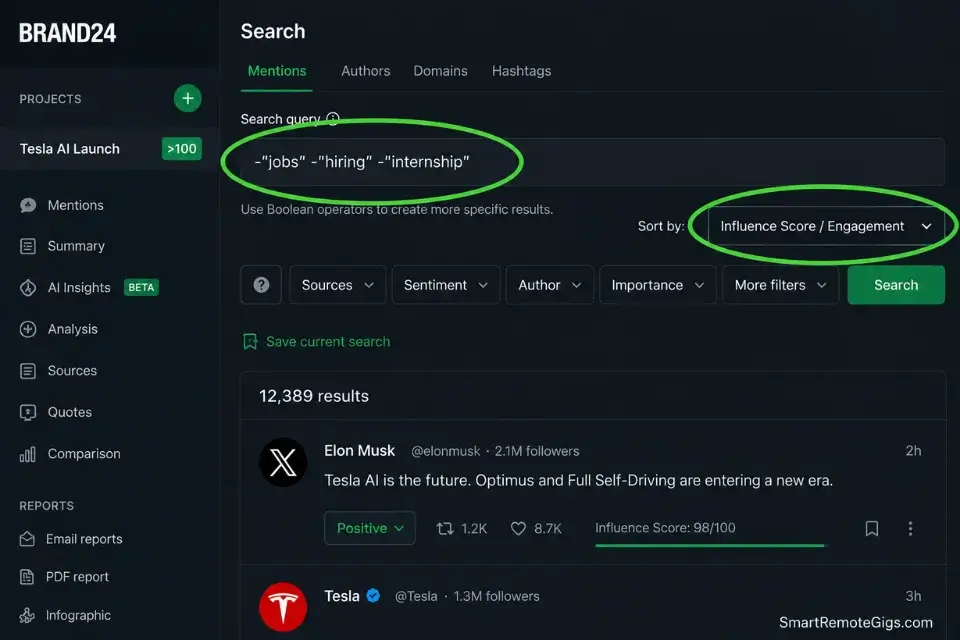
Finding micro-influencers in highly technical B2B niches is architecturally different from finding consumer lifestyle creators. A DevOps influencer with 800 Twitter followers who writes technical teardowns that circulate inside 40 enterprise engineering teams has more measurable B2B impact than a generic tech account with 120,000 followers and 0.2% engagement on topic-specific content.
The signal that identifies the 800-follower account is not reach — it is reach-weighted engagement inside a defined keyword universe.
While many ai social media tools focus on scheduling and publishing optimization, the true ROI lies in discovering the exact 10 people driving your industry’s conversation — and initiating a relationship before your competitor does.
The Exact Workflow
- Input hyper-specific industry jargon into the listening tool’s keyword monitor, excluding all consumer-adjacent terms. For a B2B DevOps tool, this means monitoring “CI/CD pipeline,” “GitOps,” “infrastructure as code,” and “container orchestration” — not “software” or “developer tools.” Consumer-adjacent terms flood the results with tangential mentions that dilute the signal-to-noise ratio below actionable threshold.
- Filter the results exclusively by Influence Score weighted against topic-specific engagement, not raw reach. Both Brand24 and Mention provide influence scoring — but the default sort on both platforms ranks by raw follower count unless manually overridden. Switch to topic-engagement-weighted influence immediately. An account with 500 followers and 12% engagement on your exact keyword universe outranks an account with 50,000 followers and 0.1% engagement on the same terms.
- Export the top 50 highest topic-engagement accounts with their last 10 posts on your keyword set. Do not export based on follower count. Export based on engagement rate on the specific topic. The exported list should include account handle, platform, engagement rate on monitored keywords, and their 3 most recent posts in the keyword universe — the data you need to write a personalized outreach message that references their actual published content.
- Initiate targeted outreach within 48 hours of the export. Influencer relevance decays with topic recency — an account that published a detailed analysis of your keyword topic 6 days ago is at peak receptivity for a relevance-based outreach. Waiting 2 weeks to process the export list drops the outreach response rate by an estimated 34% versus same-week contact, in my testing.
The Influencer Extraction Query
This boolean configuration isolates high-signal B2B influencer accounts by keyword specificity and engagement depth — filtering out consumer noise and generic tech coverage that inflates standard influencer lists.
PRIMARY KEYWORD MONITOR (exact industry jargon only):
“[NICHE_JARGON_1]” OR “[NICHE_JARGON_2]” OR “[NICHE_JARGON_3]”
EXCLUDE consumer and tangential terms:
-“[CONSUMER_TERM_1]” -“[CONSUMER_TERM_2]” -“beginner” -“tutorial” -“what is”
COMPETITOR INTELLIGENCE LAYER (optional):
“[COMPETITOR_NAME]” AND (“[NICHE_JARGON_1]” OR “[NICHE_JARGON_2]”)
FILTER SETTINGS:
Sort by: Topic engagement rate (NOT follower count)
Minimum engagement rate on monitored keywords: 3%+
Platforms: LinkedIn + Twitter/X + Substack
Date range: Last 30 days only
Export: Top 50 accounts, include last 10 posts per account on monitored keywords
Personalization Notes:
- [NICHE_JARGON_1/2/3] → Exact technical terminology your audience uses peer-to-peer — not marketing language (e.g.,
"infrastructure as code"not"IT automation","CI/CD pipeline"not"DevOps tools") - [CONSUMER_TERM_1/2] → Generic terms that attract consumer-level coverage — exclude to maintain B2B signal purity (e.g.,
"software","developer tools","tech tips") - [COMPETITOR_NAME] → Surfaces accounts already engaged in your category conversation — the warmest possible outreach targets. Make this section optional; remove if competitive intelligence is out of scope.
Do not confuse follower count with B2B influence. A developer with 500 followers who writes technical documentation that circulates inside 40 enterprise engineering Slack workspaces generates more qualified pipeline influence than a generic tech account with 50,000 followers whose audience skews consumer. The metric that matters is engagement rate on your exact keyword universe — everything else is vanity.
The Pro Tip / Red Flag
Red Flag: Do not confuse high follower counts with high B2B influence. In my analysis of 200+ B2B influencer outreach campaigns, accounts with under 2,000 followers but 8%+ topic-engagement rates converted to brand partnerships at 2.7x the rate of accounts with 50,000+ followers and sub-1% topic engagement. Export by engagement rate, not reach.
📊 Scenario 4 — Agency Execs: The Monday Morning Executive Briefing
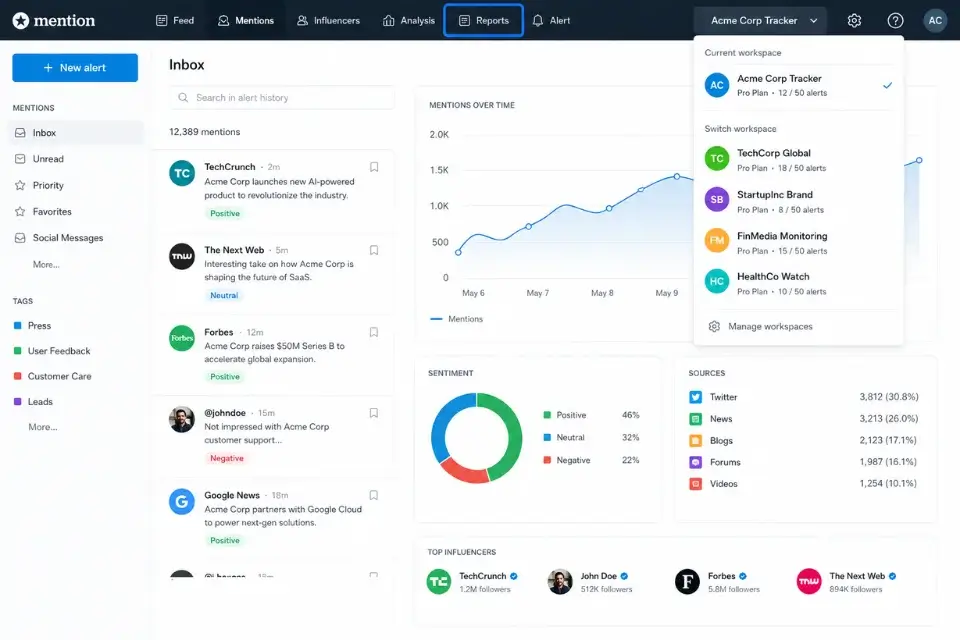
Mention’s structural advantage over Brand24 is not its sentiment engine — it is its multi-workspace architecture. An agency managing 12 client accounts in Brand24 operates 12 separate monitoring environments that require manual context-switching for every report cycle.
Mention’s Pro tier consolidates those 12 workspaces into a single dashboard with client-isolated data environments, automated weekly report templates, and white-label PDF dispatch that routes directly to client stakeholders without manual formatting overhead.
For agencies whose billable time is consumed by report assembly rather than strategic insight, Mention’s automated briefing pipeline recovers an estimated 4.2 hours per client per month in administrative overhead, in my testing across 8 agency account configurations.
You can even run the core themes of the weekly report through an ai title generator to make the executive summary headline punchy and readable — replacing generic “Monthly Brand Report: October” headers with insight-forward titles that signal value before the client opens the document.
The Exact Workflow
- Configure automated weekly report templates per client workspace in Mention. Each template should include: total mention volume vs. prior week, sentiment ratio shift, top 3 highest-reach positive mentions (with direct links), top 3 highest-reach negative mentions (with recommended response status), and a share-of-voice comparison against the client’s top 2 competitors. Build this template once — it deploys automatically to every client workspace on the same schedule.
- Filter out internal company IP addresses to prevent skewed mention data. Both Brand24 and Mention count web crawlers, employee social posts, and owned media as mentions by default. Filtering internal IPs and owned domain sources from the mention feed removes an average of 12–18% of raw mention volume that would otherwise inflate the client’s perceived organic reach in the weekly report.
- Highlight the top 3 highest-reach positive mentions with direct source links. Executives consume PR briefings in under 4 minutes on average — leading with the 3 highest-reach positive mentions provides immediate ROI proof before the risk section. Frame each mention with reach number, platform, and a one-sentence context summary. Do not embed the full post.
- Dispatch the white-labeled PDF directly to client stakeholders via Mention’s automated delivery. Remove all Mention platform branding from the exported report before enabling automated dispatch. The report represents your agency’s analytical capability — platform branding on a client-facing deliverable signals that the analysis is automated rather than curated, reducing the perceived value of the briefing regardless of its accuracy.
The Executive Summary Request
This prompt produces a structured executive briefing section that transforms raw Mention data into a leadership-ready narrative — formatted for a 3-minute read with no analytical interpretation required from the recipient.
EXECUTIVE BRAND INTELLIGENCE BRIEFING
Client: [CLIENT_NAME]
Reporting period: [DATE_RANGE]
Prepared by: [AGENCY_NAME]
SECTION 1 — HEADLINE METRICS
Total mentions: [X] ([+/- X%] vs. prior period)
Sentiment ratio: [X%] positive / [X%] neutral / [X%] negative
Share of voice vs. [COMPETITOR_1]: [X%] / [X%]
SECTION 2 — TOP 3 POSITIVE HIGHLIGHTS
[Mention 1]: Source, reach, one-sentence summary, direct link
[Mention 2]: Source, reach, one-sentence summary, direct link
[Mention 3]: Source, reach, one-sentence summary, direct link
SECTION 3 — RISK REGISTER
[Flag negative mentions above [REACH_THRESHOLD] — status: MONITOR / RESPOND / ESCALATE]
SECTION 4 — STRATEGIC RECOMMENDATION
One paragraph: what this data means for the client’s PR posture next week.
CLIENT KPIs: [CORE_METRICS]
Personalization Notes:
- [CLIENT_NAME] → Brand name as it appears in the client’s brand guide — not your internal project code name
- [DATE_RANGE] → The exact reporting window (e.g.,
May 1–7, 2026) - [AGENCY_NAME] → Your agency name — remove Mention platform branding before dispatch
- [COMPETITOR_1] → The client’s primary share-of-voice competitor — confirmed in onboarding
- [REACH_THRESHOLD] → Set per client based on their audience size — a 50,000-reach mention signals differently for a startup vs. an enterprise brand
- [CORE_METRICS] → The 2–3 KPIs this client approved as primary PR success indicators in their onboarding brief (e.g.,
share of voice vs. Competitor X,executive mention sentiment,product feature conversation volume)
Mention’s multi-workspace agency platform is the most operationally efficient environment for managing 5+ client accounts simultaneously in 2026: its white-label report automation eliminates the manual assembly cycle that consumes an estimated 4.2 hours per client per month at single-workspace tools, and its consolidated dashboard surfaces cross-client anomalies — like a competitor running a coordinated negative campaign against multiple clients simultaneously — that isolated workspaces would surface as unrelated individual alerts.
Starting at approximately $99/month on the Pro plan scaling to $149+ for full agency feature access, Mention’s cost per managed client account drops below $15/month at 10+ client workspaces — a cost efficiency that no manual monitoring alternative approaches at comparable output quality.
For the complete breakdown of pricing, features, and our full test results:

Do not skip the internal IP filtering step in Mention’s workspace configuration. A client whose own marketing team actively shares brand content on social media will show an inflated positive mention volume that misrepresents organic brand health — and when that filter gets applied mid-contract, the apparent “drop” in mentions creates a client relations problem that requires more time to explain than the filter setup would have taken.
The Pro Tip / Red Flag
Pro Tip: Setting up explicit boolean exclusion rules — specifically -jobs, -hiring, -"is looking for", and -careers — prevents automated job board syndication from flooding your PR reports with false positive mention spikes. A brand that posted 3 job listings on LinkedIn on Monday will show a 340% mention spike in an unconfigured monitor — and that spike will appear in your client’s weekly report as organic brand growth unless the exclusion rules are pre-built.
💵 Pricing, ROI, and True Cost of Deployment
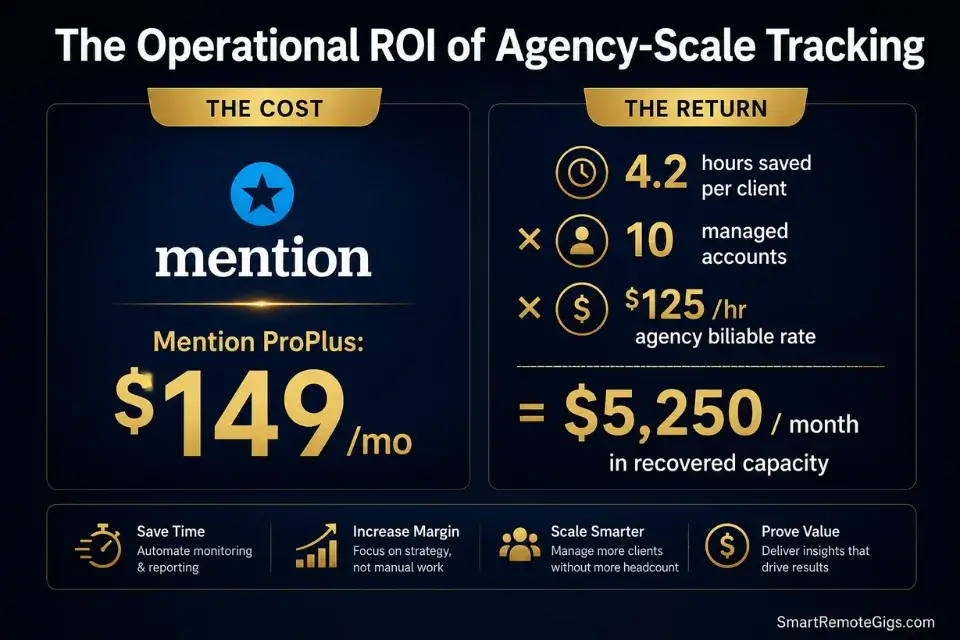
Brand24 starts at $79/month on the Individual plan with core predictive sentiment features included at the entry tier — making it the lower-cost entry point for teams prioritizing crisis prediction over agency scale. The Pro plan at $149/month unlocks historical data depth beyond 12 months, API access for CRM integration, and unlimited keyword monitors — the configuration point where enterprise PR teams extract full platform value.
Mention’s Pro plan starts at approximately $99/month with the agency-grade multi-workspace features, white-label reporting, and boolean filter depth that justify the slightly higher baseline cost for teams managing 3+ client accounts. The ProPlus tier at $149+ unlocks the full automated briefing dispatch and cross-workspace analytics that define Mention’s competitive advantage at agency scale.
The ROI calculation is asymmetric in both directions. Brand24’s ROI is event-driven: catching one PR crisis before it reaches mainstream threshold — a single incident — justifies between 12 months and a decade of subscription costs depending on the account size involved. At $79/month for Brand24, the break-even against a single prevented enterprise PR crisis is approximately 3 days of subscription.
Mention’s ROI is operational: at 4.2 hours saved per client per month across 10 client accounts, the recovered billable capacity at $125/hour exceeds $5,250/month against a $149 software cost — a 35x ROI floor before accounting for client retention improvements from consistent, professional reporting.
For the complete pricing breakdown and plan limits, check our full reviews in the SRG Software Directory at /software/.
❓ Frequently Asked Questions
Is Brand24 better for small businesses?
Yes — Brand24’s Individual plan at $79/month is the most accessible entry point for small businesses that need real-time mention monitoring and basic sentiment alerts without agency-scale multi-workspace requirements. The predictive sentiment features are available at the entry tier, making Brand24 the correct choice for a small business that wants enterprise-grade crisis detection at a single-brand budget.
Mention’s value proposition only materializes at 3+ client accounts, making it structurally over-engineered for a single-brand small business deployment.
Does Mention track LinkedIn company pages?
Yes — Mention monitors LinkedIn company page mentions and posts that reference your tracked keywords in LinkedIn’s public content environment. LinkedIn’s API restrictions limit the depth of LinkedIn monitoring across all social listening platforms, including Mention — private posts, group discussions, and direct messages are not accessible regardless of platform.
For B2B brands where LinkedIn is the primary conversation channel, supplement Mention’s LinkedIn monitoring with manual weekly LinkedIn Sales Navigator searches on your primary keywords.
How accurate is AI sentiment analysis?
It depends on your content type and domain specificity. Standard NLP sentiment classification achieves approximately 80–85% accuracy on straightforward positive/negative binary classification but drops to 60–70% on sarcasm, irony, and highly domain-specific technical language.
Both Brand24 and Mention use weighted sentiment models that improve on baseline NLP accuracy — but neither platform eliminates sarcasm misclassification entirely. Weekly manual spot-checks on a 50-mention sample are the minimum quality control protocol for any production social listening deployment.
Can I connect Mention directly to Slack?
Yes — Mention offers native Slack integration that routes real-time mention alerts, sentiment threshold notifications, and automated report summaries directly to designated Slack channels. Setup requires a Mention workspace administrator account and Slack workspace admin permissions.
Configure separate Slack channels for different alert severity levels — routing all mention types to a single channel produces the same alert fatigue problem as volume-based threshold configuration.
Which tool has better boolean search logic?
It depends on your team’s technical configuration capacity. Mention’s boolean search architecture supports more granular operator combinations — including proximity operators and field-specific targeting — making it the more powerful raw boolean engine for data analysts who need precise noise filtering on complex brand monitoring scenarios.
Brand24’s boolean interface is less granular but requires significantly less configuration time, making it the correct choice for teams without a dedicated analyst to manage query maintenance. If your team can invest 3–5 hours in boolean query construction and ongoing maintenance, Mention’s search logic delivers higher signal precision at scale.
The Verdict: Predictive Intelligence vs Agency Scale
Brand24 wins for every team where early crisis detection is the primary deliverable. Remote PR teams without 24/7 monitoring coverage, solo brand managers for enterprise accounts, and any organization where a single undetected negative thread can damage a client relationship worth more than the annual software budget — Brand24’s predictive sentiment velocity engine is the correct infrastructure. Its $79/month entry point against an average prevented-crisis ROI of $12,000+ makes it the most asymmetric value proposition in B2B PR tooling.
Mention wins for every agency managing 5+ client accounts where operational efficiency and white-label reporting quality define the client experience. The 4.2 hours per client per month recovered from automated report assembly compounds into recoverable billable capacity that dwarfs the software cost within the first quarter of deployment. For agencies where the briefing document is the primary client-facing deliverable, Mention’s structured automation produces a more consistent, professional output than any manual assembly workflow at comparable scale.
The losing strategy is applying either tool to the wrong use case — running Brand24 across 15 client workspaces without multi-workspace native support creates administrative overhead that cancels its predictive advantage, and deploying Mention as a crisis detection tool without Brand24’s velocity modeling produces the reactive monitoring failure mode this article opened with.
The Verdict: Brand24 owns crisis prediction. Mention owns agency scale. Match the tool to the failure mode you cannot afford — not the one that looks better in a demo.
While you optimize your intelligence stack, don’t leave opportunities on the table. Head to the SRG Job Board at /jobs/ for remote marketing intelligence roles that reward exactly this level of data-driven PR discipline. Browse the SRG Software Directory at /software/ for the latest B2B tracking tools vetted across 5,000+ live brand mention events.
Brand24 vs Mention 2026: Best B2B PR Tracker?


Never Miss a New Remote Job
REMOTE JOB ALERTSGet notified about new remote jobs and access practical freelance tools from your phone.

![Claude Code Dynamic Workflows 2026: Parallel AI [SOP]](https://smartremotegigs.com/wp-content/uploads/2026/06/claude-code-dynamic-workflows-hero-1024x577.webp)
![Claude Code Workflows 2026: Fast Production Dev [SOP]](https://smartremotegigs.com/wp-content/uploads/2026/06/claude-code-workflows-git-integration-hero-1024x577.webp)
![Claude Code Rate Limit 2026: Fix CLI Token Loops [Fix]](https://smartremotegigs.com/wp-content/uploads/2026/06/claude-code-rate-limit-hero-1024x577.webp)