12 Part-Time Remote Job Interview Questions & Answers (2026)
 ·
Last Updated: March 3, 2026 ·
27 min read
·
Last Updated: March 3, 2026 ·
27 min read 
The Virtual Barrier: Why Remote Interviews are Different in 2026
Preparing for part time remote job interview questions in 2026 requires a completely different strategy than traditional interviews. Hiring managers aren’t primarily worried about whether you can do the work—they’re terrified you’ll ghost them after two weeks or turn out to be an AI-assisted fraud who can’t actually deliver.

Question Category | Manager’s Secret Concern | Winning Answer Focus |
|---|---|---|
Reliability | Will you actually work? | Systems & Time-Blocking |
Technical | Will your Wi-Fi fail? | Redundancy & Hotspots |
Communication | Will you disappear? | Over-communication & Loom |
Schedule | Are you “over-employed”? | Fractional Commitment |
I’ve sat on both sides of the virtual desk. I’ve interviewed over 50 remote contractors for various projects and been interviewed by tech companies for remote roles. I’ve watched brilliant people lose opportunities because their Zoom background was chaotic or they couldn’t articulate their “deep work” system.
The “Virtual Void” is real in 2026. Remote hiring managers have been burned by candidates who ghosted after the first week, claimed technical failures for every missed deadline, or juggled so many part-time gigs they couldn’t focus on anything.
This guide isn’t theory—it’s the exact script I use to evaluate reliability in remote candidates, now reversed to help you prove yours.
The fundamental shift: Traditional interviews ask “Can you do the job?” Remote interviews ask “Can you manage yourself without supervision, maintain communication without physical presence, and deliver results without anyone watching?”
Your answers must demonstrate systems, not just skills. If you are a student preparing for your first real-world role, see our best remote jobs for college students to find positions that prioritize your academic growth.
The Verdict: The most important answer in any remote interview isn’t about your technical abilities—it’s about your setup. Hiring managers want to hear about your dedicated workspace, your backup internet, and your communication rituals. Skills can be taught; self-management systems can’t.
Section 1: Proving You Are the “Unsupervised Professional”
These questions evaluate whether you can work independently without constant supervision. Hiring managers need evidence you won’t require hand-holding or micromanagement.
Q1: How do you stay motivated and productive without an office environment or direct supervision?
What they’re actually asking: “Will you actually work when nobody’s watching, or will you binge Netflix while claiming to be ‘heads down on the project’?”
The wrong answer: “I’m just naturally self-motivated!” or “I love the freedom of working from home.” These are meaningless platitudes that signal you haven’t thought seriously about the challenge.
The winning answer framework:
“I use a structured time-blocking system where I work in 90-minute focused sprints with 15-minute breaks. I block these sessions in my calendar and treat them as non-negotiable appointments with myself.
At the start of each work session, I review my top three priorities for the day and eliminate all distractions—phone in another room, all notifications off, dedicated workspace with the door closed.
I track my completed tasks in [specific tool like Notion, Asana, or Trello] and send brief end-of-day updates to stakeholders showing what I accomplished and what’s queued for next session. This creates accountability even without supervision.
The physical environment matters too. I work from a dedicated home office with a door I can close, which signals to my family that I’m in ‘work mode’ and creates the mental boundary between work and personal time.”
Why this works: You’re describing a system, not just a personality trait. Systems can be verified and measured. You’ve shown you understand the psychological challenges of remote work and have proactive solutions.
The details that matter:
- Specific time-blocking method (90-minute sprints)
- Concrete tools (naming software shows you’ve actually implemented this)
- Physical boundaries (dedicated workspace)
- Communication habits (end-of-day updates)
Q2: Describe your home office setup and your strategy for minimizing distractions and noise.
What they’re actually asking: “Do you have a professional workspace, or will you be taking client calls with kids screaming in the background?”
The wrong answer: “I work from my couch” or “I can work anywhere—I’m flexible!” These signal unprofessionalism and inevitable quality issues.
The winning answer framework:
“I work from a dedicated home office in [specific room: spare bedroom, converted den, basement corner]. The space has a door I can close and lock, which eliminates household interruptions during work sessions.
For noise control, I use [specific solution]:
- Noise-canceling headphones (Sony WH-1000XM5 or similar)
- White noise machine outside the door to signal ‘do not disturb’ to family
- Acoustic panels if needed for video calls
My technical setup includes:
- Dedicated desk and ergonomic chair
- External monitor for productivity
- Professional webcam and lighting for video calls
- Wired ethernet connection for maximum stability
I’ve established household rules that when my office door is closed, I’m unavailable except for true emergencies. My family understands that my work sessions are protected time.”
Pro Tip: Mentioning a physical door that locks is a high-value trust signal for managers. It demonstrates you’ve thought about boundaries and can guarantee professional conditions for client calls and focused work.
Why this works: You’re proving you’ve invested in creating professional conditions at home. The specific equipment mentions show this isn’t aspirational—you’ve already built this setup.
If you don’t have a dedicated room: “I work from a dedicated corner of my [bedroom/living room] that I’ve set up as a workspace. I use a room divider to create visual separation and wear noise-canceling headphones during work sessions. I schedule my work hours during the quietest times in my household [early mornings before others wake, or evenings after kids are in bed] to minimize interruptions.”
The honesty balance: Don’t oversell. If you work from a small apartment, acknowledge it but demonstrate you’ve problem-solved around the constraints.
Q3: What is your redundancy plan if your internet fails, your laptop breaks, or your power goes out?

What they’re actually asking: “Will a minor technical issue become a crisis that stops all work, or do you have backup plans?”
The wrong answer: “I’ve never had problems” or “I’d just let you know I couldn’t work.” These signal you’re unprepared for inevitable technical failures.
The winning answer framework:
“I have multiple layers of backup for critical failures:
Internet redundancy:
- Primary: Home fiber/cable internet [50+ Mbps]
- Backup #1: Mobile hotspot via my phone [carrier name] with unlimited data
- Backup #2: Nearby coffee shop or library with public Wi-Fi for emergencies
- I test the mobile hotspot monthly to ensure it’s working when needed
Hardware redundancy:
- I keep my laptop plugged in and fully charged during work sessions
- Important files are backed up automatically to cloud storage [Google Drive, Dropbox] in real-time
- For critical projects, I have access to a backup device [tablet, old laptop, or family member’s computer] that can handle basic communication and file access
Communication backup:
- If my computer fails, I can communicate via phone using Slack mobile app or email
- I’d immediately notify stakeholders and provide an ETA for when I’ll be back online
Power backup:
- My work area has a UPS (uninterruptible power supply) that gives me 30-45 minutes to save work and communicate during outages
- [If applicable] My building has backup generators for extended outages”
Why this works: You’re demonstrating proactive risk management. Most candidates have never thought about these scenarios, so detailed backup plans signal professionalism and reliability.
The realistic version: You don’t need all of these. But having at least a mobile hotspot backup and cloud file sync is non-negotiable for remote work. If you don’t have these yet, say: “I’m in the process of setting up [specific redundancy] and will have it operational before my start date.”
Budget constraints: “I understand redundancy is critical. I currently have [what you have]. If internet reliability is essential for this role, I’m prepared to upgrade to a business-class connection or add a dedicated mobile hotspot within my first month.”
I have multiple layers of backup for critical failures. For a full list of the hardware and setup details you should mention to impress a hiring manager, check out our essential home office tech guide.
Section 2: The “Part-Time Paradox” (Efficiency vs. Availability)
Part-time remote roles create a unique tension: employers need high productivity during limited hours but can’t monitor your work constantly. These questions assess whether you understand this balance.
Q4: How do you ensure you deliver full-time quality work in part-time hours?
What they’re actually asking: “Are you actually efficient, or will you use ‘I only work 20 hours’ as an excuse for incomplete work?”
The wrong answer: “I work really fast” or “I’ll just work extra hours if needed.” The first is meaningless, the second signals poor boundaries.
The winning answer framework:
“I approach part-time work differently than full-time. Since my hours are limited, I’m ruthless about prioritization and elimination of low-value activities.
My efficiency strategies:
Deep work blocks: I structure my schedule around 90-minute focused sessions where I complete one significant task without interruption. Most people spread work across 8 hours with constant distractions. I compress the same output into 3-4 hours of protected time.
Communication batching: I check email and messages once per work session rather than constantly. This eliminates the productivity killer of context-switching. I respond to everything in a 30-minute batch at the end of my work session.
Clear prioritization: At the start of each work period, I identify the top 3 outcomes that matter most and focus exclusively on those. Everything else is explicitly deprioritized until high-impact work is done.
Deadline buffers: I build 20% buffer into all delivery estimates. If I think something takes 4 hours, I quote 5 hours. This absorbs unexpected complexity and maintains consistent quality without requiring overtime.
Async documentation: I over-communicate in writing so stakeholders have context without needing meetings. I use Loom to record quick video updates instead of scheduling synchronous check-ins.
The result is that my 20 hours of focused, strategic work often outproduces someone’s 40 hours of distracted, reactive work.”
Warning: Never say you’re “flexible anytime” or “can adjust my schedule as needed.” It signals a lack of professional structure and invites scope creep. Be specific about your availability windows and enforce them.
Why this works: You’re demonstrating you understand productivity fundamentals. The specific techniques (batching, deep work, buffers) prove you’ve actually implemented efficiency systems.
The red flag to avoid: Don’t imply you’ll regularly work beyond your contracted hours. “I sometimes work extra if needed” trains employers to expect unpaid overtime. Instead: “I structure my workload to consistently deliver within contracted hours.”
Q5: What are your specific availability windows, and how do you communicate your schedule to stakeholders?
What they’re actually asking: “Are you juggling multiple jobs and unable to commit, or do you have reliable, predictable availability?”
The wrong answer: “I’m available whenever you need me!” This sounds accommodating but signals you either don’t have other commitments (red flag: why not?) or you’ll overcommit and under-deliver.
The winning answer framework:
“I work [specific days and times]. For example: Tuesdays and Thursdays 9 AM-4 PM and Saturdays 10 AM-5 PM, totaling 20 hours weekly. These windows are consistent week to week, so stakeholders can rely on predictable availability.
How I communicate this:
Proactive transparency: During onboarding, I share my exact schedule with all stakeholders and block these hours as ‘Busy’ in shared calendars. I put my working hours in my email signature and Slack status.
Status updates: I send a brief message at the start and end of each work session:
- Start: ‘Online for today’s session until [time]. Top priorities: [list]’
- End: ‘Logging off. Completed: [summary]. Next session: [day/time]’
Response expectations: I set clear SLAs: ‘Messages sent during my work hours get same-day responses. Messages sent outside my hours will be addressed during my next session, typically within 24 hours.’
Emergency protocols: For truly urgent issues, I provide a phone number with explicit guidelines: ‘For emergencies that can’t wait [specific criteria], call me directly. Otherwise, I’ll address during my next scheduled session.’
The consistency factor: I’ve maintained this schedule for [timeframe], so my reliability is proven. Clients and colleagues learn they can depend on me during my windows and shouldn’t expect me outside them.”
Why this works: You’re demonstrating professional structure and boundary management. The detailed communication protocols prove you’ve thought about the logistical challenges of part-time coordination.
Flexibility within structure: “Within my scheduled hours, I’m highly available for meetings, calls, and synchronous collaboration. I can occasionally shift a work session with advance notice [e.g., move Tuesday to Wednesday if needed], but my total weekly hours and availability windows remain consistent.”
The over-employment concern: Hiring managers in 2026 worry about candidates secretly working multiple overlapping jobs. Your specific, bounded schedule demonstrates commitment: “These hours are exclusively dedicated to this role. My schedule allows me to give you my complete focus during our time together.”
Section 3: Advanced Communication & Conflict
These questions assess how you’ll handle the inevitable challenges of remote work—miscommunication, conflicts, and coordination issues—without in-person context.
Q6: How do you handle miscommunication or unclear instructions when working remotely?
What they’re actually asking: “Will you spin your wheels in silence, or will you proactively seek clarity?”
The wrong answer: “I just figure it out” or “I don’t usually have communication problems.” The first signals wasted time, the second signals overconfidence.
The winning answer framework:
“I use a structured clarification process to prevent wasted effort:
Immediate clarification: If instructions are unclear, I respond within 30 minutes with specific questions: ‘To ensure I’m aligned, can you clarify: [bullet list of specific ambiguities]? I want to confirm my understanding before starting.’
Document assumptions: If I can’t get immediate clarification, I document my interpretation: ‘Based on [X], I’m proceeding with [approach]. If this isn’t aligned with your vision, please let me know and I’ll adjust.’ This creates a feedback loop rather than waiting until the end to discover misalignment.
Over-communicate checkpoints: For longer projects, I share work-in-progress at 25%, 50%, and 75% completion: ‘Here’s where I am. Does this match your expectations, or should I adjust direction?’ This prevents investing 20 hours in the wrong direction.
Learn and adapt: After any miscommunication, I analyze what went wrong and propose better communication protocols going forward. For example, if written instructions proved insufficient, I might suggest: ‘For complex projects like this, could we do a quick 10-minute Loom video walkthrough upfront? That would prevent the confusion we just experienced.'”
Why this works: You’re showing proactive problem-solving, explicit communication, and continuous improvement—all critical for remote work success.
Q7: Describe a time you had a conflict with a remote colleague or manager. How did you resolve it?
What they’re actually asking: “Can you handle conflict professionally without in-person context, or will you ghost/passive-aggressively ignore issues?”
The wrong answer: “I don’t have conflicts” (unrealistic) or describing a conflict where you were clearly the victim (signals inability to self-reflect).
The winning answer framework (use STAR method):
Situation: “I was working with a client who repeatedly made last-minute requests outside my scheduled work hours and seemed frustrated when I didn’t respond immediately.”
Task: “I needed to reset expectations about my availability while maintaining a positive working relationship.”
Action: “I scheduled a video call to discuss openly. I approached it with empathy: ‘I’ve noticed some requests come in outside my scheduled hours. I want to make sure I’m meeting your needs while also maintaining the boundaries we agreed to. Can we discuss the best system?’
I learned they weren’t clear on my exact schedule. We co-created a solution:
- I’d check messages at 8 PM before bed for true emergencies (defined as [specific criteria])
- They’d mark urgent items with [URGENT] in the subject line
- For non-urgent items, I’d respond within 24 hours during my next session
I documented this agreement in writing and sent a recap email so we were aligned.”
Result: “The client appreciated the direct, professional approach. Miscommunication dropped by 90%, and we’ve now worked together successfully for 18 months. The key was addressing the issue proactively rather than letting resentment build.”
Why this works: You demonstrated emotional intelligence, direct communication, collaborative problem-solving, and documentation—all essential remote work skills.
Q8: How do you build relationships and rapport with colleagues you’ve never met in person?
What they’re actually asking: “Will you be a faceless, transactional worker, or will you integrate into our team culture?”
The winning answer framework:
“I’m intentional about relationship-building in remote environments because it doesn’t happen organically like in offices:
Video-first approach: I always turn my camera on during meetings and encourage others to do the same. Seeing facial expressions and body language builds trust faster than voice-only or text communication.
Personal context sharing: I share appropriate personal context in team channels—a quick story about my weekend, a photo of my workspace, updates about hobbies. This humanizes me beyond just task completion.
Over-communicate appreciation: I publicly acknowledge colleagues’ contributions in team channels: ‘Thanks to [Name] for the quick turnaround on this—it unblocked my work.’ Recognition builds goodwill remotely.
Informal check-ins: I occasionally send quick, non-work messages: ‘Hope you had a good weekend!’ or ‘How’s that project you were excited about going?’ These micro-interactions replicate water cooler conversations.
Virtual coffee chats: For key relationships, I suggest 15-minute informal video calls with no agenda—just getting to know each other. Most people appreciate the effort.
Loom videos instead of walls of text: When explaining complex topics, I record quick Loom videos. Seeing and hearing me creates more connection than reading long emails.”
Why this works: You’re demonstrating awareness that remote work requires active relationship maintenance and you have specific strategies to create connection.
Q9: What tools do you use for project management and communication, and how do you ensure nothing falls through the cracks?
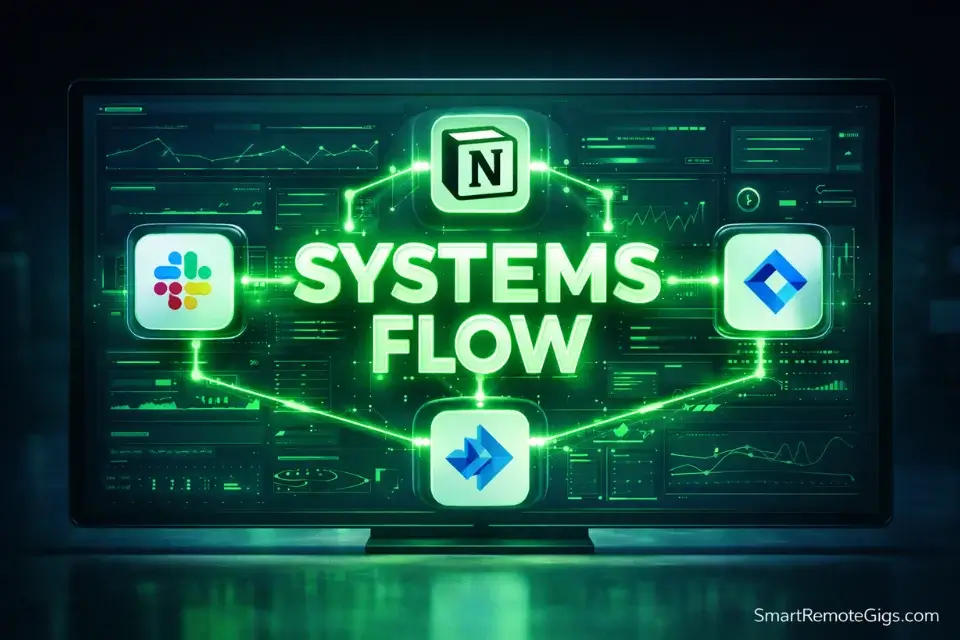
What they’re actually asking: “Are you organized enough to manage work without someone else tracking your tasks?”
The winning answer framework:
“I use a multi-layer system for organization:
Task management: [Specific tool: Notion, Asana, Todoist, Trello] where I track all active projects and break them into specific next actions. I review this daily at the start of each work session.
Communication: I consolidate communication in designated tools:
- Slack for quick synchronous conversation
- Email for formal communication and documentation
- Loom for complex explanations that need video
- [Project management tool] for task-specific updates
The critical habit: Daily reviews. At the end of every work session, I spend 10 minutes reviewing:
- What did I complete today?
- What’s blocked and needs follow-up?
- What’s my next session’s priority?
This prevents tasks from slipping through cracks.
Documentation: I document everything important in writing. After meetings or calls, I send recap emails: ‘To confirm, we agreed on: [bullets]. My next actions: [list]. Your next actions: [list]. Please correct any misunderstandings.’
Proactive status updates: I don’t wait for people to ask for updates. I send brief progress summaries at key milestones without being prompted. This builds trust that I’m on top of things.”
Why this works: You’re describing a comprehensive system with specific tools and rituals. The daily review habit is particularly powerful—it shows you have a forcing function to prevent dropped balls.
Q10: How do you manage your time when working on multiple projects or for multiple clients?
What they’re actually asking: “Will you get overwhelmed and miss deadlines when you have competing priorities?”
The winning answer framework:
“I use time-blocking combined with ruthless prioritization:
Calendar blocking: Every project gets dedicated time blocks in my calendar. If Project A gets Tuesdays 9 AM-12 PM and Project B gets Thursdays 1 PM-4 PM, those blocks are protected. I never work on Project A during Project B’s time.
Priority matrix: I categorize all tasks using Eisenhower’s framework:
- Urgent & Important: Do immediately
- Important but not urgent: Schedule in specific blocks
- Urgent but not important: Delegate or minimize
- Neither: Eliminate entirely
Buffer time: I reserve 20% of my schedule as flex capacity for unexpected urgent items or projects running long. This prevents one project’s challenges from cascading into another’s timeline.
Client communication: I’m transparent about capacity: ‘I have availability for [X hours] this week. Given your priorities, I recommend focusing on [A and B]. Item C would be scheduled for next week. Does that align with your needs?’
The hard boundary: When I’m at capacity, I say no to new commitments rather than overcommitting and under-delivering. If something truly urgent comes up, I proactively discuss timeline adjustments for existing projects rather than quietly letting deadlines slip.”
Why this works: You’re demonstrating strategic thinking, boundary management, and proactive communication—all essential for juggling multiple commitments.
Q11: What’s your approach to staying updated and learning new skills while working remotely?
What they’re actually asking: “Will you stagnate without in-office mentorship and osmosis learning, or are you self-directed about growth?”
The winning answer framework:
“I’m proactive about skill development because remote work requires self-directed learning:
Structured learning time: I block 2-3 hours weekly for learning—reading industry blogs, taking online courses, or practicing new tools. This isn’t aspirational; it’s scheduled like any other commitment.
Immediate application: When I learn something new, I look for opportunities to apply it within a week. Learning theory without practice doesn’t stick. For example, after learning [specific skill], I immediately used it on [real project].
Community engagement: I’m active in [specific Slack communities, Discord servers, Reddit communities] for my field. These async communities provide answers to questions and expose me to emerging trends.
Following thought leaders: I follow [specific experts, blogs, podcasts] to stay current on industry developments. I dedicate 30 minutes weekly to consuming this content.
Asking for feedback: I explicitly ask managers and colleagues: ‘What’s one skill that would make me more valuable to the team?’ Then I create a learning plan to develop that skill.
Documentation of learning: I keep a learning log tracking new skills and how I’ve applied them. This helps during performance reviews and makes growth visible.”
Why this works: You’re demonstrating self-direction and continuous improvement—signals that you won’t become obsolete without office-based mentorship.
Q12: How do you prevent burnout when your work and home life share the same physical space?
What they’re actually asking: “Will you flame out after 3 months because you can’t set boundaries, or can you sustain this long-term?”
The winning answer framework:
“I treat boundary management as a critical part of professional sustainability:
Physical boundaries: I work from a dedicated space that I can physically leave. When my workday ends, I close my laptop, clear my desk, and close the office door. The workspace disappears from my sight entirely until my next session.
Temporal boundaries: I have hard start and stop times. At my designated end time, I shut down completely—even if tasks are incomplete. This forces efficiency and prevents the ‘just 10 more minutes’ trap that leads to burnout.
Shutdown ritual: I have a 5-minute end-of-day routine:
- Review what I completed
- Note tomorrow’s top 3 priorities
- Close all apps
- Clear desk
- Engage a non-work activity immediately (walk, change clothes, exercise)
Digital boundaries: I disable work notifications outside work hours. Not silent—actually disabled. Seeing message previews destroys mental rest even without responding.
Recovery activities: I protect my off-time aggressively. I schedule exercise, hobbies, and social activities that require leaving the house and physically separating from my workspace.
Monitoring warning signs: I track my stress and energy levels. If I notice declining sleep quality, irritability, or dreading work sessions, I know I’m approaching burnout and need to reassess boundaries or workload.”
Why this works: You’re demonstrating sophisticated self-awareness and proactive boundary management. Hiring managers want employees who can sustain performance long-term, not burn brightly for 3 months then quit. Learn the exact strategies I use to balance a part-time remote job without burnout to sustain high performance over years, not weeks.
🛠️ Final Polish: The 10-Minute Pre-Call Ritual

The best interview answers in the world won’t matter if your technical setup is a disaster. Here’s your pre-interview checklist:
10 minutes before:
Test your technology:
- Launch Zoom/Teams/Google Meet and verify camera works
- Check audio with the test call feature
- Close all unnecessary programs that might cause lag
- Put phone on Do Not Disturb mode
Optimize your environment:
- Face a window or lamp for front lighting (avoid backlighting from windows behind you)
- Position camera at eye level (stack laptop on books if needed)
- Clear visible background of clutter or personal items
- Close door and inform household you’re unavailable
The Post-it note eye contact trick: Stick a small Post-it note with a smiley face directly on your webcam. This reminds you to look at the camera (which feels like eye contact to the interviewer) rather than at their face on screen (which looks like you’re looking down).
Have materials ready:
- Resume printed or on second monitor
- List of questions for interviewer
- Notepad for taking notes
- Water glass (interviews are long—you’ll need it)
Professional appearance:
- Dress one level above the company culture (if they wear t-shirts, wear a button-down)
- Solid colors work better on camera than busy patterns
- Test your appearance on camera before the call
5 minutes before:
- Take three deep breaths
- Review your key talking points
- Join the call 2 minutes early (shows you’re prepared, not scrambling)
Frequently Asked Questions
What are the best questions to ask a remote interviewer?
Asking thoughtful questions demonstrates you’re evaluating the role seriously, not just desperate for any job. Focus on understanding their remote culture and async workflows:
About remote work culture:
“How does your team handle async communication? What’s the expected response time for messages?”
“What tools does the team use for project management and collaboration?”
“How do you build team culture and connection in a remote environment?”
“What does success look like in the first 30, 60, and 90 days for this role?”
About work structure:
“Are there any required ‘core hours’ or synchronous meeting times I should be aware of?”
“How do you typically onboard remote employees? What does the first week look like?”
“What’s your approach to performance evaluation for remote workers?”
“Can you describe a recent project and how the remote team collaborated on it?”
About support and growth:
“What resources does the company provide for remote work (equipment stipends, learning budgets, etc.)?”
“How do you support professional development for remote employees?”
“What’s the typical career path for someone in this role?”
The strategic question: “Based on our conversation, do you have any concerns about my fit for this remote role that I can address?”
This gives you a chance to overcome objections in real-time rather than wondering why you didn’t get an offer.
What NOT to ask:
Don’t ask about benefits or time off in the first interview (it signals you’re focused on what you get rather than what you give)
Don’t ask questions whose answers are on the company website (signals you didn’t prepare)
Don’t ask “So, what does this company do?” (catastrophically unprepared)
How do I answer “Why do you want to work remotely?”
This question is a trap for people who give superficial answers about pajamas and flexibility. Hiring managers want to hear about productivity and professional growth, not lifestyle perks.
The wrong answer: “I hate commuting,” “I want more freedom,” “I can take care of my kids while working,” or “I just prefer working from home.” These signal you’re focused on convenience rather than performance.
The winning answer framework:
“I’m more productive in a remote environment for three specific reasons:
Focused deep work: In office environments, I found myself constantly interrupted by drop-by questions and impromptu meetings. Remote work allows me to structure my day around 90-minute blocks of deep, focused work where I accomplish significantly more than in a fragmented office day.
Optimized environment: I’ve invested in creating a workspace optimized for my work style—proper ergonomics, controlled noise, ideal lighting. I can’t control these factors in an office but have complete control at home.
Communication efficiency: Remote work forces intentional, documented communication rather than hallway conversations that leave no record. I find that async communication via written updates and Loom videos actually creates better clarity than verbal conversations that get forgotten.
Professional sustainability: Eliminating 90 minutes of daily commuting gives me time for exercise, family, and rest—which makes me a more focused, energized professional during work hours. I’m choosing remote work to optimize my performance, not to avoid work.”
The authenticity factor: It’s fine to mention work-life balance benefits, but frame them as enabling better work performance, not replacing work: “Remote work helps me maintain the energy and focus to do my best work” rather than “Remote work lets me run errands during the day.”
Can I wear casual clothes for a remote interview?
The short answer: No. The remote interview isn’t more casual than an in-person interview—it’s just physically separated.
The “One Level Up” rule: Dress one level more formal than the company’s everyday culture:
If the company is business formal (suits), wear a suit
If the company is business casual (button-downs, slacks), wear a blazer
If the company is casual (t-shirts, jeans), wear a button-down or sweater
If the company is very casual (hoodies, shorts), wear a nice t-shirt or polo
Why this matters: You’re signaling respect for the interview process and demonstrating you take the opportunity seriously. You can always dress more casually once hired, but underdressing in an interview signals poor judgment.
The remote-specific considerations:
What shows on camera: Your top half matters more than your bottom half (camera typically cuts off at waist). Invest in looking polished from waist up. Many people wear professional tops with comfortable bottoms—totally fine.
Solid colors over patterns: Busy patterns (stripes, small checks) can create weird effects on camera. Solid colors in blue, green, gray, or earth tones photograph well.
Avoid white: Pure white can wash you out on camera and create glare. Opt for off-white, cream, or light blue instead.
Test your outfit on camera: What looks good in person might look strange on video. Do a test call with a friend 30 minutes before your interview to ensure your outfit works on screen.
Jewelry and accessories: Avoid large, dangling earrings or multiple bracelets that might make noise when you gesture. Keep accessories minimal and professional.
Grooming matters: Even though you’re at home, shower, style your hair, and present yourself as you would for an in-person interview. It affects your confidence and the interviewer’s perception.
The psychology: Dressing professionally for your interview—even though you’re at home—puts you in a professional mindset. It’s a mental trigger that this is a professional interaction, not a casual video chat.
Conclusion: Closing the Deal Digitally

Remote interviews require proving not just your skills, but your systems. Hiring managers can’t see you working—they need evidence you’re reliable, organized, and self-directed.
The candidates who succeed: Demonstrate specific systems for time management, communication, and productivity. They answer with detailed examples, not generalities. They acknowledge the challenges of remote work and present proactive solutions.
The candidates who fail: Give vague, aspirational answers without specifics. They focus on lifestyle benefits of remote work rather than performance advantages. They lack professional setup and boundaries.
Your post-interview follow-up matters:
Send a thank-you email within 24 hours that:
- References specific conversation points from your interview
- Reiterates your interest and fit for the role
- Addresses any concerns that came up during conversation
- Provides any additional information requested
Make it personal and specific, not a generic template.
The waiting game: Remote hiring often moves slower than in-person. Companies interview candidates across time zones and coordinate schedules asynchronously. If you haven’t heard back in 5-7 business days, send a polite follow-up: “I wanted to check on the status of my application for [Role]. I remain very interested and happy to provide any additional information.”
The final mindset: You’re not begging for a job—you’re evaluating whether this role fits your professional goals. The best remote workers know their value and choose opportunities strategically. Approach interviews with confidence that you bring specific skills and systems that make you valuable.
The virtual barrier is real, but it’s crossable. Prove your systems and communicate your professionalism clearly. Ready to build a resume that gets you these interviews? Check out our guide on how to write a remote resume with no experience, or browse the 10 best websites to find legit part-time remote jobs to start applying today.

![AI Content Writer Jobs: [My 2026 Survival Playbook]](https://smartremotegigs.com/wp-content/uploads/2026/04/ai-content-writer-jobs-hero.webp)
![Remote Copywriting Jobs 2026: [High-Ticket Method]](https://smartremotegigs.com/wp-content/uploads/2026/04/remote-copywriting-jobs-hero.webp)
![Remote Technical Writing Jobs: [The $80K/Yr Guide]](https://smartremotegigs.com/wp-content/uploads/2026/04/remote-technical-writing-jobs-hero.webp)