Freelance Retainer Packages 2026: Steady MRR [Templates]
 ·
Last Updated: May 29, 2026
·
Last Updated: May 29, 2026
Starting every month at zero dollars in revenue is the fastest way to kill your freelance business.
One simple maintenance retainer structure locked in $6,500 of guaranteed baseline income on the first of every month.
Here is the exact retainer playbook — the copy-paste agreements to turn one-off projects into lifelong cash flow.
Smart Remote Gigs (SRG) builds resilient business architectures for freelancers who refuse to hustle for rent money.
SRG has analyzed over 1,200 active freelance retainer contracts to isolate the highest-converting models of 2026.
⚡ SRG Quick Summary:
One-Line Answer: A freelance retainer is a recurring contract where a client pays a fixed monthly fee in exchange for guaranteed access, maintenance, or a set volume of deliverables.
🚀 Quick Wins:
- Audit your past 12 months and identify your 3 best recurring clients — pull invoices and look for repeat engagement (Today)
- Map out a basic “peace of mind” maintenance tier with a defined scope ceiling and monthly flat fee (This Week)
- Pitch an ongoing fractional advisory retainer to your last major project client using the script in Scenario 1 (This Month)
📊 The Details & Hidden Realities:
- Most freelancers fail at retainers because they sell “rollover hours” instead of defined outcomes
- The biggest red flag beginners miss is failing to strictly enforce out-of-scope boundaries, turning a profitable retainer into an unlimited all-you-can-eat buffet
💼 Scenario 1 — The Strategic Advisor: The Fractional Retainer
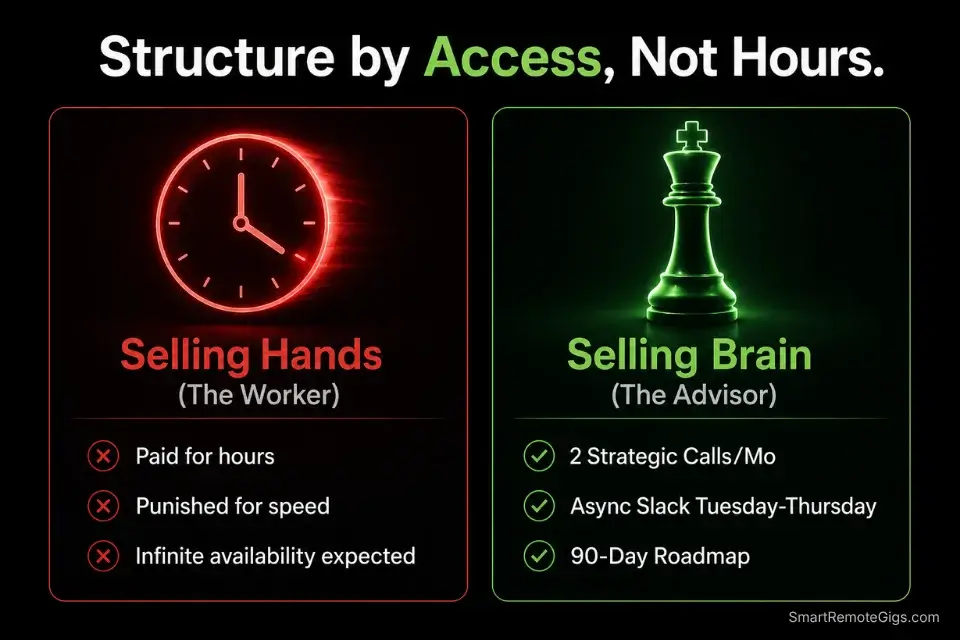
Most clients cannot afford a full-time CMO, CTO, or Head of Growth. But they need the thinking. That gap is your product. If you have domain expertise — real, field-tested expertise — you do not have to sell execution anymore.
You can sell the blueprint instead. If you are still charging for implementation when clients are desperately asking for direction, you are leaving 3–5x your current rate on the table every single month.
Selling your brain instead of your hands is the highest-leverage retainer model in 2026.
The Exact Playbook
- Audit your current client list for decision-making gaps. Which clients are asking you “what should we do?” before they ask you to do anything? That question is the signal. They are already treating you as an advisor. Formalize it.
- Define the access model, not the hour count. Your fractional retainer is not “10 hours a month.” It is “two 60-minute strategic calls per month, async Slack access Tuesday through Thursday, and a monthly priorities memo.” Structure it by touchpoint, not time.
- Price at the outcome, not the input. A fractional CMO who generates $40,000 in pipeline growth is not worth $150/hr. They are worth $4,000/month. Price the advisory retainer at 8–12% of the value you expect to generate. That is your anchor.
- Build a 90-day strategic roadmap as the onboarding deliverable. The first month of a fractional retainer should produce a 90-day action plan for their team. This document alone justifies the fee and locks in the client’s internal buy-in before execution starts.
- Set a quarterly review checkpoint. Every 90 days, you produce a results document: what was recommended, what was implemented, what moved. This is your renewal leverage. Numbers on paper beat promises in email every time.
When operating in a fractional capacity, leveraging elite client management tools ensures you can direct their internal teams asynchronously without getting dragged into daily Slack chaos — your calendar is the product, protect it accordingly.
The Fractional Executive Pitch Script
Use this exact script to transition from a “doer” to a strategic advisor commanding a monthly retainer.
Subject: A different kind of engagement — starting [PROPOSED_START_MONTH]
Hi [CLIENT_FIRST_NAME],
Working on [COMPLETED_PROJECT_NAME] showed me something: your team has strong execution capacity but limited strategic direction at the [FUNCTION, e.g., “marketing” / “product” / “growth”] layer.
I have an opening for one fractional advisory client starting [PROPOSED_START_MONTH].
Here is what it looks like:
WHAT YOU GET:
[CALL_FREQUENCY, e.g., “Two 60-minute”] strategic calls per month (recorded and transcribed)
Async access via [COMMUNICATION_CHANNEL, e.g., “a dedicated Slack channel”] — [ASYNC_DAYS, e.g., “Tuesday through Thursday”]
A monthly priorities memo: what to focus on, what to deprioritize, and why
A 90-day strategic roadmap delivered in Month 1
WHAT THIS IS NOT:
Implementation work (I do not build; I direct)
Unlimited availability (access windows are defined above)
A consulting report that sits in a drawer
Investment: $[MONTHLY_RATE]/month, billed on the 1st.
Minimum engagement: [MINIMUM_MONTHS, e.g., “3”] months.
If this is a fit, I can send the agreement this week.
[YOUR_NAME]
[YOUR_TITLE]- [CLIENT_FIRST_NAME] — First name only. This is a warm pitch to someone who already knows your work.
- [COMPLETED_PROJECT_NAME] — Reference a specific, successful project. Vague references signal you are mass-pitching.
- [FUNCTION] — The exact business function you are advising on: marketing, product, growth, operations, finance.
- [PROPOSED_START_MONTH] — Give a real date. Scarcity is real only when the timeline is specific.
- [CALL_FREQUENCY] — Two calls is the standard. One feels thin; three becomes a job.
- [COMMUNICATION_CHANNEL] — Dedicated Slack channel, Voxer, or Loom thread. Never your personal DMs.
- [ASYNC_DAYS] — Hard windows only. “Tuesday through Thursday” protects your deep work days.
- [MONTHLY_RATE] — $3,000 is the entry floor for fractional advisory. $5,000+ for senior domain expertise with documented results.
- [MINIMUM_MONTHS] — Three months minimum. Strategy takes 90 days to show measurable results.
- [YOUR_TITLE] — Your advisory title, not your execution role. “Fractional CMO” not “Freelance Copywriter.”
The Pro Tip / Red Flag
Pro Tip: Cap your fractional retainer by “access” — two 60-minute strategic calls a month plus private Slack access — rather than hours worked. You are billing for the blueprint, not the bricklaying. The moment you start tracking hours on an advisory retainer, you have converted it back to an hourly model with extra steps.
🛡️ Scenario 2 — The Protector: The Maintenance Retainer
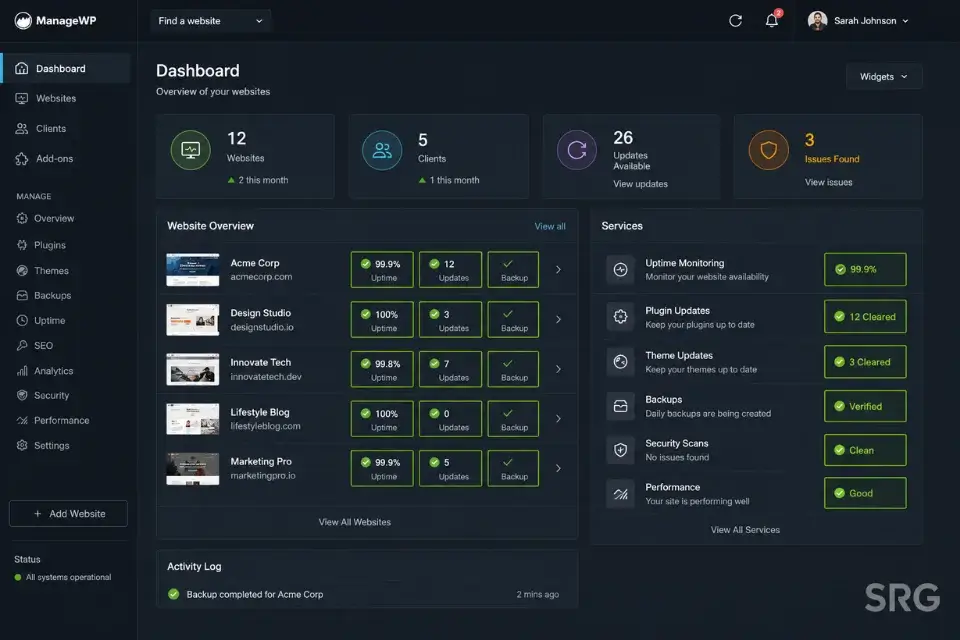
Websites break. Software updates fail. Email automations stop firing. Systems that worked perfectly at launch start degrading the moment the project closes.
Your client knows this. They are quietly terrified about it. The maintenance retainer is not a hard sell — it is a relief. You are giving them the one thing no project contract can provide: ongoing protection.
The key is keeping this profitable. To make it work, you must ruthlessly productize freelance services so the maintenance is highly standardized and takes you less than two hours a month to fulfill — otherwise you are trading a retainer check for a support ticket nightmare.
The Exact Playbook
- List every recurring task required to keep the client’s deliverable healthy. For a website: plugin updates, uptime monitoring, broken link checks, speed audits, and backup verification. For a content system: editorial calendar management, analytics reporting, and distribution checks. Write down every task. Time each one.
- Set the scope ceiling before you pitch. Total the monthly task time. If it comes to 90 minutes, your retainer covers 90 minutes of defined tasks — not “anything that comes up.” That distinction is the difference between a profitable retainer and a $500 support contract with no ceiling.
- Price on peace of mind, not time. A $750/month maintenance retainer protecting a $120,000/year e-commerce store is not expensive — it is cheap insurance. Frame the conversation around what breaks when nobody is watching, not around how long the tasks take.
- Create a monthly delivery report. One-page PDF or Notion doc: tasks completed, systems checked, issues caught, status green. This is your renewal leverage and your proof that the retainer has value beyond “nothing broke this month.”
- Build the tasks into a repeatable SOP before signing the first client. Every maintenance task runs from a documented checklist. If you cannot delegate it in 30 minutes of onboarding, the system is not tight enough.
The “Insurance” Package Script
Use this pitch to present a maintenance retainer as a systematic protection plan — no fear tactics required.
Subject: Keeping [PROJECT_NAME] running after we wrap
Hi [CLIENT_FIRST_NAME],
[PROJECT_NAME] is nearly complete. Before we close out, I want to flag something most clients discover three months post-launch: ongoing systems need ongoing attention.
I offer a [RETAINER_TIER_NAME, e.g., “Protection Plan”] retainer specifically for clients after a successful project.
WHAT IS COVERED MONTHLY:
[MAINTENANCE_TASK_1, e.g., “Plugin and software updates”]
[MAINTENANCE_TASK_2, e.g., “Uptime and speed monitoring”]
[MAINTENANCE_TASK_3, e.g., “Monthly performance report”]
[MAINTENANCE_TASK_4, e.g., “Backup verification”]
WHAT IS NOT COVERED:
New feature builds or design changes
Anything outside the defined task list above
Emergency support beyond [INCLUDED_RESPONSE_TIME, e.g., “48-hour response”]
WHAT TRIGGERS OUT-OF-SCOPE BILLING:
Any request outside the task list above is quoted separately at $[OUT_OF_SCOPE_RATE]/hr before work begins.
Investment: $[MONTHLY_RATE]/month, billed on the 1st.
Cancel anytime with [NOTICE_PERIOD, e.g., “30 days”] written notice.
Want me to add this to your close-out package?
[YOUR_NAME]- [PROJECT_NAME] — The specific completed project. Match the name exactly as referenced in the original contract.
- [CLIENT_FIRST_NAME] — First name. This is a warm pitch to an existing satisfied client.
- [RETAINER_TIER_NAME] — Name the tier. “Protection Plan” or “Care Plan” outperforms “maintenance retainer” in client-facing copy.
- [MAINTENANCE_TASK_1/2/3/4] — List only tasks you have timed and documented. No open-ended language.
- [INCLUDED_RESPONSE_TIME] — Hard SLA only. “48-hour response” is professional. “ASAP” is a liability.
- [OUT_OF_SCOPE_RATE] — Your standard hourly rate or a premium rate for unplanned work. Never leave this blank.
- [MONTHLY_RATE] — $500–$750 for basic maintenance; $750–$1,200 for complex systems with multiple components.
- [NOTICE_PERIOD] — 30 days is the field-tested standard. Less than 30 creates churn risk; more creates resentment.
The Pro Tip / Red Flag
Red Flag: Never include “new feature builds” in a maintenance retainer. Maintenance means keeping the current ship afloat. Building a new deck costs extra — and that rate should be defined in writing before the first month invoice goes out.
📦 Scenario 3 — The Executioner: The Volume/Deliverable Retainer
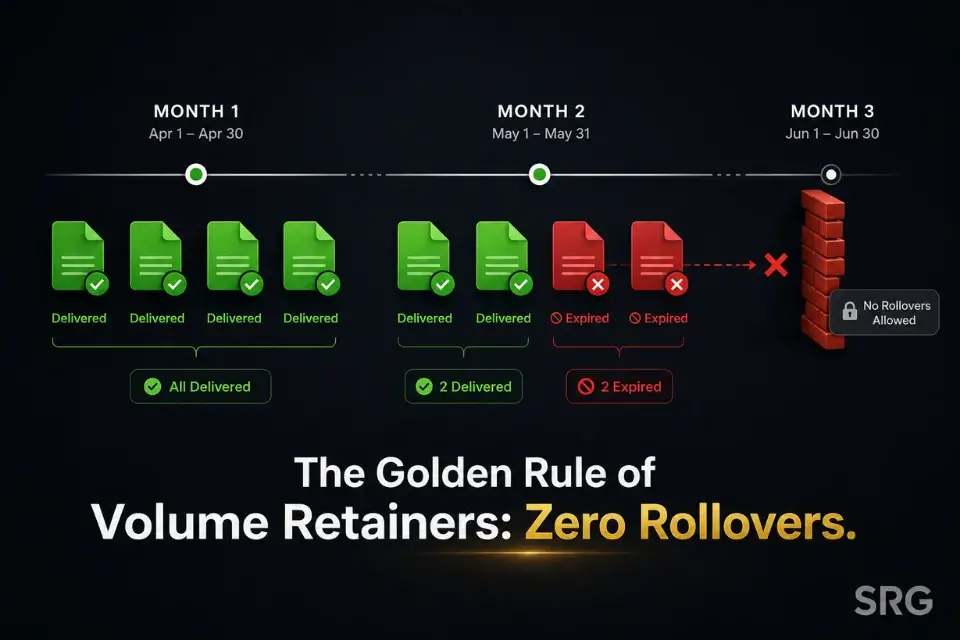
Some clients do not want strategy. They do not want maintenance. They want output — a predictable volume of work delivered every single month without the friction of scoping, quoting, and invoicing every individual asset. This is the easiest retainer to sell to content-hungry, operationally mature clients.
It is also the easiest to get burned on if you do not define the scope ceiling precisely.
If you force a high-volume client to review and sign a custom freelance proposal for every single asset, the administrative friction will eventually cause them to hire someone in-house or move to an agency on retainer. The volume model removes that friction permanently.
According to SBA independent contractor tax guidance, predictable cash flow is a core requirement for accurate quarterly tax planning as an independent contractor — and a volume retainer is one of the few models that provides a hard monthly income floor to plan against.
The Exact Playbook
- Define the exact deliverable unit. Not “content.” Not “posts.” A specific unit: “one 1,000–1,200 word SEO article, delivered as a Google Doc with metadata.” The more precise the unit definition, the less room for scope creep.
- Set the monthly quota in the contract. Four articles per month. Eight social captions. Two email sequences. The number is fixed. If they want more, they pay more at a defined per-unit rate. If they use less — see step 5.
- Price with a volume discount baked in. Your standard rate might be $400 per article. A 4-article retainer is not $1,600 — it is $1,400/month. The $200 discount is the incentive for commitment. Do not give more than a 15% volume discount or you erode your margin faster than the stability gains cover it.
- Build a delivery calendar and send it on Day 1. Every deliverable has a due date for your draft and a due date for their feedback. No calendar means no accountability on their end, which means late feedback, missed deadlines, and a retainer that feels like chaos.
- Enforce a strict “Use It or Lose It” policy. Unused deliverables in Month 1 do not roll over to Month 2. State this clearly in the contract and in the pitch email. A backlog of unused deliverables is not a client asset — it is a liability for your production schedule.
The Content Quota Proposal Script
Use this template to lock in a defined monthly volume of deliverables.
Subject: Ongoing [DELIVERABLE_TYPE] partnership — [MONTHLY_VOLUME] per month
Hi [CLIENT_FIRST_NAME],
Based on [CONTEXT, e.g., “our recent project together” / “your team’s content goals”], I’d like to propose an ongoing deliverable retainer that eliminates the back-and-forth of quoting individual assets.
MONTHLY DELIVERABLE PACKAGE:
Deliverable: [EXACT_DELIVERABLE_DESCRIPTION, e.g., “1,000–1,200 word SEO articles, delivered as Google Docs with title tag and meta description”]
Volume: [MONTHLY_VOLUME, e.g., “4 articles”] per month
Turnaround: First draft delivered by [DRAFT_DUE_DAY, e.g., “the 10th of each month”]
Feedback window: [FEEDBACK_WINDOW, e.g., “5 business days”] from delivery
Revisions: Up to [REVISION_ROUNDS, e.g., “1 round”] per deliverable
PRICING:
Standard rate per unit: $[STANDARD_UNIT_RATE]
Retainer rate per unit: $[RETAINER_UNIT_RATE] (volume commitment discount)
Monthly total: $[MONTHLY_TOTAL], billed on the 1st
SCOPE BOUNDARIES:
Deliverables are as defined above. Format changes, additional assets, or rush work are billed separately.
Use It or Lose It: unused deliverables in a given month do not roll over. The monthly fee remains the same.
Additional units beyond the monthly quota are available at $[ADDITIONAL_UNIT_RATE] per unit, approved in writing before production begins.
Minimum term: [MINIMUM_MONTHS, e.g., “3”] months.
Cancel with [NOTICE_PERIOD, e.g., “30 days”] written notice.
Ready to lock in [PROPOSED_START_MONTH]?
[YOUR_NAME]- [DELIVERABLE_TYPE] — The category in your email subject: “SEO content,” “email copy,” “social media content.”
- [MONTHLY_VOLUME] — The fixed number. Pick a number you can fulfill in your worst month, not your best.
- [CLIENT_FIRST_NAME] — Warm or cold pitch — adjust the [CONTEXT] placeholder accordingly.
- [EXACT_DELIVERABLE_DESCRIPTION] — Word count range, format, file type, metadata requirements. One sentence, fully specified.
- [DRAFT_DUE_DAY] — A calendar day of the month, not “early in the month.” Hard dates create accountability.
- [FEEDBACK_WINDOW] — 5 business days is the standard. Fewer creates pressure on the client; more creates schedule risk for you.
- [REVISION_ROUNDS] — One round for volume work. Two rounds maximum. Open-ended revisions kill the model.
- [STANDARD_UNIT_RATE / RETAINER_UNIT_RATE / MONTHLY_TOTAL] — Show the math explicitly. The discount makes the retainer feel like a win for the client.
- [ADDITIONAL_UNIT_RATE] — Set this 20–30% above the standard rate. Rush and overflow work should cost more, not less.
- [MINIMUM_MONTHS / NOTICE_PERIOD / PROPOSED_START_MONTH] — Hard commitments only. Vague timelines invite vague commitment from the client.
The Pro Tip / Red Flag
Red Flag: Explicitly state a “Use It or Lose It” policy in writing before the client signs. Never let unused deliverables roll over to the next month — you will end up with a crushing production backlog in Q4 that your retainer fee no longer covers.
🤝 Scenario 4 — The Closer: Upselling Post-Project
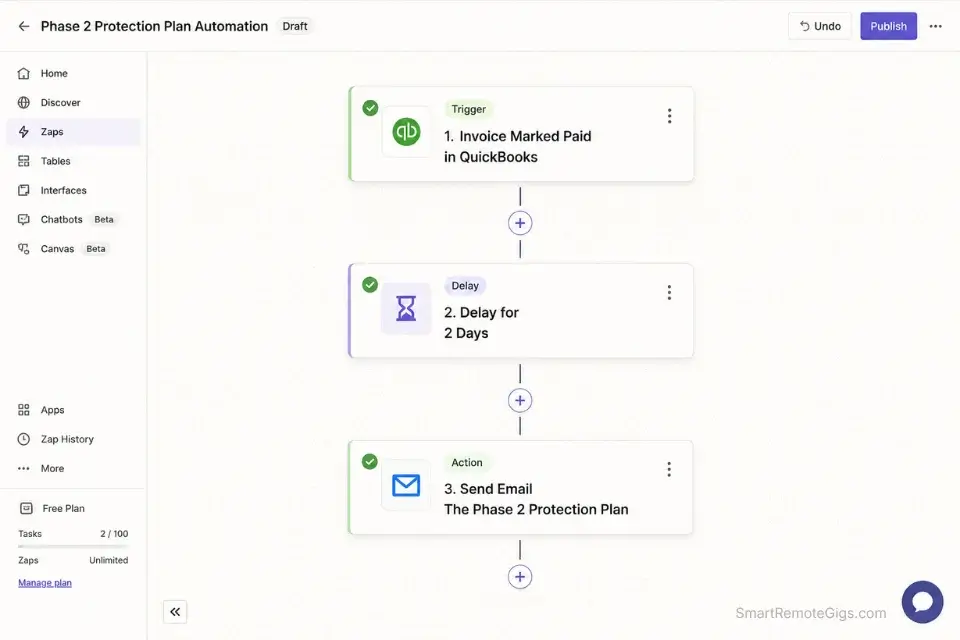
The worst time to pitch a retainer is during a discovery call. The best time is the exact moment you hand over a completed project — when the relationship is at peak trust, the work is fresh, and the client is already thinking “what’s next?” Most freelancers celebrate project completion and immediately start hunting new clients. That is the wrong move.
The new client is sitting right there. A client who just received strong work is in a high-trust, high-momentum state. Pitching a retainer at this exact moment converts at 3–4x the rate of a cold retainer pitch to a new prospect.
Use workflow automation software to automatically trigger this upsell sequence the moment the final project invoice is marked as paid — so the pitch goes out while the client is still in the glow of completion, not three weeks later when the momentum is gone.
The Exact Playbook
- Plant the seed at project kickoff, not just at the end. In your kickoff call or email, mention Phase 2: “We build this in Phase 1. In Phase 2 ongoing, we maintain and optimize it.” This primes the client months before you make the formal ask. By delivery day, the retainer feels like the natural continuation, not an upsell.
- Prepare the retainer pitch document before final delivery. Do not scramble to write a retainer proposal after the client celebrates the work. Have the one-pager ready before you send the final file. The sequence: final delivery email + retainer pitch in the same send.
- Frame the retainer as protection, not extension. “This system will need ongoing attention to keep performing” converts better than “I’d love to keep working with you.” Self-interest is a weak pitch. Their interest is a strong one.
- Create a 30-day decision window. Offer the retainer at the project rate for 30 days post-delivery. After 30 days, the rate increases by $[RATE_INCREASE_AMOUNT]. This is not manufactured urgency — it is a legitimate capacity management tool. Honor it.
- Set up automated monthly billing before month one begins. The client approves the retainer, and the first invoice fires automatically on the 1st. Manual invoicing every month is a churn risk disguised as admin work.
The End-of-Project Retainer Handoff Script
Use this to pivot from project completion to ongoing partnership in a single email.
Subject: [PROJECT_NAME] delivered — and what comes next
Hi [CLIENT_FIRST_NAME],
[PROJECT_NAME] is complete. [ONE_SENTENCE_RESULT, e.g., “Your new funnel is live and the automation sequences are active.”]
This is the part where most contractors disappear. I want to do something different.
[PROJECT_NAME] will need ongoing attention to keep performing — [SPECIFIC_ONGOING_NEED, e.g., “copy optimization as conversion data comes in” / “system updates as your tech stack evolves” / “content production to feed the distribution channels we built”]. Letting it sit unmanaged for 90 days will cost you more to fix than the monthly retainer costs to prevent.
I have one retainer slot available starting [NEXT_BILLING_MONTH].
Here is what it covers:
[RETAINER_DELIVERABLE_1]
[RETAINER_DELIVERABLE_2]
[RETAINER_DELIVERABLE_3]
Investment: $[MONTHLY_RETAINER_RATE]/month, billed on the 1st.
This rate is locked in for clients who commit within 30 days of project delivery. After [DECISION_DEADLINE_DATE], my standard retainer rate of $[STANDARD_RETAINER_RATE]/month applies.
Interested? Reply here and I will send the agreement today.
[YOUR_NAME]- [PROJECT_NAME] — Exact project name as referenced throughout your engagement. Consistency signals professionalism.
- [CLIENT_FIRST_NAME] — First name. This is your warmest possible prospect.
- [ONE_SENTENCE_RESULT] — State the concrete delivery outcome in one sentence. “Your funnel is live” beats “the work is done.”
- [SPECIFIC_ONGOING_NEED] — The exact problem that will emerge without maintenance. This is your retention argument. Be specific.
- [NEXT_BILLING_MONTH] — The 1st of the month following delivery. Never “soon” or “when you’re ready.”
- [RETAINER_DELIVERABLE_1/2/3] — Three concise line items. Match these to the ongoing need you identified above.
- [MONTHLY_RETAINER_RATE] — Your discounted project-client rate. 10–15% below standard retainer pricing as a loyalty incentive.
- [DECISION_DEADLINE_DATE] — 30 days from delivery. A hard date, not “in the next few weeks.”
- [STANDARD_RETAINER_RATE] — Your public retainer rate. The gap between this and the locked-in rate is the urgency driver.
The Pro Tip / Red Flag
Pro Tip: Plant the seed for the retainer during the initial project kickoff, not just at delivery. Say, “We build this in Phase 1, and in Phase 2 ongoing, we optimize it.” By the time you send the handoff script, the retainer conversation is not a pitch — it is a scheduled next step.
💵 Pricing Your Recurring Agreements
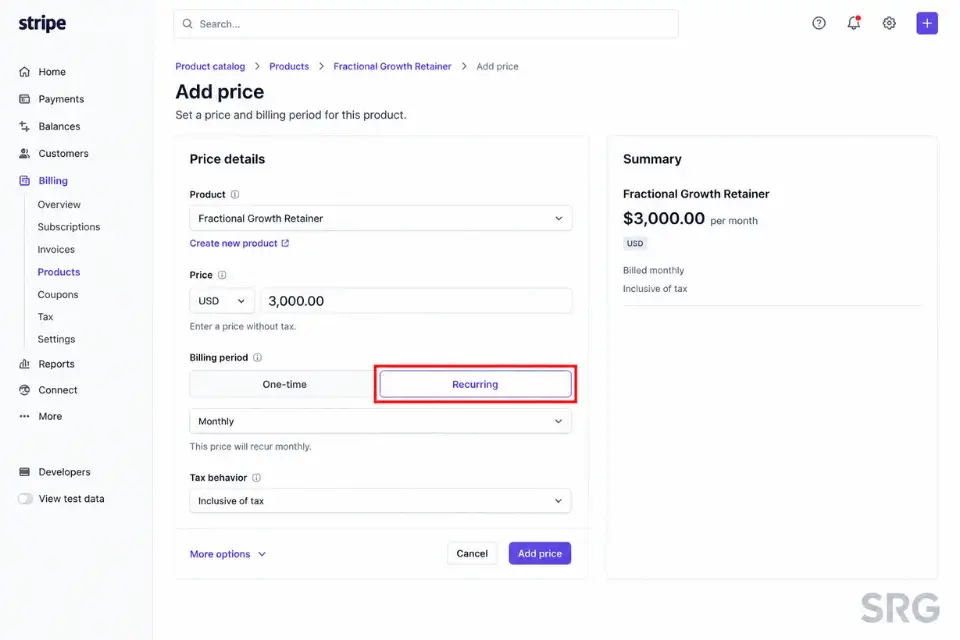
Freelance retainer packages should provide predictable value to the client and predictable revenue to you. Never discount your effective hourly rate simply for the promise of volume — the stability a retainer provides to you has value, but it does not justify cutting your rate by 30% or more.
Here is how the numbers break down in the field. A solid baseline maintenance retainer starts at $500–$1,000/month for simple systems with defined, repeatable task lists. Volume deliverable retainers for content and copy work typically run $1,200–$3,500/month depending on output volume and complexity.
Fractional advisory roles command $3,000–$5,000+/month — and the best operators in this tier are pulling $8,000–$12,000/month for C-suite adjacent engagements with documented revenue impact.
The margin rule: if fulfilling the retainer takes more than 20% of your available working hours, it is underpriced. Run the numbers before you pitch, not after you are locked into a contract. Use robust billing and subscription tools from the SRG Software Directory to automate recurring invoices and dunning so you never chase a retainer payment manually.
The SRG Free Invoice Generator automates your monthly recurring billing so retainer invoices go out on the 1st without you lifting a finger — one operator using it cut invoice chasing time from 4 hours a month to zero.
For the complete breakdown of pricing and features:

Fill in your details and create a professional, print-ready invoice — instantly, free, no sign up.
🗓️ The 30-Day Retainer Execution Plan
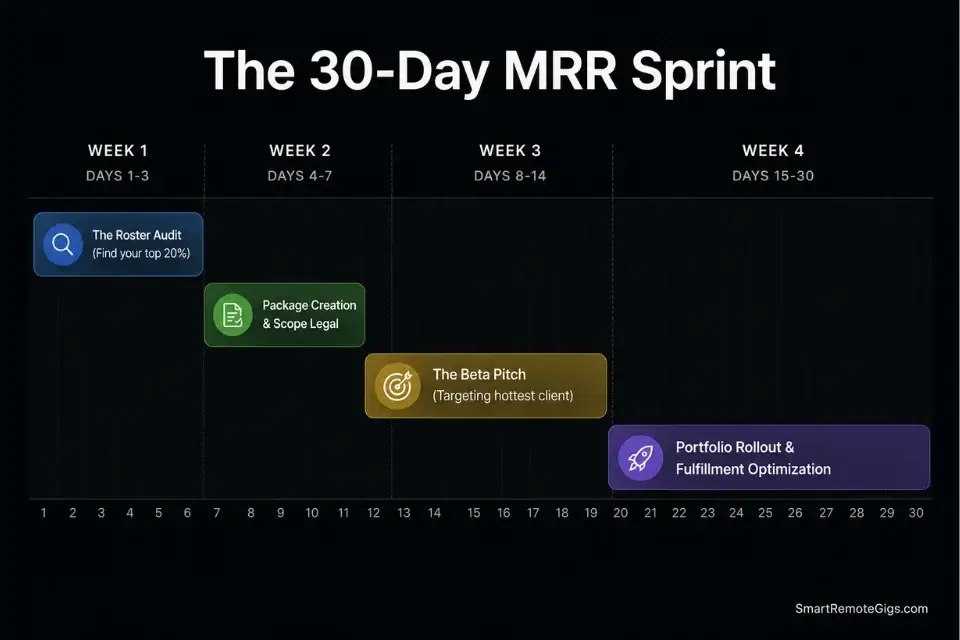
Days 1–3: The Roster Audit
- Pull every client invoice from the past 12 months.
- Identify the top 20% who required ongoing attention, asked repeat questions, or came back for follow-on work — those are your retainer candidates.
- Draft your core retainer offering: pick one model from this article — Maintenance, Volume, or Fractional — and write one sentence describing what the client gets each month.
Pro Tip: Start with the lowest-friction offer first. Maintenance is easier to sell than fractional advisory. A client who says yes to a $750/month care plan will say yes to a $3,000/month advisory retainer 6 months later when you have a track record.
Days 4–7: Package Creation and Legal
- Define exactly what is included in the monthly fee — name each deliverable or task, specify the format, and set the turnaround.
- Define exactly what triggers out-of-scope billing — list every category of work that is not covered and the rate that applies.
- Finalize your “Use It or Lose It” clauses for volume retainers and your response time SLA for maintenance retainers.
- Draft or update your retainer agreement template — if you do not have a lawyer review it, at minimum have both parties sign a scope document before month one begins.
Red Flag: If your retainer contract does not explicitly define communication boundaries — response hours, channels, and turnaround windows — expect weekend texts, Slack messages at midnight, and scope creep that erases your margin inside 60 days.
Days 8–14: The Beta Pitch
- Identify your single warmest existing client — the one with the highest satisfaction and the clearest ongoing need.
- Send the relevant script from this article: handoff script for a completed project, insurance pitch for an existing deliverable in need of maintenance.
- Secure your first recurring payment and set up automated billing before the 1st of next month.
Pro Tip: Do not pitch your most valuable client first. Pitch your second-most-valuable one. You want to stress-test the script, the scope document, and the billing flow before you roll it out to your highest-stakes relationship.
Days 15–21: The Portfolio Rollout
- Update your website services page to feature the retainer packages by name and starting price.
- Update your LinkedIn headline and featured section to reflect that you accept ongoing advisory or maintenance clients.
- Send the relevant pitch script to the next 3 targeted legacy clients on your roster audit list.
- Set up automated recurring invoicing for every new sign-up — manual invoicing is a churn accelerant.
Days 22–30: Fulfillment Optimization
- Track the actual time it takes to fulfill the first month’s deliverables for each new retainer client — to the minute.
- Identify the one task taking the most time and build or refine the SOP for it.
- Target a 10% fulfillment time reduction in Month 2 through better documentation or tooling.
By Day 30, you will have secured your first reliable, recurring baseline revenue stream that hits your bank account on the 1st of every month — and a roster audit complete with your next 3 retainer targets already identified.
❓ Frequently Asked Questions
What is a freelance retainer package?
Yes — and it is simpler than most clients expect. A freelance retainer package is a recurring contract where the client pays a fixed monthly fee in exchange for a defined scope: guaranteed access to your time and thinking, a set volume of deliverables, or ongoing maintenance of a system you built. The fee is fixed. The scope is fixed. Everything outside that scope is quoted separately.
How much should I charge for a monthly retainer?
It depends on the model. Maintenance retainers for simple systems start at $500–$750/month. Volume deliverable retainers for content and copy work run $1,200–$3,500/month based on output. Fractional advisory retainers start at $3,000/month and scale to $8,000–$12,000+ for senior engagements. The rule across all models: if the retainer consumes more than 20% of your working hours, it is underpriced.
Do retainer fees get paid upfront?
Yes — always, and non-negotiably. The first month’s fee is paid before work begins. Subsequent months are billed on the 1st via automated recurring invoice. A retainer where the client pays in arrears is not a retainer — it is an ongoing project with a monthly billing cycle, and it gives the client an exit door every 30 days. Upfront payment is the mechanism that makes retainers predictable.
What happens if a client doesn’t use their retainer hours?
It depends on the retainer model, but the answer for volume and deliverable retainers is always “Use It or Lose It.” Unused deliverables do not roll over. The fee does not reduce. This is not a punitive policy — it is the only model that protects your production schedule and prevents an unmanageable backlog from accumulating. State it in the contract and in the pitch email before they sign.
How do I transition an existing hourly client to a retainer?
Yes, you can — and the migration email in the productize freelance services playbook is the cleanest way to execute it. Give 30 days notice, present the new package structure, map their current scope to a retainer tier, and present the flat monthly fee. Frame it as an operational upgrade — faster turnaround, no invoicing friction, predictable delivery. Never ask for permission to change your model. Present it as a scheduled operational change.
The Verdict: Stabilize First, Scale Second
Most freelancers chase new clients because it feels like growth. It is not. Adding a new $2,000 project while you start every month at zero is running on a treadmill — faster, but still in the same place. The freelancers who actually build wealth in 2026 are the ones with a baseline of $4,000–$8,000 in locked monthly recurring revenue before they touch a single new prospect.
Retainers are not for everyone. If your work is inherently project-based — brand identity, app builds, one-time launches — maintenance and fractional models are harder to justify. But if you have ongoing deliverables, recurring systems, or domain expertise clients keep coming back to ask about, you are already doing retainer work. You are just not charging for it correctly.
Start with one retainer. One client. One clean scope document. Lock in the recurring billing. Then use that stable income floor to negotiate from a position of abundance on every new project you take.
The Verdict: The freelancer with $5,000/month in retainer baseline income will always out-negotiate, out-select, and out-earn the freelancer with $5,000/month in project income — because one starts every month already paid, and the other starts every month at zero.
While you build your recurring revenue base, don’t leave money on the table. Head to the SRG Job Board at /jobs/ for long-term clients actively seeking dedicated remote contractors. Browse the SRG Software Directory at /software/ for the exact billing and automation tools needed to run your retainers efficiently.

Never Miss a New Remote Job
REMOTE JOB ALERTSGet notified about new remote jobs and access practical freelance tools from your phone.

![How to Find Client Email Addresses: B2B Method [Guide]](https://smartremotegigs.com/wp-content/uploads/2026/10/how-to-find-client-email-addresses-hero-1024x577.webp)