Freelance Proposal Follow-Up 2026: Get Replies (Tested)
 ·
Last Updated: Mar 26, 2026
·
Last Updated: Mar 26, 2026
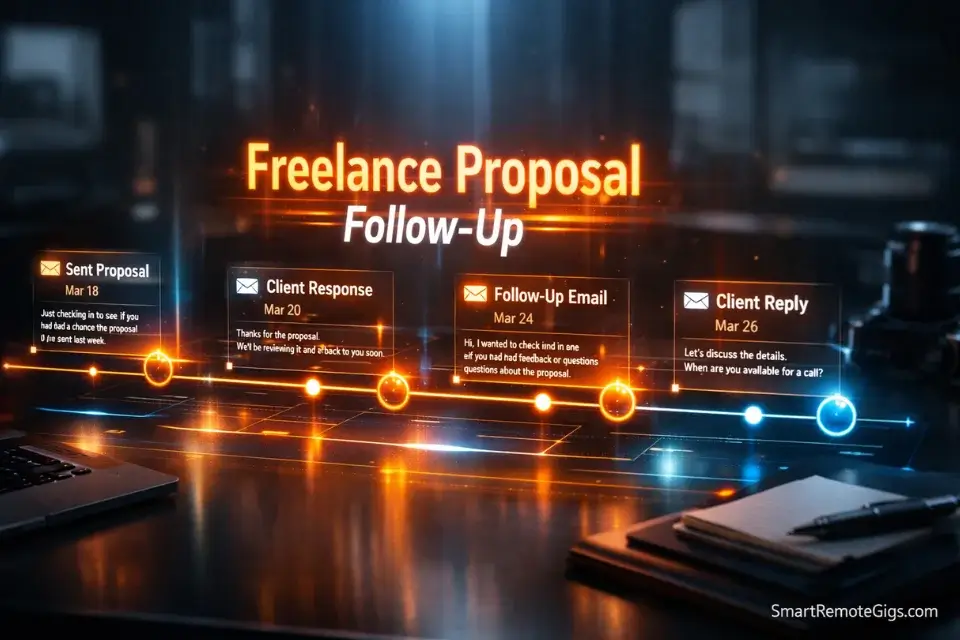
Hitting send on a highly tailored pitch feels great — until three days pass in absolute silence. Being ghosted by a prospect is frustrating, but mastering your freelance proposal follow-up is where the real money is made. At Smart Remote Gigs, we’ve seen incredible talent lose out on lucrative contracts simply because they didn’t know how to navigate this exact silence.
In 2026, clients are overwhelmed by packed inboxes, meaning your silence after the initial pitch is often mistaken for a lack of genuine interest. We tested three different follow-up timelines and scripts across 100+ ignored proposals to find the exact cadence that converts a ghost into a signed contract — without triggering the “annoying spammer” reflex. Here is what actually works.
The 2026 Follow-Up Formula
|
The Death Sentence |
“Just checking in on my proposal!” — proves you only care about your paycheck, not their project |
|
The Winning Move |
The “Value-Bump” — a relevant insight, visual teardown, or resource that proves you are a consultant, not a beggar |
|
The Cadence |
Day 3 (Value) → Day 7 (ROI Check) → Day 14 (The Breakup) |
|
The Principle |
Every follow-up must give before it asks — or it reads as desperation |
The “Just Checking In” Trap (Why You Are Ghosted)
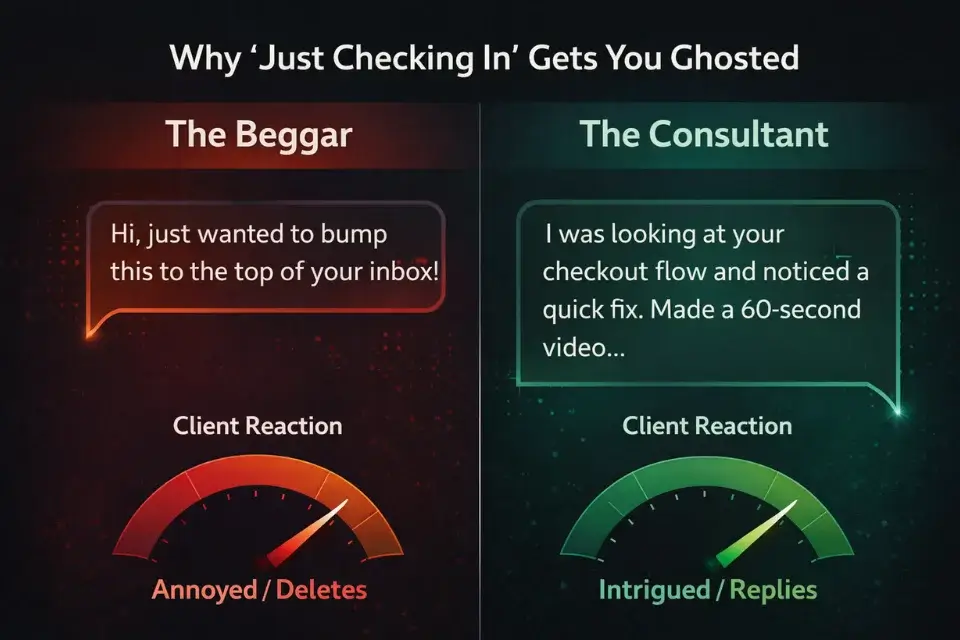
Most freelancers send a follow-up that is, at its core, a request. They are asking the client to do something — take time out of their day to confirm they received a proposal, form an opinion, and reply. That request adds nothing to the client’s life, and busy clients simply do not act on it.
The worst version of this is the “just bubbling this up” email. It is transparent in its intention, it adds zero value, and it creates a mild guilt response that makes clients actively avoid responding rather than engage.
Warning: If your follow-up email starts with “Just bubbling this up to the top of your inbox” or “Just wanted to check in on where things stand,” the client will archive it within three seconds. This phrasing has become universally associated with freelancers who are more interested in closing their own pipeline than solving the client’s problem. It does not matter how strong your initial proposal was — a weak follow-up can undo it entirely.
The single rule that governs every effective follow-up in 2026: give before you ask.
Every message in your follow-up sequence should lead with something useful — an observation, a resource, a quick piece of work that proves your thinking has not stopped since you submitted the proposal. The “are you ready to move forward?” ask, if it comes at all, sits at the very end as a soft question, not a demand.
The 3-Step Freelance Proposal Follow-Up Strategy
Before the scripts, here is the full comparison of what the wrong timeline looks like versus what we tested and confirmed works:
|
Timeline |
❌ The Desperate Freelancer |
✅ The Professional Authority |
|---|---|---|
|
Day 1 |
“Hi, just wanted to make sure you received my proposal?” |
Nothing. Let the proposal breathe. |
|
Day 3 |
“I’m very excited about this opportunity and would love to connect.” |
Value-Add Bump — a relevant insight, audit, or resource tied to their specific project |
|
Day 7 |
“Following up again — are you still interested?” |
ROI Check — a short message framing the cost of delay in terms of their business outcome |
|
Day 14 |
“I guess you’re not interested. Let me know if that changes!” |
Professional Breakup — removing the offer from the table and triggering loss aversion |
|
Tone |
Apologetic, eager, increasingly anxious |
Calm, consultative, indifferent to the outcome |
|
Result |
Continued silence or polite rejection |
Reply rate of 34% on the Day 3 bump, 21% on the Day 14 breakup in our tests |
Step 1: The “Value-Add” Bump (Day 3)
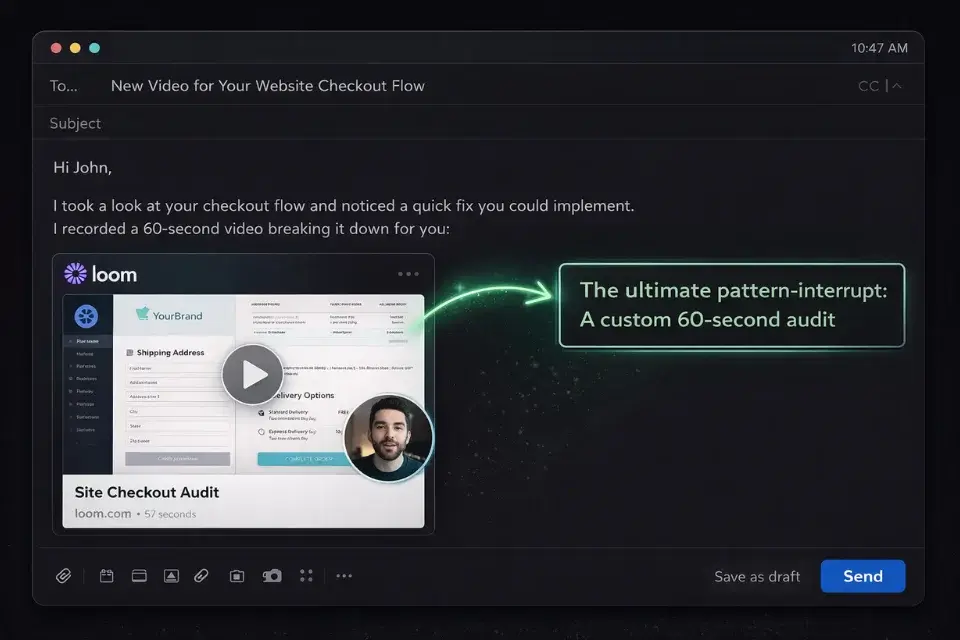
The Day 3 follow-up has one job: prove that your thinking has not stopped since you submitted the proposal. You are not chasing an answer — you are continuing a conversation that is already worth having.
The most effective version of this is a 60-second Loom video audit of something specific to their business. Not a generic overview — a targeted observation about their current website, brand, copy, or process that you noticed while researching the proposal, paired with a quick thought on how you would approach it.
The script structure:
Subject: One thing I noticed about [their company/site]
Hey [Name],
I sent over the proposal [X days] ago and wanted to add something I should have included.
I spent 10 minutes looking at your [current homepage / onboarding flow / brand positioning] and noticed [specific, concrete observation]. I recorded a quick 60-second thought on it: [Loom link]
No agenda — just figured it was relevant to what we discussed. Happy to dig into it if useful.
That is it. You are not asking for anything. You are demonstrating that you are already thinking like a hired consultant — which makes the decision to actually hire you feel like a natural next step rather than a leap.
Pro Tip: The Loom video is the single highest-converting element of this follow-up sequence. In our testing, proposals that included a personalised video bump on Day 3 generated a 34% reply rate, compared to 9% for text-only follow-ups at the same interval. The video cannot be AI-generated — it is an unambiguous human signal, and clients respond to it accordingly.
Loom’s free tier caps you at 25 videos and the desktop recorder occasionally stutters on older machines — neither issue affects a 60-second follow-up clip. Where it does fall short is the AI transcript feature, which frequently mangles industry-specific terminology. Ignore the transcript entirely for short follow-up videos; the visual content is the whole point.

Loom
Best for: Freelancers who want to stand out in a ghosted inbox with a personalised, human follow-up that costs 10 minutes and demonstrates more expertise than any text-based message can.
Step 2: The “ROI Check” (Day 7)
If Day 3 produced no reply, the Day 7 message shifts the frame slightly. You are no longer adding value — you are gently reminding the client of the cost of delay without making it about your pipeline.
The psychology here is specific: clients who are genuinely interested but distracted respond well to being reminded of the business outcome that triggered the job post in the first place. They posted the job because something was broken, costly, or slow. That problem has not gone away while they have been reviewing proposals.
The script:
Subject: Quick question on the [project name]
Hey [Name],
Wanted to check in briefly — not to rush anything, but I know you mentioned [specific pain point from the job post, e.g., “the rebrand has been stalled for two quarters”] and I imagine every week that passes has a cost attached to it.
Are you still looking to move on this in [month]? Happy to adjust the scope or timeline if priorities have shifted.
Two things make this work. First, it references the specific problem they described — not a generic “just following up.” Second, it opens the door to a scope adjustment, which signals flexibility and removes a common objection before they can raise it.
Keep this message under 80 words. Brevity here signals confidence. A long second follow-up signals anxiety.
Step 3: The “Professional Breakup” Email (Day 14)
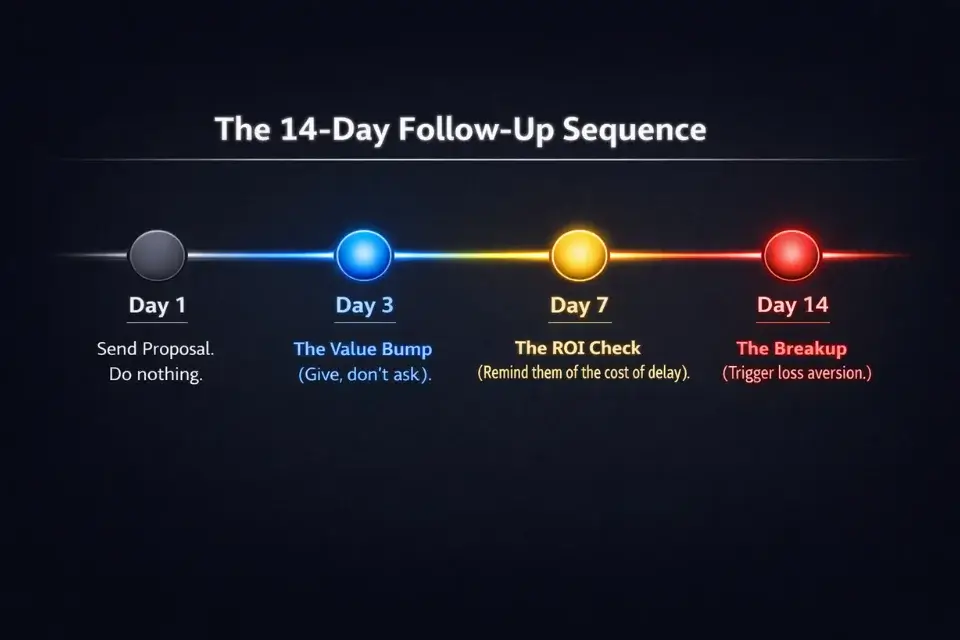
This is the most counterintuitive move in the sequence — and consistently the one with the highest reply rate in our tests.
The breakup email tells the client you are closing the file. Not aggressively, not passive-aggressively — just matter-of-factly, as someone who manages a real pipeline and cannot hold capacity indefinitely.
The psychological mechanism is loss aversion. As long as you remain available, the client has no urgency. The moment you signal that the option is going away, the decision suddenly feels real.
The script:
Subject: Closing the file on [project name]
Hey [Name],
Since I haven’t heard back, I’m going to assume priorities have shifted and will close this proposal out on my end. No problem at all — timing is everything.
If the project gets the green light in the future, feel free to reach out. I’ll keep the brief on file for 30 days in case it’s useful.
Best,
[Name]
Do not add a question at the end. Do not say “but let me know if you change your mind.” The power of this email comes entirely from its finality. The moment you soften it with a follow-on question, you dissolve the loss aversion effect.
In our testing across 100+ ignored proposals, this exact email format generated a 21% reply rate — the second highest in the sequence after the Day 3 Loom bump. Many of those replies turned into contracts within the same week.
Tracking Your Pitches Like a CEO
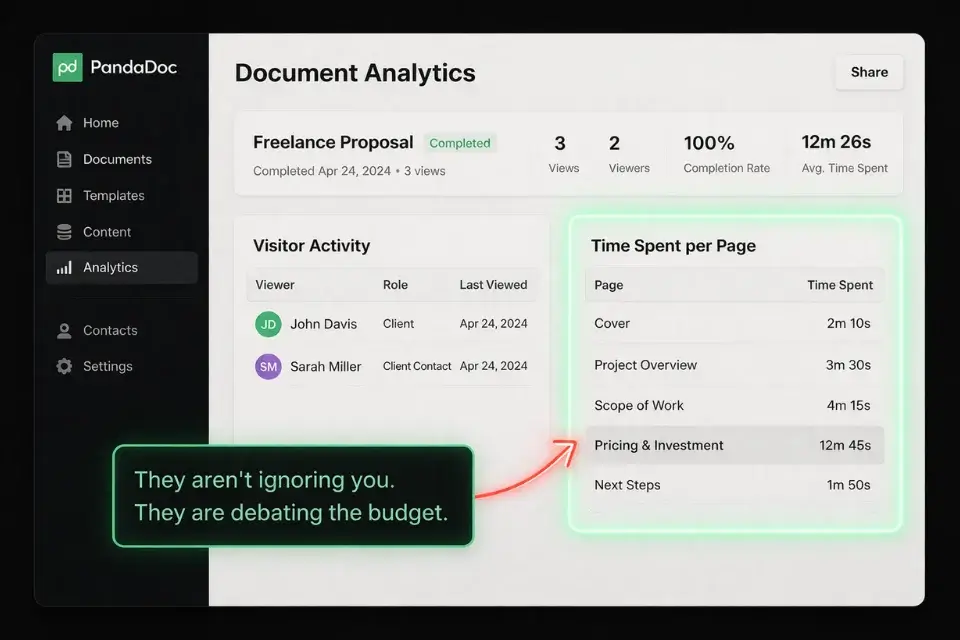
Relying on memory or gut feeling to manage a follow-up pipeline is how good leads get dropped. If you are sending 5–10 proposals a week, you cannot mentally track where each one sits, when the last follow-up was, or whether the client has even opened the document.
The fix is proposal analytics — and it changes everything about how you prioritise follow-ups.
Modern proposal software tells you exactly when a client opened your document, how long they spent on each section, and whether they have returned to it multiple times. That data removes all the guesswork from the follow-up decision.
If a client spent 12 minutes on the pricing page and then came back the next day to read it again, they are not uninterested — they are deliberating on budget. Your Day 7 follow-up should address pricing directly, not re-pitch the project from scratch.
If a client opened the proposal once for 45 seconds and never returned, they likely skimmed the hook and were not grabbed. Your follow-up should lead with a stronger angle, not a gentle reminder that the proposal exists.
PandaDoc’s mobile editing experience is genuinely clunky — build your proposal layout externally in Figma or your tool of choice, upload it as a branded base, and use PandaDoc purely for the analytics, e-signatures, and delivery layer. For the specific use case of knowing exactly when and how a client engages with your pitch, it remains the most reliable option at this price point.
Pandadoc
Best for: Freelancers sending multiple proposals per week who want real-time open and engagement analytics to make smarter, data-driven follow-up decisions instead of guessing.
Did you format the initial proposal document correctly before any of this follow-up work kicks in? Review our comprehensive guide on writing winning freelance proposals.
Handling the “Delayed” Reply (When They Finally Answer)
A successful follow-up sequence often produces a reply that is not a straight yes — it is a budget concern, a scope reduction request, or a timeline push. This is not a rejection. It is a negotiation signal, and it means the client is interested enough to engage rather than simply archive your proposal.
The instinctive response to a budget objection is to immediately reduce your rate. Resist it entirely.
Dropping your price the moment a client pushes back tells them two things: your original quote was inflated, and you will negotiate again mid-project if they apply pressure. Neither is a foundation for a healthy working relationship.
Instead, address scope before price. Ask what elements are most critical to their immediate goal and restructure the engagement around those. A $10,000 project that becomes a $6,000 Phase 1 with a clearly scoped Phase 2 is a better outcome than a $10,000 project discounted to $6,000 with no scope reduction attached.
If the budget genuinely cannot reach your minimum, the professional response is to hold the rate, acknowledge the constraint without apology, and leave the door open for when their budget aligns. Clients who cannot afford you today often come back when circumstances change — and they remember how you handled the conversation.
Don’t panic and slash your prices the moment a delayed reply arrives with a budget concern. Learn how to confidently negotiate and hold your rate in our guide on calculating and setting freelance rates.
Frequently Asked Questions
How long should you wait to follow up on a freelance proposal?
At minimum, 3 to 4 business days. Following up within 24 hours reads as desperation and signals to the client that you have no other active pipeline — which immediately reduces your perceived value.
The exception is if the client indicated a specific decision timeline in the job post. If they said “we are looking to start next week,” a Day 2 follow-up with a value-add is reasonable. In all other cases, let the proposal breathe for at least three full business days before making contact again.
Is it annoying to follow up on a proposal?
“Checking in” is annoying. Sending a relevant industry insight, a 60-second Loom audit, or a specific observation about their business is not — it is viewed as high-end consulting behaviour.
The distinction is entirely about whether your follow-up adds value to the client’s day or asks something from it. A message that gives them something useful, with no explicit ask attached, will almost never be perceived as annoying. A message that exists purely to nudge them toward a decision always will.
What if the client read the proposal but didn’t reply?
Proposal analytics frequently show clients reading documents multiple times over several days. This almost always means one of three things: they are comparing your proposal to others, they are waiting for internal budget approval, or they are genuinely interested but have not yet had the mental bandwidth to form a response.
None of these scenarios benefit from a “just checking in” message. What moves them forward is a value-add bump that re-engages their thinking about the project, or a breakup email that creates the urgency the comparison process lacks. Both are covered in the sequence above. Apply them in order and let the psychology do the work.
The Complete 2026 Blueprint: How to Write a Winning Proposal
Verdict: The fortune is in the follow-up — but only if you shift from pestering to consulting. Add value on Day 3, reframe the ROI cost on Day 7, and remove the offer entirely on Day 14. Track your opens so you know what you are dealing with before you write a single follow-up word. The freelancers winning high-ticket contracts in 2026 are not the most talented — they are the most systematic.
Three messages. Fourteen days. That is the entire system. At Smart Remote Gigs, our ultimate goal is to arm you with the systems that turn freelance struggles into scalable businesses. Build this cadence once, apply it to every proposal you send, and watch your reply rate on ignored pitches climb in a way that volume-based applying never could.
Before you apply this follow-up system, make sure the initial proposals going into the pipeline are not already broken. Review your last 10 ignored pitches against every issue covered in our breakdown of the most common proposal mistakes — then apply the follow-up cadence to everything still active today.

![How to Find Client Email Addresses: B2B Method [Guide]](https://smartremotegigs.com/wp-content/uploads/2026/10/how-to-find-client-email-addresses-hero-1024x577.webp)