
You know the feeling. You pick up your phone to check the time, and thirty minutes later you’re three years deep into a stranger’s vacation photos, your mood has shifted from neutral to vaguely anxious, and you can’t remember what you were supposed to be doing. The infinite scroll has claimed another chunk of your life.
Social media platforms are engineered to be addictive. Teams of psychologists and designers work specifically to keep you scrolling, clicking, and coming back. The dopamine hits from likes, the fear of missing out, the algorithmically-curated outrage—none of this is accidental. You’re not weak for struggling with it. You’re responding exactly as designed.
But here’s the empowering truth: you can reset this relationship. A mindful social media cleanse isn’t about permanently deleting your accounts or swearing off connection. It’s about intentionally re-evaluating your relationship with these platforms, breaking automatic habits, and rebuilding your usage based on what actually serves your wellbeing.
This 7-day social media challenge provides a structured, manageable plan to step away, observe your patterns, and return with clarity and control. By the end of this week, you’ll understand how social media affects you, what you actually value about it, and how to use it mindfully going forward. This is a core practice of the Digital Minimalism philosophy, and it starts right now.
The Ground Rules for Your 7-Day Cleanse
Before you begin, you need clear boundaries. These ground rules define what counts as “clean” during your social media cleanse:
- No Mindless Scrolling: No opening Instagram, Facebook, Twitter/X, TikTok, or any other social platform to “just see what’s happening.” No checking feeds, no browsing stories, no exploring trending topics.
- No Posting, Liking, or Public Commenting: You’re taking a complete break from the performance and engagement aspects of social media. No sharing your thoughts, no reacting to others’ content, no public participation.
- Direct Messaging for Logistics Only: If you absolutely must coordinate plans with someone who only communicates via social DMs, brief logistical messages are acceptable. But no casual chatting or back-and-forth conversations. Use text or phone calls instead.
- Announce Your Break (Optional but Recommended): Post a simple message before you begin: “Taking a social media break for the week. Text me if you need me.” This manages expectations and reduces the anxiety of people wondering why you’ve “disappeared.”
These rules create a clean break from social platforms while acknowledging that we still live in a connected world. You’re not ghosting anyone—you’re just changing your channels of communication temporarily.
Your Step-by-Step Social Media Cleanse
This social media cleanse is broken into four distinct phases over seven days, each with specific actions and expected challenges.
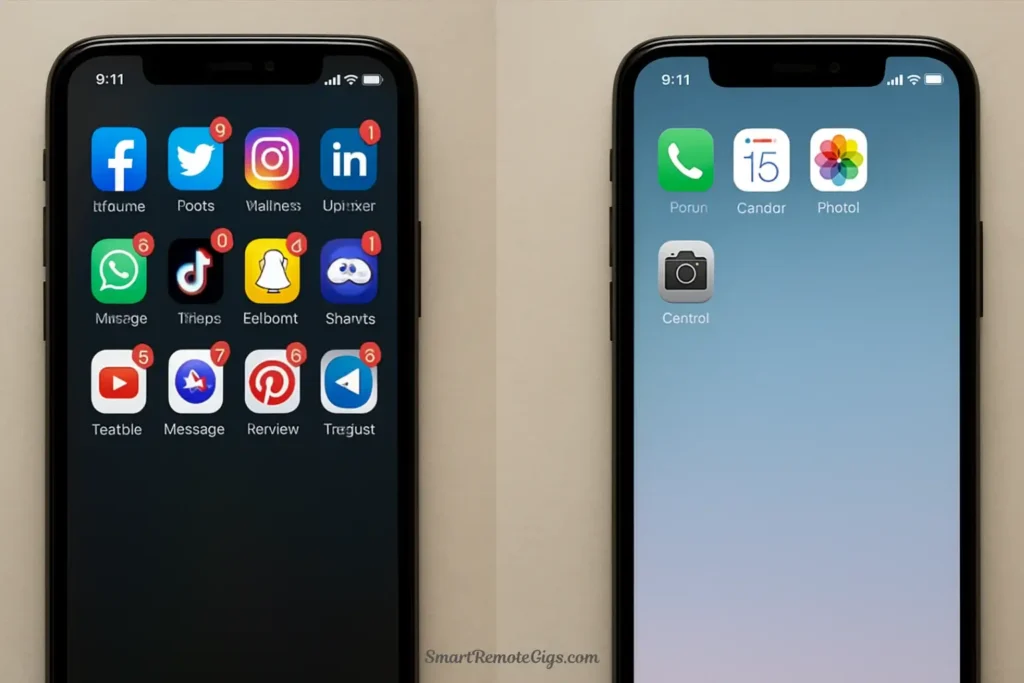
Step 1: The Audit & Unfollow (Day 1)
🕒 Time Required: 30-45 minutes
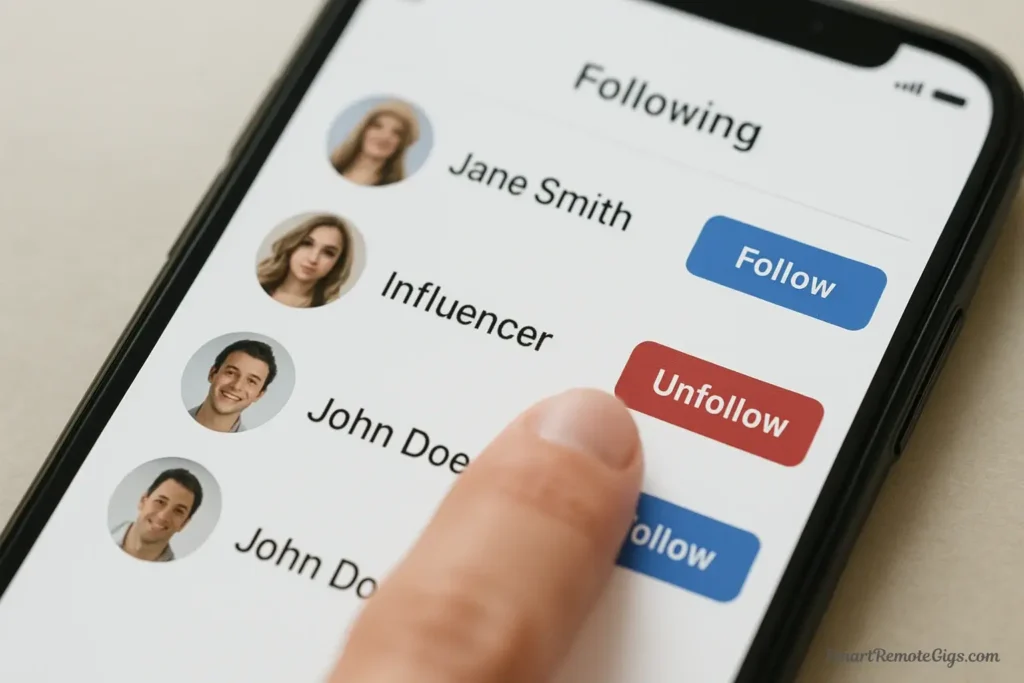
Action: Before you step away from social media, you need to clean up what you’ll be returning to. Today is about ruthlessly curating your feeds so they serve you rather than drain you.
Specific tasks:
- Choose your primary platform to audit: Start with whichever platform you use most (Instagram, Facebook, Twitter/X, TikTok). You can audit others later, but focus on one today.
- Go through every account you follow: This is tedious but transformative. Open your following list and scroll through it. For each account, ask:
- Does this account inspire, educate, or genuinely enrich my life?
- Is this a real friend or family member I actually care about?
- Does viewing this content make me feel better or worse about myself?
- Unfollow or mute ruthlessly: If the answer isn’t an enthusiastic “yes, this adds value,” unfollow or mute that account. This includes:
- Influencers who make you feel inadequate
- News accounts that spike your anxiety
- Brands and businesses (unless they provide genuine value)
- Acquaintances you don’t actually care about
- Accounts you follow out of obligation or FOMO
- Anyone whose content triggers comparison, envy, or negativity
- Aim for a dramatic reduction: Most people should cut their following list by 50-80%. If you’re following 500 accounts, aim to get down to 100-200 maximum. Your feed should feel like a carefully curated magazine, not a chaotic firehose.
Why this matters: When you return to social media after this cleanse, you want to return to a healthier environment. A cluttered, anxiety-inducing feed will pull you right back into old patterns. This Instagram cleanse (or whichever platform you’re auditing) sets the foundation for mindful use.
What to expect: You’ll feel resistance. “But what if they notice?” “What if I miss something important?” Push through. No one is tracking your unfollows, and you won’t miss anything that actually matters.
Step 2: Remove the Apps (Days 2-4)
🕒 Time Required: 5 minutes to delete, 72 hours to experience
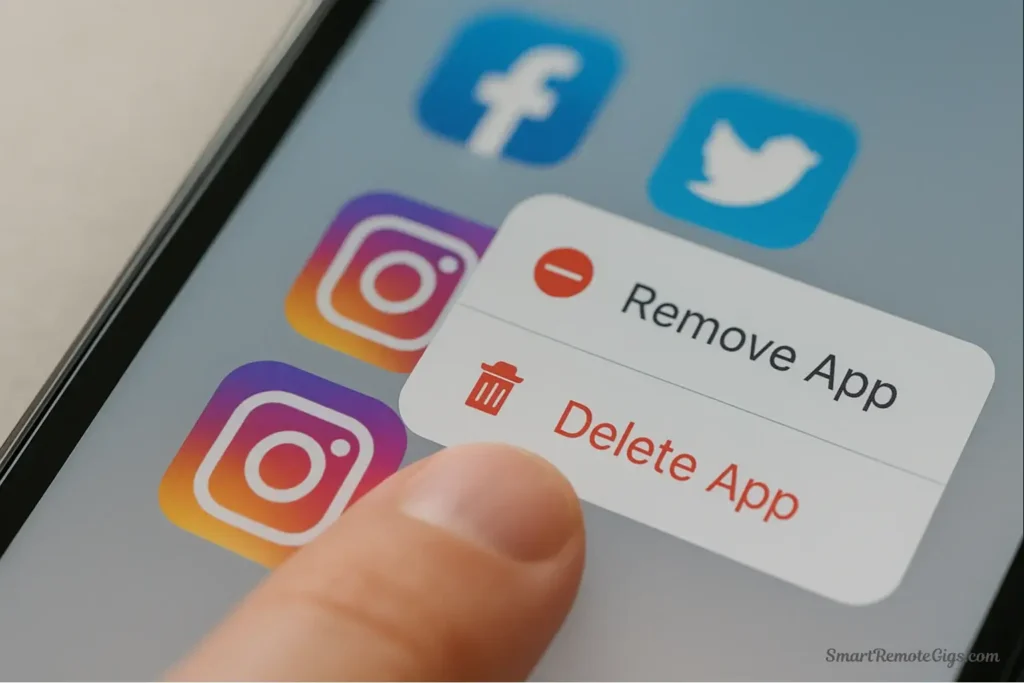
Action: Now comes the actual break. Delete all social media apps from your phone. Not just moving them to a folder—actually delete them from your device.
Specific tasks:
- Delete the apps: Remove Instagram, Facebook, Twitter/X, TikTok, Reddit, LinkedIn (unless absolutely required for job searching), and any other social platforms you use. If you need to keep one for legitimate professional reasons, use website blockers to limit when you can access it.
- Log out on your computer: Log out of all social media sites on your laptop or desktop. Delete saved passwords if needed. Create friction.
- Turn off all social media notifications: Go into your phone’s settings and disable notifications from all social platforms, even if you’ve kept a browser bookmark.
The next 72 hours (Days 2-4): This is your buffer period. You’re adjusting to life without constant social connection. Here’s what to expect:
Day 2: You’ll reach for your phone dozens of times out of pure habit. You’ll open your phone, stare at the home screen, realize there’s nothing to check, and put it down. This automatic reaching reveals just how conditioned your behavior has become.
Day 3: You’ll experience some level of withdrawal. This might manifest as:
- Anxiety or restlessness
- Fear that you’re “missing” something important
- Boredom during any moment of downtime
- Curiosity about what’s happening on your feeds
- The urge to share something interesting you encountered
Notice these feelings without judgment. They’re evidence that social media had a stronger hold on you than you realized.
Day 4: The acute withdrawal usually starts subsiding. You’ll begin noticing something remarkable: time. Lots of it. Those 10-minute “quick checks” that actually lasted 45 minutes are now available for… anything else. Read. Go for a walk. Have an actual conversation. Do nothing.
Why this matters: Removing the apps is essential because willpower alone isn’t enough. When the apps are one tap away, you’ll convince yourself that “just a quick check” won’t hurt. Creating physical friction breaks the automatic pattern.
Step 3: Observe & Replace (Days 5-6)
🕒 Time Required: Ongoing awareness throughout both days
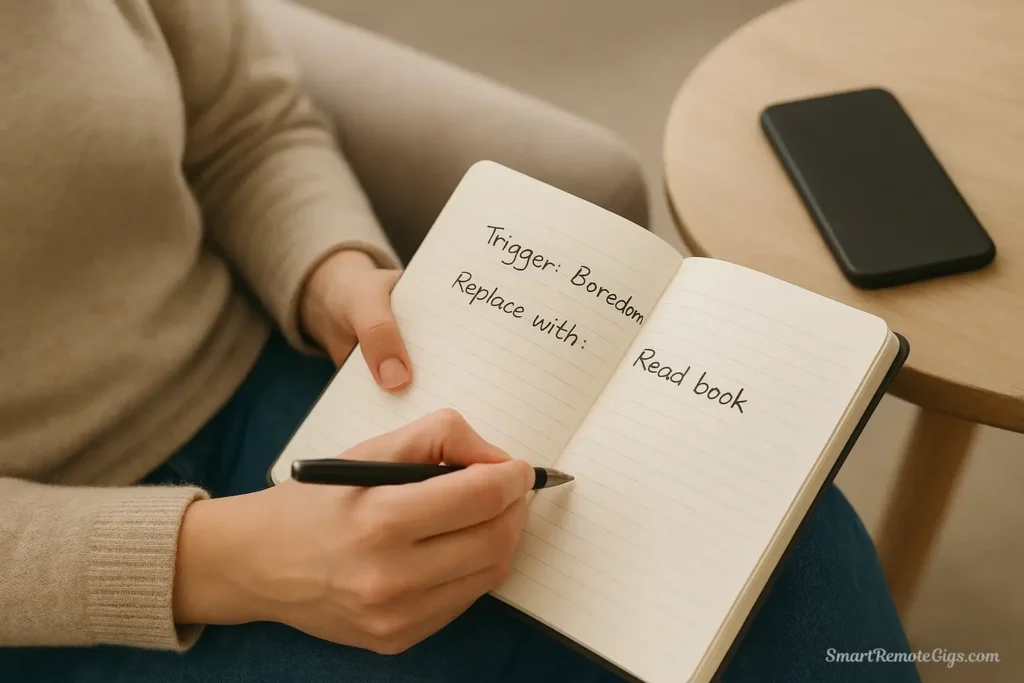
Action: By now, you’ve broken the immediate habit loop. Days 5 and 6 are about observing your patterns more deeply and actively replacing social scrolling with healthier alternatives.
Specific practices:
- Notice your triggers: Pay close attention to the moments you instinctively reach for your phone. Common triggers include:
- Waiting in line or for an appointment
- Using the bathroom (be honest)
- Feeling bored or understimulated
- Experiencing uncomfortable emotions (anxiety, loneliness, frustration)
- Waking up in the morning
- Going to bed at night
- Finishing a task and transitioning to the next one
- Keep a trigger journal: When you notice the urge to check social media, write down:
- What time is it?
- What are you doing?
- What are you feeling?
- What do you think you’re looking for?
This awareness is crucial. You can’t change patterns you don’t understand.
- Replace scrolling with intentional alternatives: When you feel the urge to check social media, do one of these instead:
- For boredom: Read a few pages of a book, do a quick stretch, or simply sit with the boredom for 2 minutes
- For connection: Text or call a specific friend directly (not a broadcast message—actual one-on-one connection)
- For information: Read a saved article, listen to a podcast episode you’ve queued, or look up something you’re genuinely curious about
- For entertainment: Take a short walk, play with a pet, make yourself tea, or engage with your physical environment
- Practice “doing nothing”: At least once during these two days, deliberately spend 10 minutes doing absolutely nothing. No phone, no book, no productivity. Just exist. Sit on your couch or look out the window. Let your mind wander. This is uncomfortable but valuable.
Why this matters: Understanding your triggers and building replacement behaviors is what transforms a temporary break into lasting change. The benefits of a social media break extend far beyond the cleanse itself if you learn these patterns.
What to expect: You’ll have insights. Many people report thinking more clearly, having ideas they haven’t had in months, and feeling more creative during this phase. Your brain is adjusting to operating without constant external stimulation.
Step 4: The Intentional Re-entry (Day 7)
🕒 Time Required: 30-45 minutes
Action: The cleanse ends today, but you’re not just jumping back into your old patterns. You’re returning to social media with clear boundaries and intentional rules. This is what makes a “cleanse” different from a “detox”—you’re learning to use these platforms mindfully, not avoiding them forever.
Specific tasks:
- Choose ONE platform to reinstall: Don’t immediately reinstall all your apps. Start with the single platform that provides the most genuine value to you. This might be Instagram if you’re a photographer, LinkedIn if it’s professionally essential, or Facebook if it’s your primary way to stay connected with distant family.
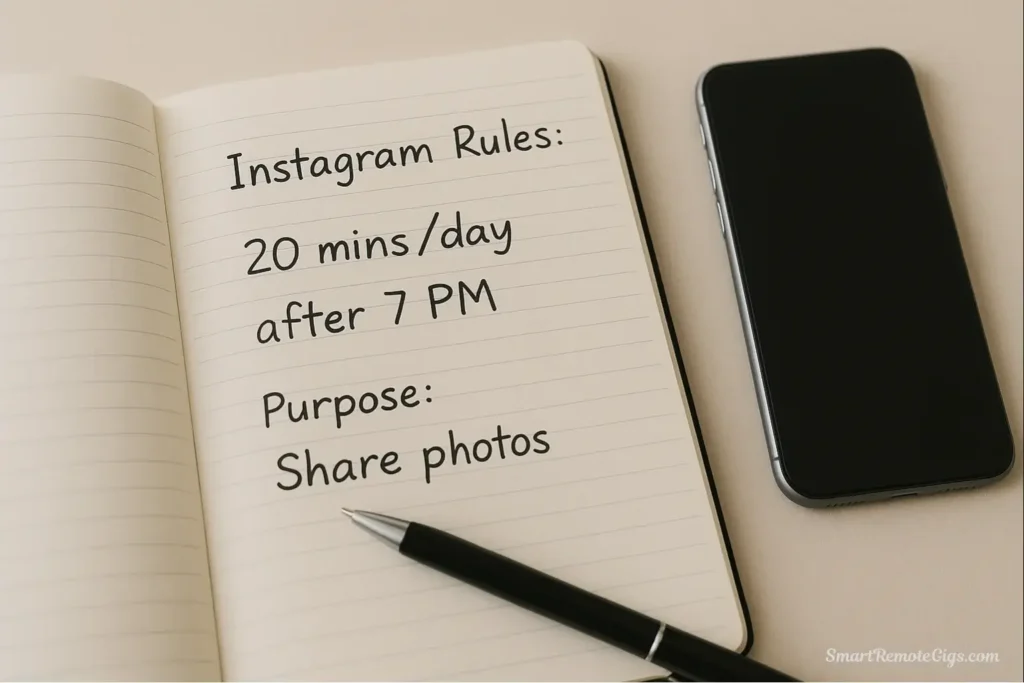
- Before you open it, write your “Rules of Engagement”: Use this exact format to create clear boundaries:
Platform: [Name]
Purpose: [Why I’m using this—be specific and values-based]
Access: [Phone app, desktop only, or browser only?]
Time Restrictions: [When am I allowed to use it?]
Duration: [How long per session/day/week?]
What I Will Do: [Specific allowed activities]
What I Won’t Do: [Specific banned activities]
Example of strong rules:
- Purpose: To share my landscape photography and connect with other photographers in my area
- Access: Phone app (but with screen time limits enabled)
- Time Restrictions: Only after 7 PM on weekdays; anytime on weekends
- Duration: Maximum 20 minutes per session
- What I Will Do: Post my photos once per week, respond to comments on my posts, browse specific photographer accounts for inspiration
- What I Won’t Do: Check the explore page, watch reels, scroll my general feed aimlessly, check it first thing in the morning
- Set up technical barriers: Before you start using the app again:
- Enable Screen Time limits (iOS) or Digital Wellbeing (Android)
- Turn off ALL notifications except direct messages from close friends
- Consider using grayscale mode to reduce visual appeal
- Schedule app blocking times using Freedom or similar tools
- Do your first check mindfully: When you finally open the app, notice how you feel. Observe the urge to keep scrolling. After your first session, close the app and reflect: Did I stick to my rules? How do I feel now compared to before I opened it?
Why this matters: This is where the cleanse becomes a sustainable practice. Without clear rules, you’ll slide back into old patterns within a week. These boundaries transform social media from an attention trap into a bounded tool you control.
- A journal for tracking triggers and writing rules
- Willpower and commitment to the process
- (Optional) Apps like Screen Time or website blockers to enforce your new boundaries
⏱️ Need to Focus?
Our free Smart Gig Finder app includes a built-in Pomodoro timer to help you master deep work. Download it now.

Life After the Cleanse: How to Maintain Your Momentum
Completing the 7-day cleanse is an achievement, but the real challenge is maintaining healthier habits long-term. Here’s how to prevent sliding back:
Turn Off All Non-Essential Notifications
Go into your phone settings (not the app settings—the phone’s master notification controls) and disable notifications from all social platforms except direct messages from people you actually know. Every notification is a hook pulling you back in.
Use App Timers
Both iOS and Android have built-in features to limit daily app usage. Set strict limits—if you decided on 20 minutes of Instagram per day, set a 20-minute timer. When time’s up, the app locks automatically.
Schedule Your Social Time
Rather than checking social media sporadically throughout the day, designate specific times. Many digital minimalists check social media once per day during a scheduled 15-30 minute block. Batch your checking like you would batch email.
Continue Curating Ruthlessly
Your feed will try to grow back like weeds. Every week, do a quick audit: unfollow accounts that no longer serve you, mute people who spike your anxiety, and remove anything that feels like clutter. Your curated feed from Day 1 needs ongoing maintenance.
Ask Before You Open
Before opening any social media app, pause and ask: “What specifically am I trying to accomplish right now?” If you can’t articulate a clear purpose, don’t open it. Close it immediately if you find yourself drifting into aimless scrolling.
Keep High-Quality Alternatives Accessible
The urge to check social media often signals an underlying need—boredom, connection, information, or escape. Keep better alternatives ready: a good book, a podcast queue, a list of friends to text, or simply the willingness to sit with discomfort for a few minutes.
Conclusion: From Mindless to Mindful
If you’ve completed this 7-day social media cleanse, you’ve done something genuinely difficult. You’ve stepped away from platforms designed by the smartest behavioral psychologists in the world to keep you engaged. You’ve sat with boredom, faced your triggers, and proven that you can exist without constant digital connection.
What you’ve gained is clarity. You understand now which aspects of social media genuinely serve you and which are just algorithmic manipulation. You’ve experienced how much time you actually have when you’re not scrolling. You’ve felt what it’s like to be fully present—in conversations, in activities, in your own thoughts—without the constant pull to document and share.
The benefits extend beyond just “less screen time.” People who complete a social media cleanse consistently report:
- Reduced anxiety and comparison
- Improved sleep quality
- More meaningful in-person connections
- Increased productivity and creativity
- A sense of control over their attention
- More time for activities they actually value
Research from institutions like Harvard and the University of Pennsylvania has shown that even moderate reductions in social media use significantly improve wellbeing, reduce depression, and decrease loneliness. Your experience over the past week is backed by science.
This cleanse is a foundational skill for digital minimalism—the practice of using technology intentionally rather than being used by it. You’ve proven you can reset your relationship with social media. Now the question is: will you maintain these boundaries?
Ready to go deeper? This social media cleanse is just one piece of a larger puzzle. For a comprehensive approach to reclaiming your digital life, try our 30-Day Digital Declutter, which applies these same principles to all your technology.
The mindful use of social media you’ve built this week is yours to keep—but only if you actively protect it. Review your Rules of Engagement regularly. Return to this cleanse whenever you feel yourself slipping. And remember: you’re not missing anything important when you’re not scrolling. You’re gaining something precious—your own attention.
Welcome to mindful social media use. You’ve earned it.