
Remote Jobs for English Majors 2026: 10 High-Pay Roles [SOP]
 ·
Last Updated: August 7, 2026 ·
17 min read
·
Last Updated: August 7, 2026 ·
17 min read
Every English major has been asked some version of the same question: so what are you actually going to do with that degree?
In 2026, the honest answer includes roles paying well into six figures at the senior level.
Most of the job titles don’t have the word “English” anywhere in them.
This guide breaks down 10 of those roles — remote jobs with an English degree that go beyond teaching or content-mill writing — based on publicly available salary data and documented entry paths, not a claimed personal success story. It’s a practical map for translating a literature degree into language hiring managers already recognize.
SRG Quick Answer
People searching for remote jobs with an English degree usually assume the options are teaching or freelance writing. In 2026, tech jobs for English majors — UX research, technical writing, AI prompt engineering — pay competitively and reward the same close-reading and pattern-recognition skills built by a literature degree.
Pay ranges below are aggregated estimates from public salary trackers (Glassdoor, ZipRecruiter, Salary.com) as of mid-2026 — directional, not guaranteed, since these sources vary by role definition and location.
[Aggregated Salary Data] [Confidence Level: Moderate]
Your English Major Superpower: Translating Analysis into Business Value
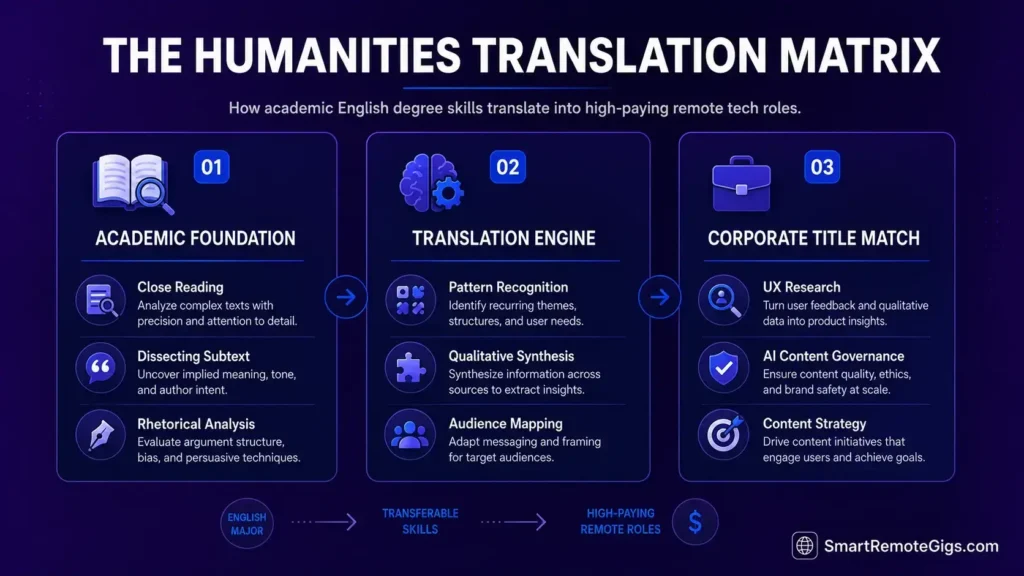
Here’s what a lot of hiring managers need but don’t know how to ask for: someone who can read between the lines.
Four years of dissecting subtext in Victorian novels, identifying rhetorical patterns, and building arguments about questions without objective answers — businesses need exactly this skill set. They just call it “qualitative analysis,” “audience research,” or “narrative design.”
The translation happens in how you frame the work:
- Academic framing (doesn’t get interviews): “Analyzed thematic elements in 20th-century American literature”
- Business framing (gets interviews): “Conducted systematic qualitative analysis to identify patterns, extract key themes, and synthesize insights from complex source material”
Same skill. Different language.
While these roles suit graduates building careers, if you’re still in school, see Remote Jobs for College Students to start earning before you finish your degree.
The AI Advantage: Why LLMs Make English Majors More Valuable
AI writing tools didn’t replace English majors — if anything, they raised the value of the judgment English majors are trained in.
Companies now produce huge volumes of AI-generated content that’s grammatically clean but often thin or subtly wrong. That creates real demand for people who can catch it: a hallucinated source, an off-tone paragraph, or narrative logic that quietly falls apart by paragraph three.
Prompt engineering is applied rhetoric — precise word choice and framing to shift an output, the same instinct trained by close reading, now pointed at a model instead of a poem.
Content governance — setting brand voice guidelines and quality standards — is the same pattern-codifying work behind any style analysis.
Group A — If you’re newer to AI tools: Use one seriously for a few weeks — drafting, editing, research — before claiming any AI-adjacent skill on a resume. Fluency shows in specifics, not buzzwords.
Group B — If you’re already comfortable with AI tools: The differentiator now is documented judgment — a portfolio piece showing you caught a factual error, a tone mismatch, or a logic gap an AI output produced, and how you fixed it.
Tech & Corporate Remote Jobs for English Majors (Besides Writing)
1. UX Researcher Assistant
🎯 Reality Check & Diagnostics
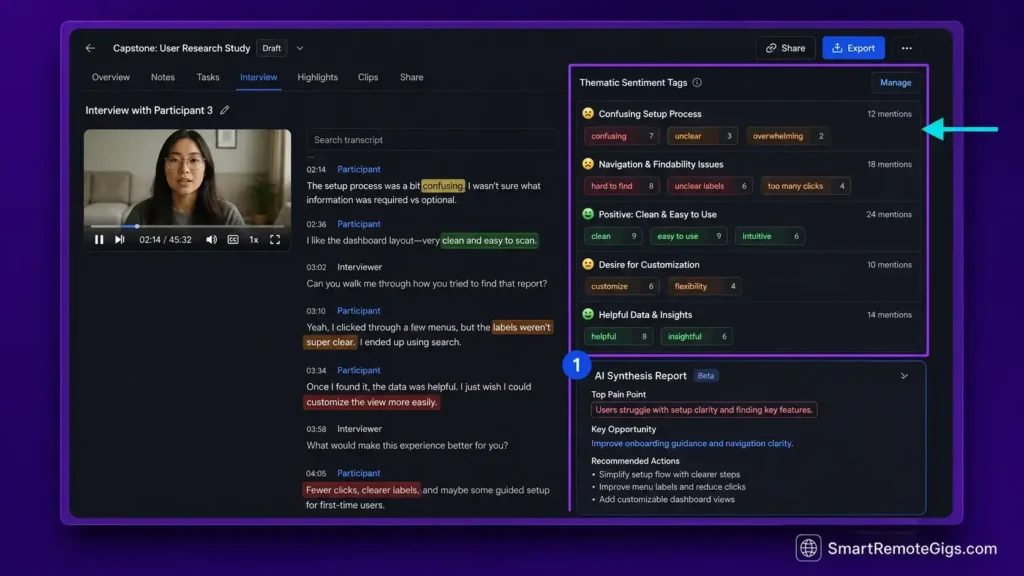
UX research is literary analysis applied to human behavior. Identifying themes across a stack of user interviews draws on the same muscle as identifying motifs across a novel — reading past what a user says to what they mean is close reading in a different medium. This is one of the clearest tech jobs for English majors, since the core deliverable is a written research brief, not code.
The pay range: $45,000–$62,000 for entry-level assistants; senior UX researchers report $90,000–$130,000. [Aggregated Salary Data] [Confidence Level: Moderate]
⚡ Exact Portfolio Workflow
Run a guerrilla usability test on your university’s course registration system (or any public site). Recruit 5 users attempting a specific task. Record the sessions. Identify 3 recurring pain points. Write a 2-page research brief with prioritized recommendations.
UX Interview Script Template
“Walk me through how you’d [complete task] — think out loud as you go.”
“What did you expect to happen when you clicked that?”
“On a scale of 1–5, how frustrating was that step, and why?”
“If you could change one thing about this process, what would it be?”
Close with: “Is there anything about this experience you haven’t mentioned that stood out?”
⚠️ Workflow Limitations
UX research involves a lot of meetings, and some companies treat it as a checkbox exercise rather than acting on findings. Watching users struggle with a poorly designed interface — without being able to jump in and help — takes some getting used to.
Pro Tip:
Record every session (with consent) — a 30-second clip of a real user struggling is more persuasive in a job interview than any bullet point.
Red Flag:
If a “UX Research Assistant” listing is really just data entry with no interview or synthesis work, it’s a mislabeled admin role — ask directly what a typical week looks like before accepting.
2. Content Strategist
🎯 Reality Check & Diagnostics
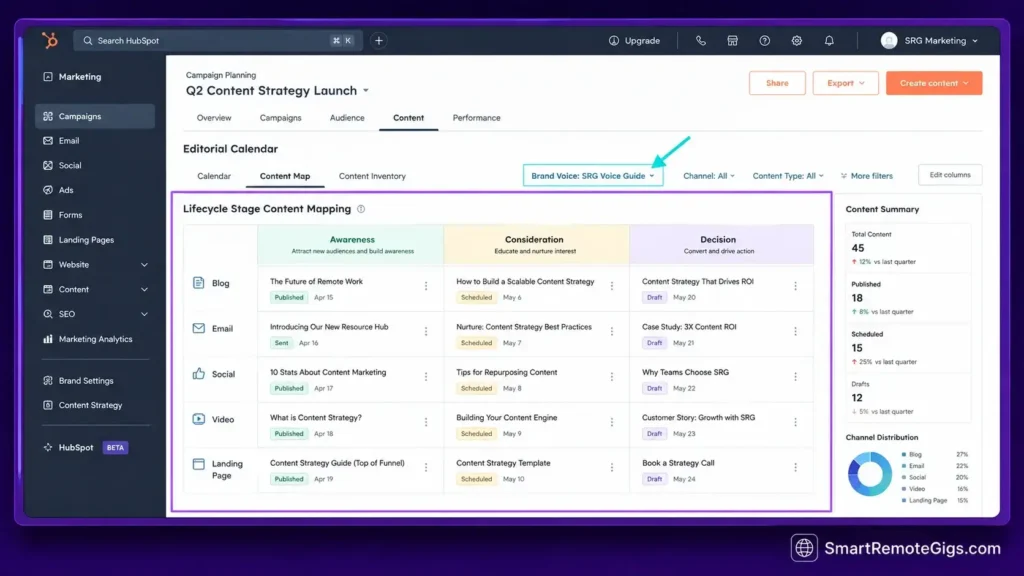
This is narrative architecture at scale — designing story arcs across channels, maintaining tonal consistency the way a novel holds together across multiple points of view.
The pay range: $50,000–$75,000 entry-level; senior strategists at tech companies report $90,000–$120,000. [Aggregated Salary Data] [Confidence Level: Moderate]
⚡ Exact Portfolio Workflow
Pick a brand with visibly inconsistent messaging across its website, email, and social. Audit each channel’s voice and gaps. Propose a 90-day content roadmap with specific deliverables. Publish it publicly.
Content Audit Template
Channel: [website / email / social / product copy]
Current voice (3 adjectives): _
Inconsistency found: _
Audience mismatch (if any): _
Recommended fix: _
Priority (High/Med/Low): _
⚠️ Workflow Limitations
Expect to defend recommendations against executives working off “gut feeling” rather than audience data. Good content strategy is also largely invisible — nobody notices the architecture until it’s missing.
Pro Tip:
Anchor every recommendation to a specific audience pain point, not a stylistic preference — it’s harder to argue with in a meeting.
Red Flag:
If a company can’t articulate who their content is for, the strategist role will spend most of its time doing discovery work that should’ve happened before hiring.ag or issue details here freely without restriction…
3. Technical Writer
🎯 Reality Check & Diagnostics
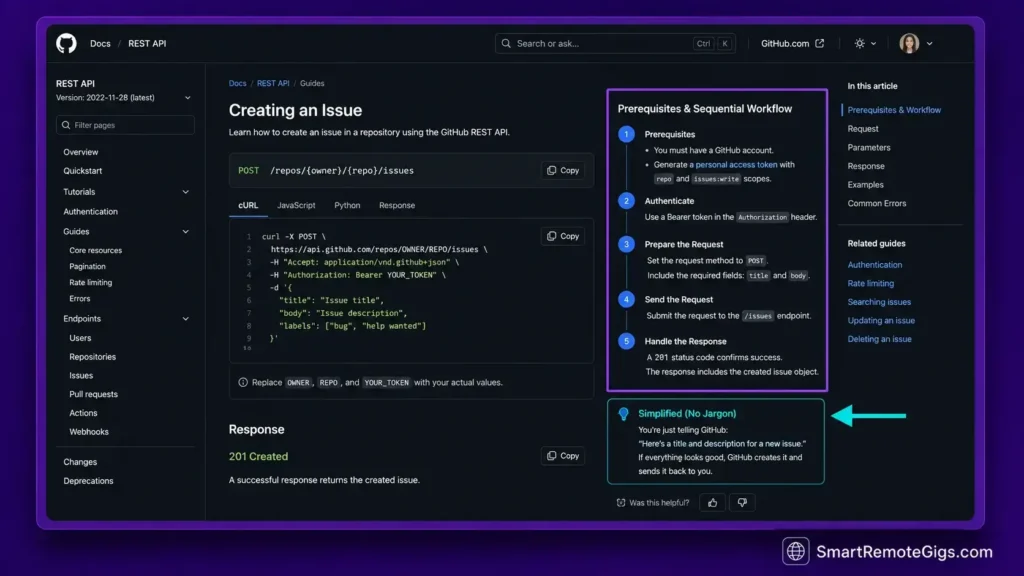
According to occupational growth data from the U.S. Bureau of Labor Statistics, technical writing provides one of the most resilient compensation floors in the professional writing sector.
The pay range: roughly $55,000–$85,000 depending on industry and seniority; public sources vary widely, with senior software technical writers scaling past $100,000. [Documented Report] [Confidence Level: Low-Moderate — check current listings for your target sector.]
⚡ Exact Portfolio Workflow
Pick one tool you use daily with poor documentation (Figma, Notion, and GitHub are common starting points). Write a comprehensive, beginner-friendly guide from zero.
Technical Doc SOP Outline
Overview — what this doc covers and who it’s for
Prerequisites — what the reader needs before starting
Step-by-step instructions (numbered, one action per step)
Common errors and fixes
Where to get help
⚠️ Workflow Limitations
You’re often the last person looped in before a launch, which compresses your deadlines. Documentation also tends to go unread until something breaks — and then gets blamed for being unclear.
Pro Tip:
Screenshot every UI step as you write it — engineers change interfaces without warning, and you’ll thank yourself later.
Red Flag:
If nobody on the team can answer “who owns keeping this doc updated after I leave,” the role is set up to produce documentation that goes stale fast.
4. AI Prompt Engineer
🎯 Reality Check & Diagnostics
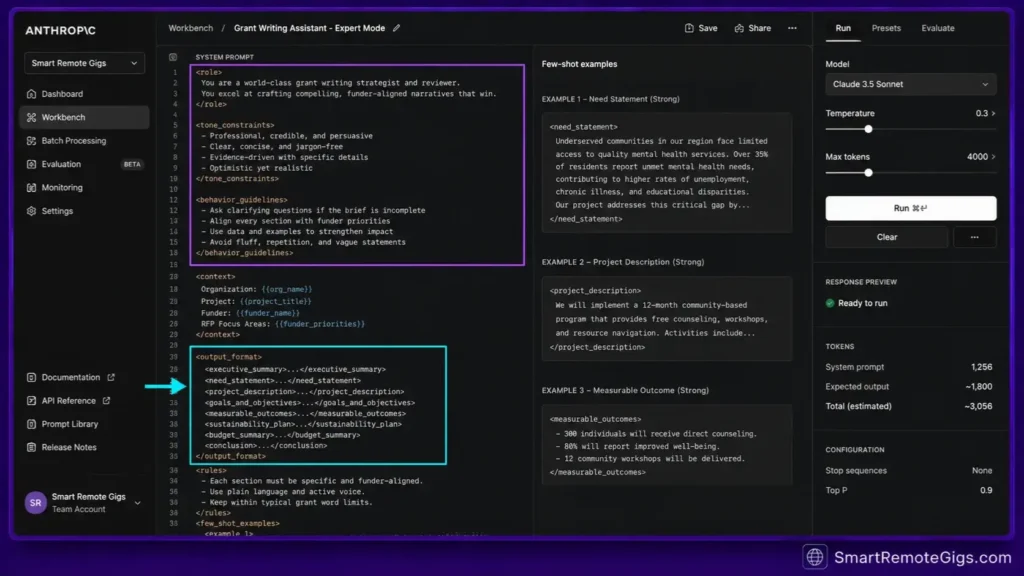
Prompting is precision language work — manipulating tone, context, specificity, and framing to get a desired outcome. Close-reading training helps diagnose why a prompt failed, not just that it did.
The pay range: roughly $60,000–$95,000, though this is a new-enough field that compensation varies widely. [Aggregated Salary Data] [Confidence Level: Low — titles and pay bands are still standardizing; verify against current listings.]
⚡ Exact Portfolio Workflow
Build a public prompt library with 50+ prompts for specific use cases (customer service responses, technical documentation, social copy). Document what works, what doesn’t, and why.
Prompt Refinement Chain Template
Draft prompt: “[initial version]”
Test output, note the specific failure (too vague / wrong tone / factually off)
Revised prompt: add one constraint at a time — role, format, length, or example
Re-test and log which single change fixed the issue
Document the final prompt + the failure it solves
⚠️ Workflow Limitations
Techniques that work well against one model version can stop working after an update. It’s also genuinely strange work — teaching a system to approximate empathy while knowing it doesn’t actually have any.
Pro Tip:
Version and date every prompt in your library — “worked as of [model, date]” is more credible than an undated claim.
Red Flag:
If a job posting expects a fixed prompt library to work indefinitely with zero maintenance, it misunderstands how fast models change.
5. Grant Writer
🎯 Reality Check & Diagnostics
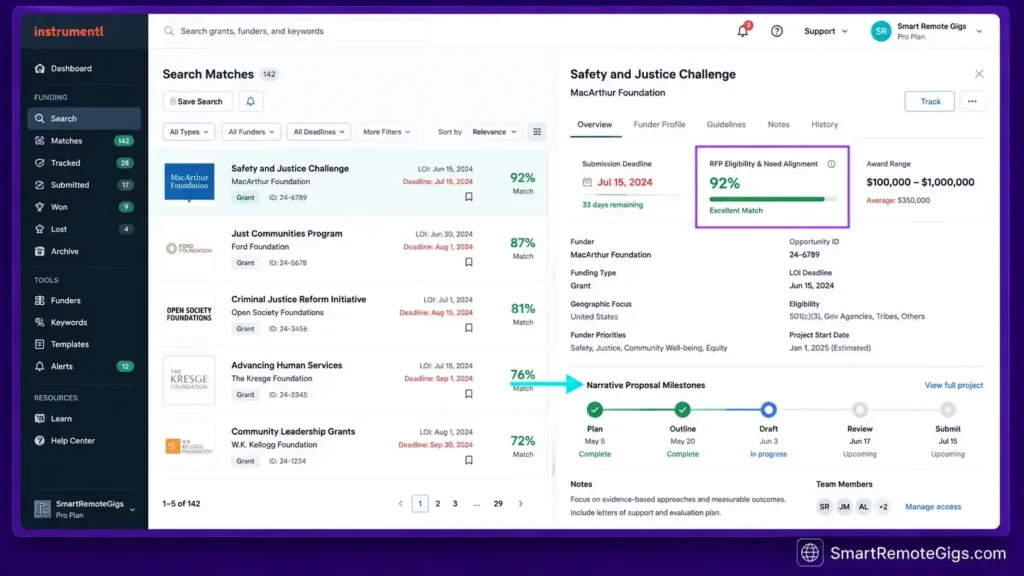
Grant writing is persuasive argumentation under strict structural constraints — the same skill practiced in academic essays, now making a funding case backed by evidence.
The pay range: $48,000–$70,000 for nonprofit roles; corporate/government-contract grant writers report $65,000–$90,000. [Aggregated Salary Data] [Confidence Level: Moderate]
⚡ Exact Portfolio Workflow
Volunteer to write a grant for a local nonprofit — many need the help and can’t afford dedicated staff. See Upwork Proposal Example if you’re planning to freelance this instead.
Grant Proposal Outline
Statement of need (the problem, with evidence)
Project description (what you’ll do about it)
Goals and measurable outcomes
Budget summary
Organizational capacity (why you’re credible to deliver this)
⚠️ Workflow Limitations
Rejections are common and often come with no feedback after significant effort. Grant cycles are seasonal, and writing daily about causes like homelessness or domestic violence can be emotionally taxing over time.
Pro Tip:
Keep a “reusable language” bank of your strongest need-statement paragraphs — grant cycles move fast and you’ll rewrite the same case for different funders.
Red Flag:
An organization that can’t produce basic outcome data (how many people served, at what cost) will make writing a credible proposal much harder.
6. Social Media Manager
🎯 Reality Check & Diagnostics
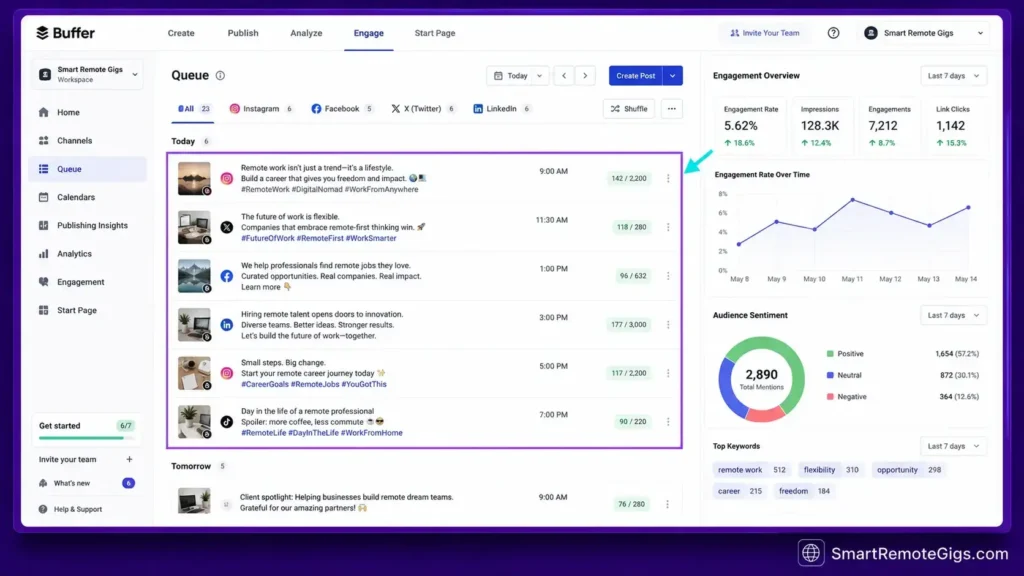
Social copy is microfiction under real constraints — crafting a narrative in a tight character count, reading platform-specific conventions, and reading sentiment in comment sections.
The pay range: $40,000–$60,000 entry-level; senior social managers at major brands report $75,000–$100,000. [Aggregated Salary Data] [Confidence Level: Moderate]
⚡ Exact Portfolio Workflow
Grow a niche account organically and document your strategy — what worked, what didn’t, and what you learned about the audience.
Social Content Audit Template
Top 3 performing posts: format, hook, why it worked
Bottom 3 performing posts: what missed
Posting cadence and best time-of-day pattern observed
One experiment to run next and its hypothesis
⚠️ Workflow Limitations
The role tends to be always-on; brand issues don’t wait for business hours. Success is tied to algorithms that change without warning. Reading negative comments daily has a real toll.
Pro Tip:
Draft a crisis-response template in advance — having a calm, pre-approved holding statement saves you from writing under pressure at 11 PM.
Red Flag:
If there’s no escalation path for a genuine brand crisis, you’re the entire crisis-comms team by default — clarify that before taking the role.
7. Podcast Producer
🎯 Reality Check & Diagnostics
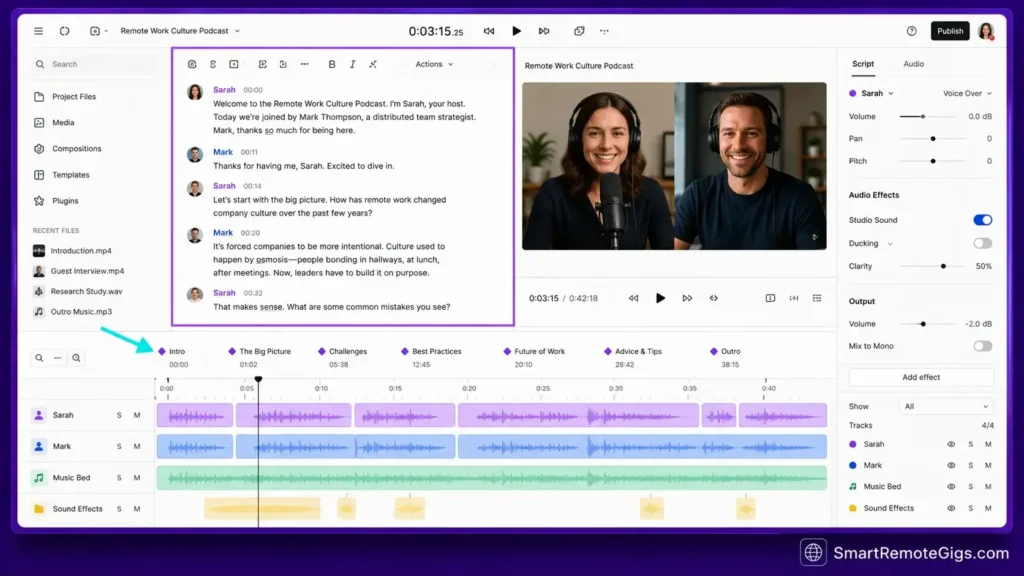
This is audio storytelling — finding the compelling arc inside a 90-minute conversation and choosing what to cut.
The pay range: $35,000–$55,000 at media companies; freelance editors on established shows report $50–$100/hour. [Aggregated Salary Data] [Confidence Level: Low-Moderate — freelance rates vary by show size and editing scope.]
⚡ Exact Portfolio Workflow
Offer to produce a podcast for free for someone with interesting expertise but no time. Edit in a tool like Descript. Three polished episodes is enough for an initial portfolio.
Episode Outline Template
Cold open (30-sec hook pulled from the most compelling moment)
Guest intro (1–2 sentences, credibility-focused)
3 main discussion segments (topic + key question each)
Takeaway close
Show notes: 2-sentence description + 3 timestamped highlights
⚠️ Workflow Limitations
Most shows fail within their first 10 episodes, so expect to invest in projects that get canceled. Audio editing is tedious — cleaning filler words out of a 60-minute conversation can take several hours.
Pro Tip:
Timestamp your rough cuts as you listen the first time — it cuts editing time significantly versus scrubbing back through blind.
Red Flag:
A client who wants weekly episodes but can’t commit to a consistent guest-booking process will burn out whoever’s producing it.
8. Email Marketing Specialist
🎯 Reality Check & Diagnostics
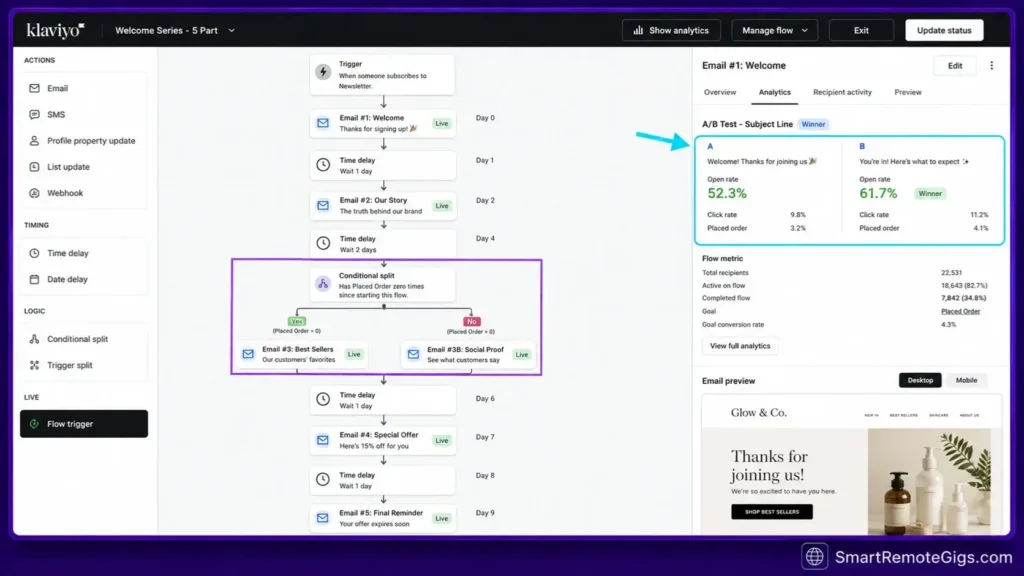
This is persuasive writing under empirical testing — crafting a narrative, understanding audience segments, and refining based on what the data actually shows.
The pay range: $45,000–$65,000; specialists at e-commerce or SaaS companies report $70,000–$90,000. [Aggregated Salary Data] [Confidence Level: Moderate]
⚡ Exact Portfolio Workflow
Build a sample 5-email welcome sequence in Mailchimp or Klaviyo for a real company that lacks one, and write up your strategy as a case study.
Welcome Sequence Template
Email 1 (Day 0): Welcome + set expectations
Email 2 (Day 2): Deliver core value / best resource
Email 3 (Day 4): Social proof or use case
Email 4 (Day 7): Address common objection
Email 5 (Day 10): Direct call-to-action
⚠️ Workflow Limitations
Success depends partly on things outside your control — spam filters, inbox algorithms, subscriber fatigue. Effective email marketing often means sending more email, which can sit uneasily with concern about inbox overload.
Pro Tip:
A/B test subject lines only — changing multiple variables at once makes it impossible to know what actually moved the open rate.
Red Flag:
If a client wants list growth and low unsubscribe rates simultaneously with an aggressive send cadence, those goals are in tension — say so up front.
9. SEO Content Specialist
🎯 Reality Check & Diagnostics
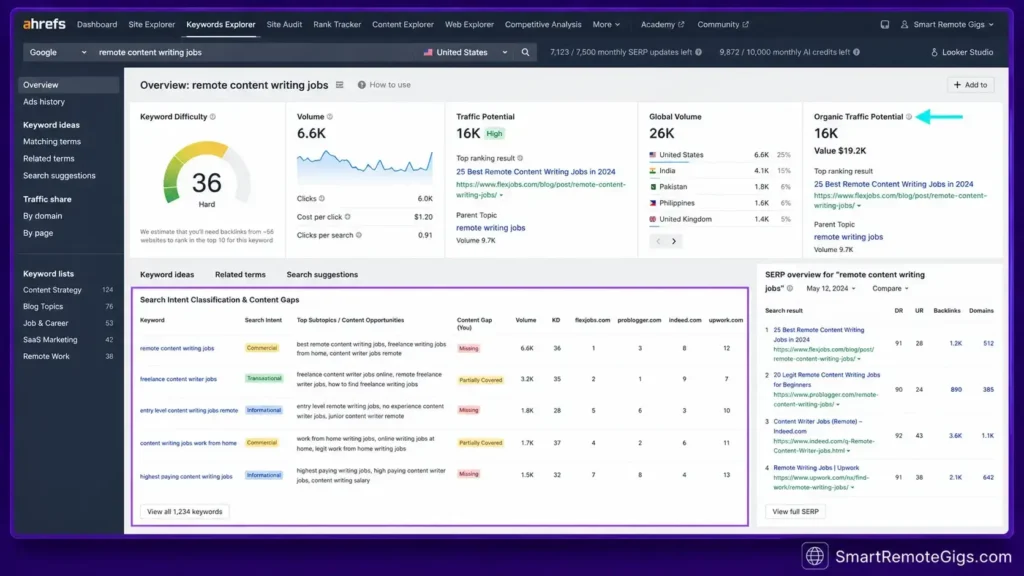
SEO is pattern recognition applied to search intent — close-reading what searchers actually need, then crafting long-form material that satisfies both the reader and Google’s Helpful Content Guidelines. This is one of the most direct tech paths for English majors willing to master basic analytics tools.
The pay range: $42,000–$65,000 entry-level; specialists at enterprise tech companies or agencies report $70,000–$95,000. [Documented Report] [Confidence Level: Moderate]
⚡ Exact Portfolio Workflow
Use Google Search Console (still free) plus Ahrefs Free or Starter to audit 5 articles on any site, identify keyword gaps, and write a detailed improvement report. See Upwork vs Fiverr if you’re deciding where to find freelance SEO work.
SEO Audit Checklist
Target keyword present in title, H1, first 100 words? Y/N
Search intent match (informational/transactional/navigational)?
Internal links to/from this page: count
Word count vs. top 3 ranking competitors
One specific content gap vs. the top-ranking result
⚠️ Workflow Limitations
A single algorithm update can undercut months of ranking work, sometimes without a clear explanation. There’s also a real tension between writing for search engines and writing for humans that never fully goes away.
Pro Tip:
Write the human-readable version first, then optimize — retrofitting keywords into already-awkward copy is obvious to readers and increasingly to search engines too.
Red Flag:
A client asking for a specific keyword density percentage is working from outdated SEO advice — modern ranking factors don’t work that way.
10. Customer Education Specialist
🎯 Reality Check & Diagnostics
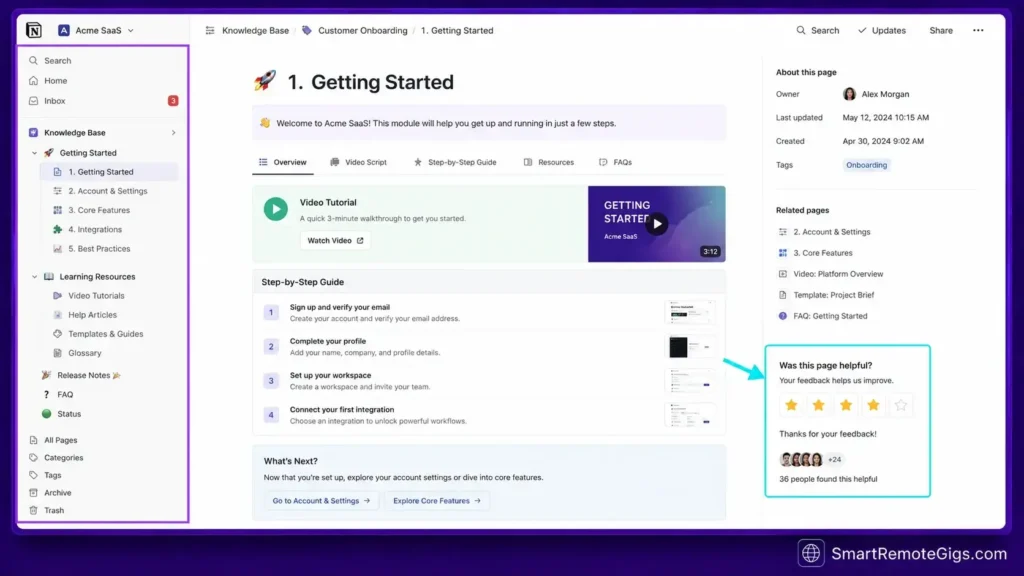
This is pedagogical design — breaking down complex concepts, scaffolding learning, adapting explanations for different learners. Anyone who’s TA’d or tutored has already done a version of this.
The pay range: $50,000–$72,000; specialists at enterprise software companies report $75,000–$95,000. [Aggregated Salary Data] [Confidence Level: Moderate]
⚡ Exact Portfolio Workflow
Pick a tool you use daily with poor documentation, write a clear step-by-step guide, and record a short video walkthrough. Post both publicly.
Customer Education Video Script Template
Hook: “By the end of this, you’ll be able to [outcome].”
Show the starting point (what it looks like before)
Walk through 3–5 steps, narrating the “why” not just the “click here”
Show the finished result
One common mistake to avoid
⚠️ Workflow Limitations
Product teams tend to prioritize building features over documenting them, so you’re often playing catch-up with limited resources — and most inbound feedback comes from frustrated users, since happy ones rarely reach out.
Pro Tip:
Build a “most-asked support questions” list from the support team directly — it’s a free content roadmap.
Red Flag:
If customer education has no seat at the table when features ship, you’ll permanently be documenting last month’s product.
🗓️ The 30-Day English Major Remote Career Launch Plan
Week 1 — Choose and Research
Pick one target role from the 10 above based on fit, not just pay. Read 10 real job postings for it and note the recurring required skills and tools.
Week 2 — Build the Portfolio Piece
Use the matching template above (interview script, content audit, technical doc, prompt library, etc.) to produce one complete, publishable portfolio artifact.
Week 3 — Publish and Translate
Post the portfolio piece publicly (LinkedIn, Medium, or a personal site). Rewrite your resume using the business-speak translation framework below.
Week 4 — Outreach
Apply to 15–20 roles with a customized note referencing your portfolio piece directly. Send 5 direct outreach messages to people in the target role, asking for 15 minutes to hear about their day-to-day.
[Aggregated Salary Data] and portfolio strategy above are general guidance, not a guaranteed timeline — actual hiring cycles vary by industry and market conditions.
Framing Your Degree: The “Business Speak” Translation
The most common mistake English majors make on resumes: describing professional-grade skills in academic language.
Before (academic framing):
- Completed honors thesis on narrative unreliability in modernist fiction
- Analyzed thematic elements across 50+ literary texts
- Presented research at undergraduate symposium
After (business framing):
- Conducted independent qualitative research project analyzing narrative patterns across 50+ source documents
- Synthesized complex findings into actionable insights presented to academic and professional audiences
- Demonstrated advanced analytical and communication skills through long-form written deliverables
Before: Served as Teaching Assistant for Introduction to Literature
After: Educated and mentored 60+ students on complex analytical concepts; developed curriculum materials and assessment frameworks; provided individualized feedback to improve student performance
| Academic Language | Business Translation |
|---|---|
| “Close reading of texts” | “Qualitative analysis and pattern identification” |
| “Literary analysis” | “Critical thinking and insight synthesis” |
| “Wrote research papers” | “Produced long-form analytical deliverables” |
| “Studied narrative structure” | “Analyzed information architecture and flow” |
| “Analyzed rhetorical strategies” | “Evaluated persuasive communication techniques” |
| “Interpreted symbolism and subtext” | “Identified implicit meanings and underlying patterns” |
Red Flag:
Watch for “Content Moderator” listings paying under $15/hour that specifically target English majors. They’re often tagged “Entry Level English Major” but offer little career growth, high burnout from disturbing content, and few transferable skills.
Before your first interview, make sure your setup is ready — see Essential Home Office Tech, especially a decent microphone for user interviews and client calls. Once you’re juggling a role alongside school or another job, Balance Part Time Remote Job is worth reading before burnout sets in.
The Verdict
Best Overall for 2026: UX Researcher Assistant. It has the strongest reported salary ceiling of the group and the most direct application of close-reading skills — every product company needs some form of user research, and few English majors realize they’re already trained for a version of it.
The idea that English majors can’t find good jobs is outdated. The real bottleneck in 2026 isn’t demand for the underlying skills — it’s translating them into language hiring managers already recognize, then proving it with a portfolio piece instead of a claim.
Ready to land your first remote role? See How to Write a Remote Resume that highlights your English degree as an asset, not something to explain away.











![AI Content Writer Jobs: [My 2026 Survival Playbook]](https://smartremotegigs.com/wp-content/uploads/2026/04/ai-content-writer-jobs-survival-playbook-1024x577.webp)
![Remote Copywriting Jobs 2026: [High-Ticket Method]](https://smartremotegigs.com/wp-content/uploads/2026/04/remote-copywriting-jobs-high-ticket-method-guide-1024x577.webp)
![Remote Technical Writing Jobs: [The $80K/Yr Guide]](https://smartremotegigs.com/wp-content/uploads/2026/04/remote-technical-writing-jobs-hero.webp)