
Start An Email Newsletter 2026: My Substack Path [Guide]
 ·
Last Updated: March 26, 2026 ·
10 min read
·
Last Updated: March 26, 2026 ·
10 min read 
If you rely purely on social media algorithms to find freelance clients, you are building your business on rented land. Figuring out how to start an email newsletter is the ultimate insurance policy for 2026 — giving you a scalable digital asset you actually own and control.
I spent 6 months moving my 5,000 LinkedIn followers to a paid Substack. I stopped chasing freelance leads because my newsletter transformed from a weekly chore into a scalable digital asset that pays my rent.
Teaching freelancers how to build these algorithm-proof assets is exactly why we created Smart Remote Gigs. That shift didn’t happen by accident. It happened because I followed a specific system — and this is that system.
Verdict: Substack is the best choice for writers who want built-in discovery and frictionless paid subscriptions from day one. Beehiiv wins for growth-focused freelancers who want ad sponsorship tools, advanced analytics, and referral programs to scale faster. Pick based on your monetization model, not the hype.
2026 Newsletter Platforms: At a Glance
Platform | Best For | 2026 Pricing Model | Monetization Strength |
|---|---|---|---|
Substack | Writers, thought leaders, long-form creators | Free (10% cut on paid subs) | ⭐⭐⭐⭐⭐ Paid subscriptions |
Beehiiv | Growth-focused freelancers & media operators | Free / $39/mo (Scale) | ⭐⭐⭐⭐⭐ Ads + subs + referrals |
ConvertKit (Kit) | Creators selling digital products | Free / $25/mo (Creator) | ⭐⭐⭐⭐ Product funnels |
Mailchimp | Legacy e-commerce & SMBs | Free / $13/mo (Essentials) | ⭐⭐ Basic email blasts |
Ghost | Technical users wanting full control | From $9/mo (self-hosted free) | ⭐⭐⭐⭐ Memberships + custom |
Step 1: Pick a Hyper-Niche (Stop Writing “For Everyone”)
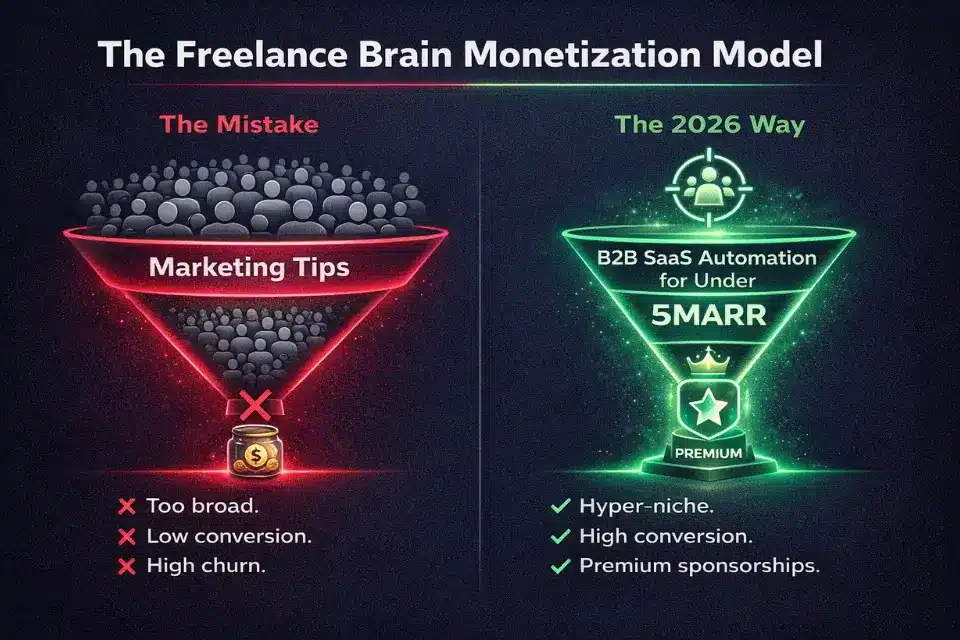
The “Freelance Brain” Monetization Model
The number one mistake I see freelancers make when starting a newsletter: they write about everything in their industry and wonder why no one subscribes.
“Marketing tips” is not a niche. “Marketing automation workflows for B2B SaaS teams under 50 people” is a niche. The difference is not semantics — it’s the difference between 47 subscribers and 4,700.
Hyper-niching does three things simultaneously. It makes your content easier to write (you’re not reinventing the topic every week). It makes you the obvious expert to a specific buyer. And it makes sponsorship pitches trivial — you can tell a software company exactly who reads your newsletter and why they’re the right fit.
The fastest way to validate your niche: look at the last 10 client conversations you’ve had. What questions came up on every onboarding call? What problems do you solve on repeat? That’s your newsletter. You’re already the expert. You’re just not packaging it yet.
Pro Tip: Repurpose the exact questions your current freelance clients ask you during onboarding calls into your first 5 newsletter editions. You already have the content — it’s sitting in your inbox and in your Zoom call notes. This approach means you launch with a genuine content backlog, not a blank page.
Step 2: Choose Your 2026 Weapon (Substack vs. Beehiiv)
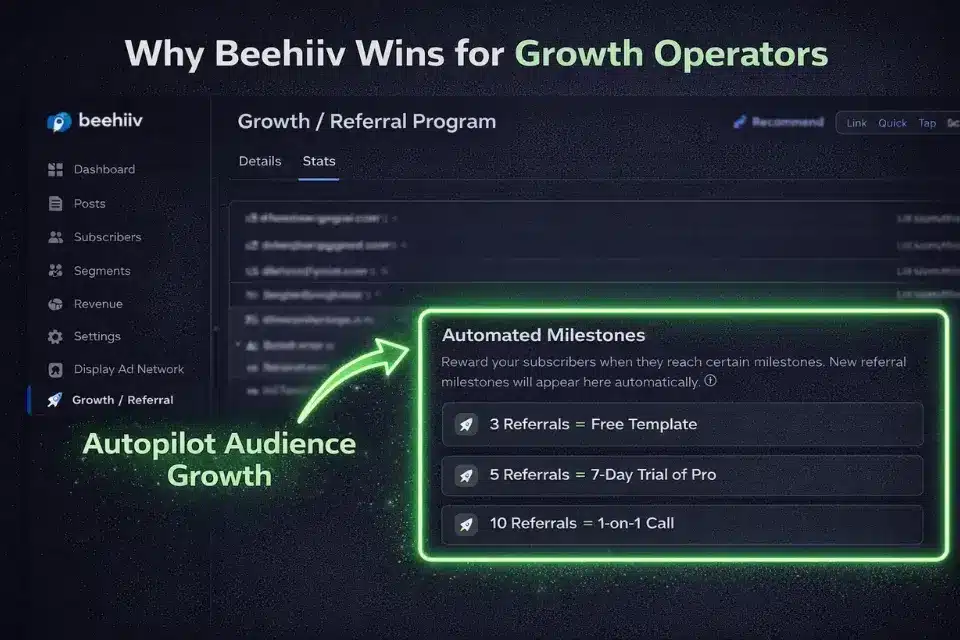
Why Mailchimp is Dead for Creators
Let me say this plainly: Mailchimp was built for small businesses sending promotional emails. It was not built for creators monetizing an audience. Using it in 2026 because it’s familiar is like using a fax machine because you already know how it works.
The modern newsletter creator needs three things baked into their platform: a native paywall, a referral growth engine, and real analytics beyond open rate. Mailchimp delivers none of those well.
Substack is the right call if you’re a writer who wants to start getting paid subscribers fast with zero technical setup. The built-in discovery network means new readers can find you organically through Substack’s own recommendation algorithm — that’s a real growth channel that doesn’t exist on other platforms. The trade-off is Substack’s 10% cut on paid subscription revenue, which stings once you’re generating serious volume.
Beehiiv is the right call if you’re treating this as a growth business from day one. The ad network (Beehiiv Ad Network) lets you monetize even a small list through sponsorships before you’ve convinced anyone to pay for a subscription. The referral program feature is the best implementation I’ve tested — readers can share a link and track their referral count, which drives organic list growth on autopilot.
My honest take: start on Substack if you’re uncertain, migrate to Beehiiv once you hit 1,000 subscribers and have validated your niche. The migration is less painful than people think, and Beehiiv’s tools justify the platform fee at scale.
Beehiiv’s real flaw: the email design editor is clunky compared to competitors, and the learning curve on the analytics dashboard is steeper than it needs to be for a product aimed at solo operators.

beehiiv
Best for: Growth-focused freelancers who want built-in referral engines and instant ad sponsorships.
ConvertKit (now rebranded as Kit) sits in an interesting middle lane. It’s not as discovery-focused as Substack, not as growth-engineered as Beehiiv — but if your newsletter feeds directly into digital product sales (templates, courses, coaching), ConvertKit’s automation sequences and product funnel integrations are the strongest in the category. The visual automation builder is genuinely excellent for building multi-step nurture flows.
The downside: ConvertKit’s free tier is more limited than it used to be, and the pricing scales aggressively past 1,000 subscribers. If you’re not selling a product alongside your newsletter, the feature set is overkill.
ConvertKit
Best for: Creators selling digital products who need advanced visual automation funnels to drive sales.
Step 3: Set Up Your Automated Content Engine
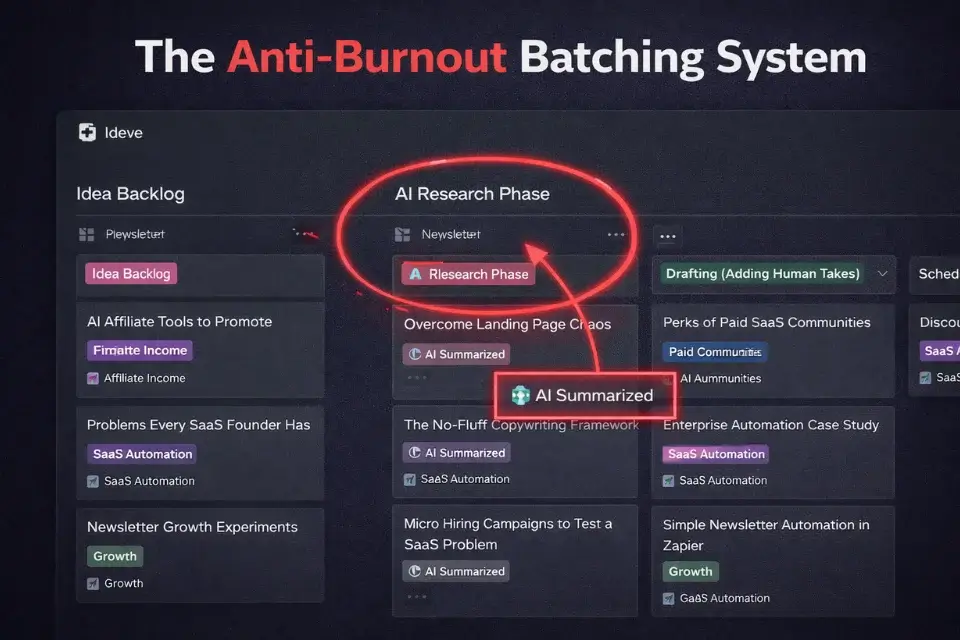
How to Avoid Newsletter Burnout
Newsletter burnout is not a willpower problem. It’s a systems problem.
Every freelancer I’ve watched quit their newsletter had the same failure mode: they treated it like a weekly emergency. Sunday night rolls around, they have no idea what to write, they panic-publish something mediocre, and three months later they’ve “taken a short break” that becomes permanent.
The fix is batching, and the tool that makes batching work is a proper content calendar.
Here’s my actual system: I block one Saturday per month and produce 4–5 editions in a single session. I use AI to pull and summarize the week’s relevant industry news — that handles 60–70% of the research. I add my own analysis and personal takes to each piece. Total active writing time per edition drops from 3 hours to about 45 minutes.
The infrastructure for this lives in a project management tool. I track each edition as a card: topic, research links, draft status, publish date. When I open my workspace on that Saturday, every edition has a skeleton waiting — I’m filling in analysis, not staring at a blank document.
Our top-ranked project management tools audit covers this in detail, but the short version: Notion is the best content calendar for newsletter operators because you can build a linked database that connects your edition tracker to your topic backlog, your sponsor pipeline, and your subscriber metrics all in one workspace. Trello works if you want something simpler and faster to set up.
The honest Notion caveat: the initial database setup takes a few hours if you’re building it from scratch. Buy a pre-made newsletter OS template and customize it — don’t start from a blank page.
Notion
Best for: Building a scalable content calendar to batch your writing and organize AI research.
Step 4: The “100 True Fans” Launch Strategy
Converting Clients into Subscribers
You don’t need 10,000 subscribers to launch. You need 100 people who genuinely care about what you’re writing.
100 engaged subscribers outperform 1,000 passive ones on every metric that matters: open rate, reply rate, word-of-mouth referrals, and — when you turn on monetization — conversion to paid.
Your first 100 subscribers are already in your network. Former clients who you’ve delivered good work for. LinkedIn connections in your niche who engage with your posts. Colleagues who ask you questions you answer for free. People in Slack communities or Discord servers you’re active in.
The sequence I used to move 5,000 LinkedIn followers to Substack:
- Posted a “I’m starting a newsletter” announcement with a clear value proposition — not “subscribe for updates,” but “every week I break down one specific growth tactic for B2B SaaS content teams.”
- Sent a direct message to my 50 most engaged LinkedIn connections personally explaining why I thought they’d find it useful.
- Added a newsletter CTA to every piece of content I published on LinkedIn for 8 weeks straight.
- Mentioned it in client onboarding emails as a resource they might find valuable.
That sequence got me to 340 subscribers in 6 weeks. None of it required a paid ad.
Warning: Never manually add past clients to your list without their explicit, opt-in consent. That is a fast track to spam filters, a damaged sender reputation, and burned professional relationships. GDPR and CAN-SPAM compliance isn’t optional — it’s the foundation your list’s deliverability is built on. Every subscriber must opt in themselves. Every single one.
Step 5: Monetization Math (Free vs. Paid Tiers)

When to Turn on the Paywall
The most common question I get: “When should I start charging?”
My answer: later than you think, but not as late as most people wait.
The industry benchmark for free-to-paid conversion on newsletter platforms sits between 1–5% of your free list, depending on niche, content quality, and how well you’ve positioned the paid tier. That means if you have 500 free subscribers, a realistic paid conversion is 5–25 people. At $10/month, that’s $50–$250/month — not life-changing, but it’s proof of concept.
The paywall is worth turning on when two conditions are met: your open rate is consistently above 40%, and you’ve received at least 10 unprompted replies or comments telling you the newsletter is valuable. That feedback pattern tells you people are reading to the end and finding it worth their attention — the prerequisite to paying for it.
Pricing the premium tier: I’ve tested $7/month, $10/month, and $15/month. $10/month is the sweet spot — below the mental threshold where people stop to think hard, above the price point that signals this is a real publication worth taking seriously.
The newsletter fits into a bigger income architecture. It’s not just a standalone revenue stream — it’s a platform that amplifies everything else you build. The passive income framework for freelancers covers exactly how the paid newsletter connects to your template business, your affiliate income, and your productized services into a compounding revenue flywheel. The newsletter is Stage 2 of that system — after you’ve built your first digital asset, your newsletter becomes the distribution engine that sells it at scale.
Frequently Asked Questions
How much does it cost to start an email newsletter in 2026?
You can start for free on Substack or Beehiiv’s free tier — no credit card required. Both platforms support free subscriber lists and basic sending at no cost. The paid tiers become relevant when you need advanced growth tools (Beehiiv’s referral engine, ad network, or custom domains start at $39/month) or when you want to remove platform revenue cuts.
Total out-of-pocket cost to launch: $0. Total cost to run a serious growth-stage newsletter: $39–$79/month depending on platform and subscriber count.
How many subscribers do I need before I can make money?
You can technically monetize at 100 subscribers through sponsored content if you have a hyper-specific niche and can demonstrate audience quality over quantity. Beehiiv’s ad network has a minimum threshold but allows small-list monetization via direct sponsor deals.
For paid subscriptions, the math works at any list size — 500 free subscribers converting at 3% paid gives you 15 paying customers at $10/month, which is $150/month in recurring revenue. Scale the list, scale the revenue.
Substack or Beehiiv: Which is better for freelance beginners?
Substack for writers. Beehiiv for growth operators. If you want to sit down, write, and start collecting paid subscribers with zero technical setup — Substack. If you’re willing to invest a few hours in configuration to get a referral program, ad sponsorship access, and superior analytics — Beehiiv.
The honest answer is that either platform will outperform your content strategy if your content strategy is weak. Pick one, commit for 90 days, and optimize from real data.
The era of renting your audience from unpredictable algorithms is officially over.
At Smart Remote Gigs, our absolute mission is to help freelancers transition from chasing leads to owning their distribution channels.
Don’t write another word on a platform you don’t own. Pick your newsletter software via our Software Directory and lock in your custom domain today.

![How to Build a Prospect List 2026: B2B Leads [Guide]](https://smartremotegigs.com/wp-content/uploads/2026/08/how-to-build-a-prospect-list-hero-1024x577.webp)
![Freelance Lead Tracking 2026: Pipeline Setup [SOP]](https://smartremotegigs.com/wp-content/uploads/2026/09/freelance-lead-tracking-hero1-1024x577.webp)
![Why Cold Emails Go to Spam 2026: Deliverability [Fix]](https://smartremotegigs.com/wp-content/uploads/2026/09/why-cold-emails-go-to-spam-hero1-1024x577.webp)