
If you are trying to escape the 9-to-5, finding the best freelance websites for beginners is usually your first step. But the reality in 2026 is brutal: the legacy platforms are saturated, and simply signing up guarantees nothing but crickets.
I spent 30 days testing fresh, zero-review, “no experience” profiles across 5 major platforms to see what actually generates inbound leads in 2026. Most platforms delivered exactly what you’d expect from a cold start: nothing. A few surprised me.
Exposing these algorithmic realities so you don’t waste months on dead platforms is exactly why we built Smart Remote Gigs. Here’s the honest breakdown.
Verdict: Contra is the best platform for modern creatives — zero commissions, portfolio-first design, and a genuinely less saturated talent pool than the legacy giants. Upwork remains the best choice for technical and admin skills, but only if you understand and actively optimize for its search algorithm. Walking in blind gets you buried.
2026 Freelance Platform Audit
Platform | Best For | 2026 Saturation Level | Algorithm Hack Strategy |
|---|---|---|---|
Upwork | Technical, admin, dev, writing skills | 🔴 Extreme | Keyword-optimized title + niche specialization in profile |
Fiverr | Productized creative & digital services | 🔴 Extreme | High-CTR gig thumbnail + narrow gig title targeting long-tail searches |
Contra | Gen Z creatives, designers, modern generalists | 🟡 Moderate | Visual portfolio quality + niche positioning in bio |
LinkedIn Services | B2B high-ticket consulting & professional services | 🟡 Moderate | Exact-match keyword stuffing in service page + headline |
Toptal | Senior devs, designers, finance experts | 🟢 Low (high barrier) | Pass the vetting process — there is no shortcut |
Top 2026 Freelance Platforms Ranked
1. Upwork — The Algorithm Heavyweight
Upwork is still the largest freelance marketplace in the world by volume, and that cuts both ways. The client base is massive and legitimate. The competition is also massive and increasingly automated — bidding bots, AI-generated proposals, and offshore freelancers willing to work for rates that make no economic sense in Western markets.
Winning on Upwork in 2026 is not about submitting more proposals. It’s about profile search rank.
When a client posts a job, Upwork’s algorithm serves them a shortlist of freelancers before they even open proposals. If you’re not in that shortlist, your proposal lands in a pile of 80 others and gets skimmed for 4 seconds. The entire game is getting into the algorithm’s initial recommendation set.
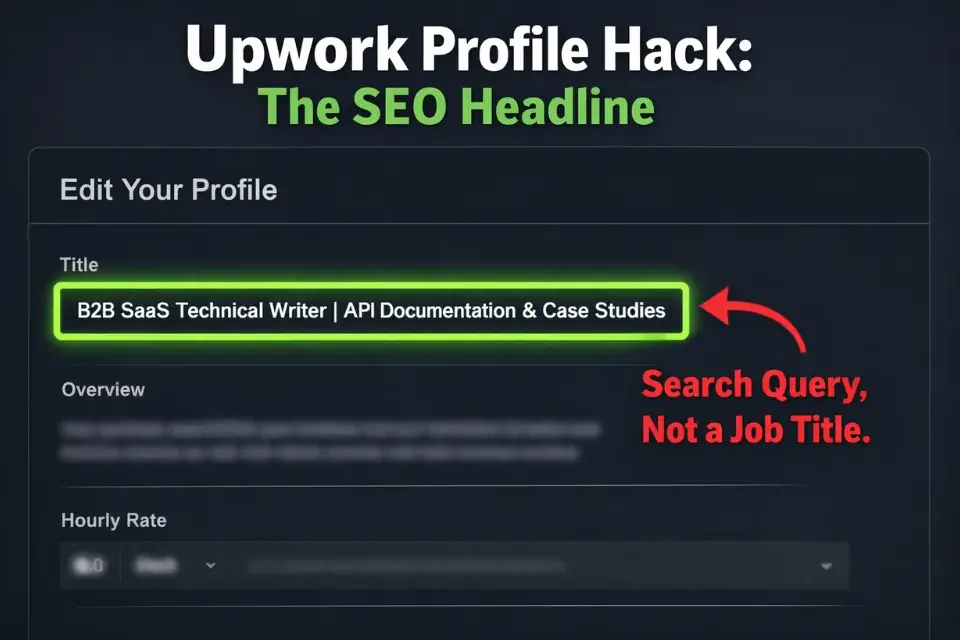
The levers that move your profile rank: your title (not your name — treat it like an SEO headline), your skill tags, your profile completeness score, your Job Success Score once you have reviews, and your response time to client messages. Your title should read like a search query your ideal client would type — “B2B SaaS Technical Writer | API Documentation & Case Studies” outperforms “Freelance Writer” by a factor that isn’t close.
For the full playbook on landing your first Upwork job with zero reviews, read our guide on getting your first Upwork job with no experience.
Warning: Never copy-paste raw ChatGPT output into Upwork proposals. Upwork’s 2026 algorithm actively flags accounts using unedited AI text, and clients have become extremely sensitive to the pattern. AI-drafted proposals get ignored or, worse, get your account shadow-banned from job recommendations. Use AI for brainstorming angles and structuring your thinking — then rewrite every single word in your own voice.
ChatGPT is still genuinely useful for the Upwork proposal process — but only as a brainstorming layer, not a finished output. Use it to identify the three strongest angles for why you’re the right fit, then write the actual proposal yourself. That combination outperforms both raw AI output and proposals written entirely from scratch.

ChatGPT
Best for: Brainstorming proposal angles and outlining structures, but strictly requires heavy human editing.
2. Fiverr — The AI Fulfillment Engine
Fiverr’s model is fundamentally different from Upwork’s, and most beginners don’t understand the distinction until they’ve wasted 3 months wondering why their gig has zero impressions.
On Fiverr, you are not pitching for jobs. You are running a product listing business.
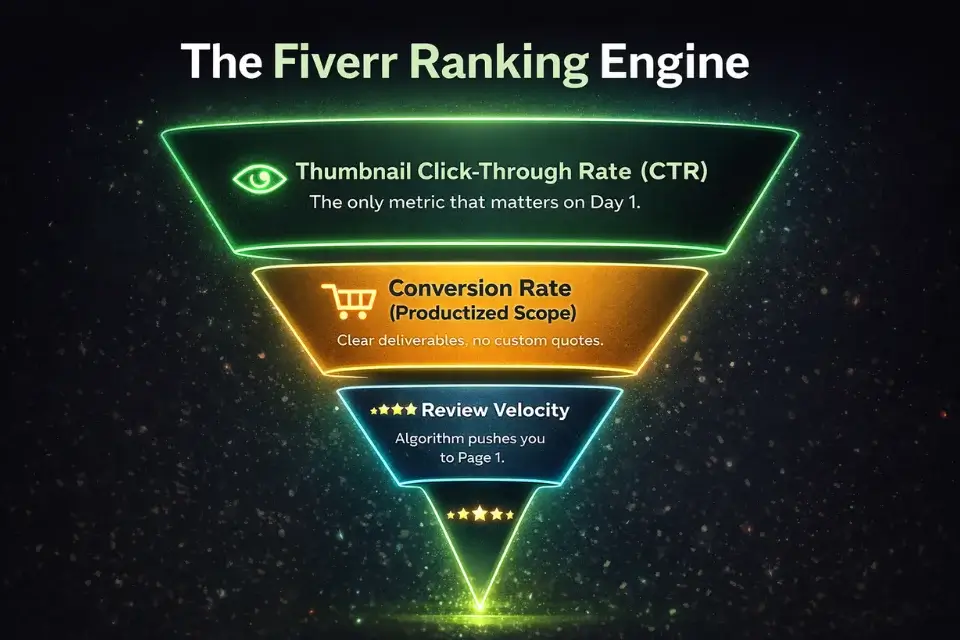
Think of it like an e-commerce store. Your gig is a product page. Fiverr’s algorithm decides which product pages to surface based on click-through rate, conversion rate, order completion rate, and review velocity. The client never reads your bio first — they scroll thumbnails. If your thumbnail doesn’t get clicked, nothing else matters.
The freelancers winning on Fiverr in 2026 have figured this out completely. Their gig titles target specific long-tail search queries (“I will write a 5-email SaaS onboarding sequence” beats “I will write email copy”). Their thumbnails are designed to stand out visually in a grid of similar offerings. Their gig packages are structured as clear products with defined deliverables, not vague “contact me for pricing” offers.
The deeper strategic move on Fiverr is productization. You’re not selling time — you’re selling a repeatably deliverable output. For ideas on which gigs actually convert in 2026, check out our breakdown of the best Fiverr gig ideas for beginners.
Canva is the tool for your gig thumbnails — full stop. The difference between a professionally designed thumbnail and a default screenshot is measurable in click-through rate, and click-through rate is the single most important metric for Fiverr’s discovery algorithm. A compelling thumbnail built in Canva takes 30 minutes and pays dividends for months.
The honest Canva caveat: if you need advanced vector work or complex brand assets, you’ll hit its ceiling. For Fiverr thumbnails and gig marketing visuals, it’s more than sufficient.
Canva
Best for: Designing highly clickable Fiverr gig thumbnails to hack the CTR algorithm.
3. Contra — The Commission-Free Challenger
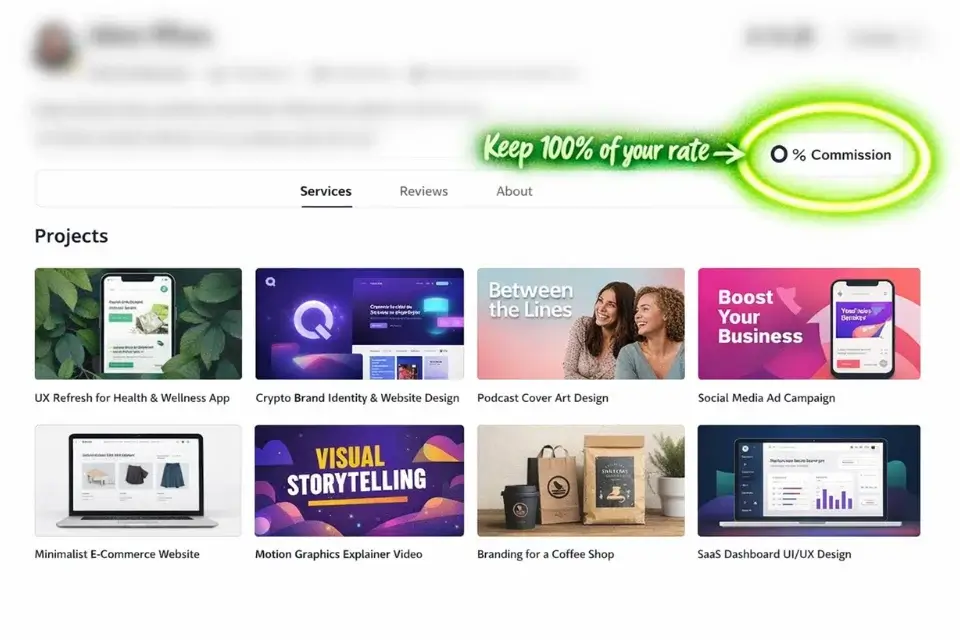
Contra is the platform I recommend most confidently to creative freelancers starting out in 2026, and the reason is simple: zero commission on earnings, ever.
Upwork takes 10%. Fiverr takes 20%. Contra takes nothing. On a $2,000 project, that’s $400 staying in your pocket versus going to a platform fee. At any volume, the math is significant.
Beyond the fee structure, Contra is architecturally different from the legacy platforms. It’s built around visual portfolios, not text resumes. Your profile is closer to a Behance page than an Upwork account — case studies, project images, and work samples lead the presentation. For designers, video editors, brand strategists, social media managers, and modern creative generalists, this format plays directly to their strengths.
The platform is less saturated than Upwork or Fiverr because it’s newer and has a higher barrier to a compelling profile — low-effort signups don’t convert well here. That creates a relative advantage for freelancers willing to invest in presenting their work properly.
The prerequisite for Contra is having a portfolio to show. If you’re starting from absolute zero, build your proof of work first. Our guide on building a freelance portfolio from scratch with AI covers the exact process for creating case studies and work samples before you have paying clients to reference.
Notion works extremely well as a portfolio host if you don’t have a personal website yet. A clean Notion page with your case studies, results, and service offerings takes a few hours to build and gives you a professional shareable URL before you’ve spent a dollar on web hosting.
Notion
Best for: Hosting a rapid, beautiful freelance portfolio case study if you don’t have a website yet.
4. LinkedIn (Services) — The B2B Goldmine
LinkedIn is not a freelance platform in the traditional sense — it doesn’t have a job board you browse or a proposal system. What it has is a massive, self-selecting audience of decision-makers who are actively trying to solve business problems and have budget to do it.
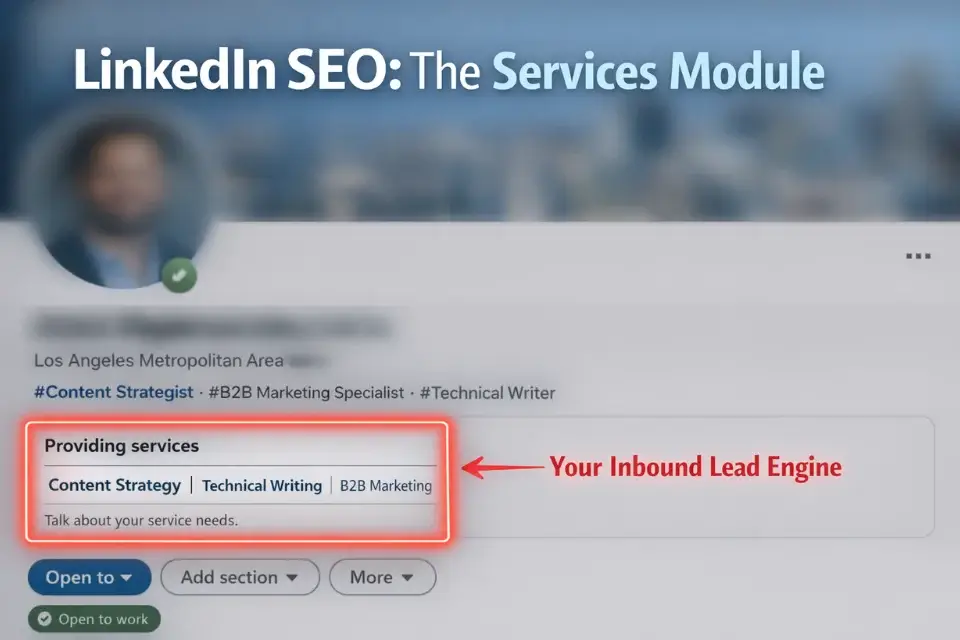
The LinkedIn Services feature (the “Providing Services” section on your profile) is severely underused by most freelancers. When activated and optimized, it makes your profile visible in searches by people specifically looking for freelance help — not just recruiters looking for full-time employees.
The strategy here is pure SEO applied to your LinkedIn profile. Your headline, your About section, your Services page, and your featured posts all function like on-page SEO signals. LinkedIn’s internal search algorithm surfaces profiles with exact-match keywords for the skills being searched.
Pro Tip: Turn on LinkedIn’s “Providing Services” feature and populate your service page with exact-match keywords that reflect how your ideal client would search — not how you’d describe yourself. “B2B SaaS Content Writer” beats “Marketing Professional.” “Fractional CFO for Tech Startups” beats “Finance Consultant.” Think like the person doing the hiring, not the person doing the work.
The high-ticket clients who don’t want to browse Upwork are on LinkedIn. A CMO looking for a senior content strategist is not posting on Fiverr. A Series A startup looking for a fractional COO is not searching Contra. They’re on LinkedIn, and if your profile ranks for their search, the inbound quality is categorically higher than any traditional freelance marketplace.
The “Zero to One” Strategy: Beating the Cold Start Problem
Every platform’s algorithm has the same fundamental chicken-and-egg problem: you need reviews to rank, but you need to rank to get jobs that give you reviews.
Here’s how I broke the cold start across multiple platforms in my 30-day test:
Step 1: Do not compete on price. The race-to-the-bottom is a real phenomenon on every saturated platform. Beginners drop their rate to $5/hour to get their first jobs, collect one review, and discover they’ve trained the algorithm — and the client pool — to expect that price point permanently. Before you set any rate on any platform, run your numbers through our freelance rate calculator so you know your floor and don’t price yourself into a loss.
Step 2: Niche down to an absurd degree. “Social Media Manager” competes against 40,000 profiles. “Instagram Content Strategist for Independent Bookstores” competes against 12. Pick a niche so specific it feels almost too narrow. You can always broaden later once the algorithm is feeding you work.
Step 3: Use your existing network for the first 3 reviews. Reach out to former colleagues, professors, or past clients and offer your service at a significantly reduced rate in exchange for a public review on the platform of your choice. Three legitimate 5-star reviews from real humans changes your algorithm standing completely.
Step 4: Build your AI tech stack before your first pitch. The freelancers getting traction fastest in 2026 are the ones who show up with tools, systems, and a delivery process — not just a skill. Our software directory maps out the exact tools worth adding to your stack by category, so your first client impression is one of someone who operates professionally, not someone who just signed up.
Frequently Asked Questions
Which freelance website is best for absolute beginners with no experience?
Contra is the most forgiving starting point for creative beginners because it prioritizes portfolio quality over review count, charges no commission, and is less saturated than Upwork or Fiverr. For non-creative skills (development, admin, data), Upwork’s volume makes it worth mastering despite the competition — but you need a hyper-specific niche title and a strong profile before you submit a single proposal. If you have zero portfolio work, build that first using our guide on building a freelance portfolio from scratch.
Are Upwork and Fiverr too saturated to join in 2026?
They’re saturated for generic profiles, not for specialized ones. “Graphic Designer” on Fiverr has 50,000 competing gigs. “Pitch Deck Designer for Climate Tech Startups” has 40. The saturation problem is a positioning problem masquerading as a platform problem. Niche down hard, optimize for the platform’s specific algorithm (CTR on Fiverr, profile search rank on Upwork), and the saturation becomes irrelevant.
According to Upwork’s own 2025 Skills Index, highly specialized skills in AI integration, automation, and niche industry copywriting have seen demand growth of over 50% year-over-year — the opportunity is there, it’s just not at the generic tier.
Do I need to pay to join freelance platforms?
No — every platform in this guide has a free tier that lets you start working. Upwork, Fiverr, Contra, and LinkedIn all allow you to create a profile and receive client work without an upfront fee. Where paid tiers exist (Upwork’s Freelancer Plus at $14.99/month, Fiverr Pro verification), they offer advantages like boosted profile visibility and additional proposal credits — but they’re not necessary to land your first clients. Start free, validate the platform works for your niche, then upgrade only if the ROI is clear.
At Smart Remote Gigs, our mission is to help you bypass the saturated beginner traps and build an undeniable, algorithm-proof freelance business.
Don’t sign up for any of these platforms yet. Your first move is building proof of work. Read our guide on how to build a freelance portfolio from scratch, construct your asset, and then launch your profile with something worth showing.
Top 2026 Freelance Platforms Ranked

Contra
Contra is the zero-commission freelance platform built for modern creatives. It prioritizes visual portfolio presentation over review count, making it the most accessible and financially fair starting point for beginners in 2026.

Upwork
Upwork is the highest-volume freelance marketplace globally, best suited for technical, administrative, and writing professionals who understand how to optimize their profile for its internal search algorithm.

Fiverr
Fiverr operates as a product listing marketplace where gig thumbnail CTR and review velocity drive algorithm placement. Best for freelancers selling clearly defined, productized services with repeatable deliverables.

LinkedIn Services
LinkedIn's Providing Services feature turns your existing professional profile into an inbound lead engine for B2B clients. High-ticket buyers who never browse Upwork are actively searching for talent here.